

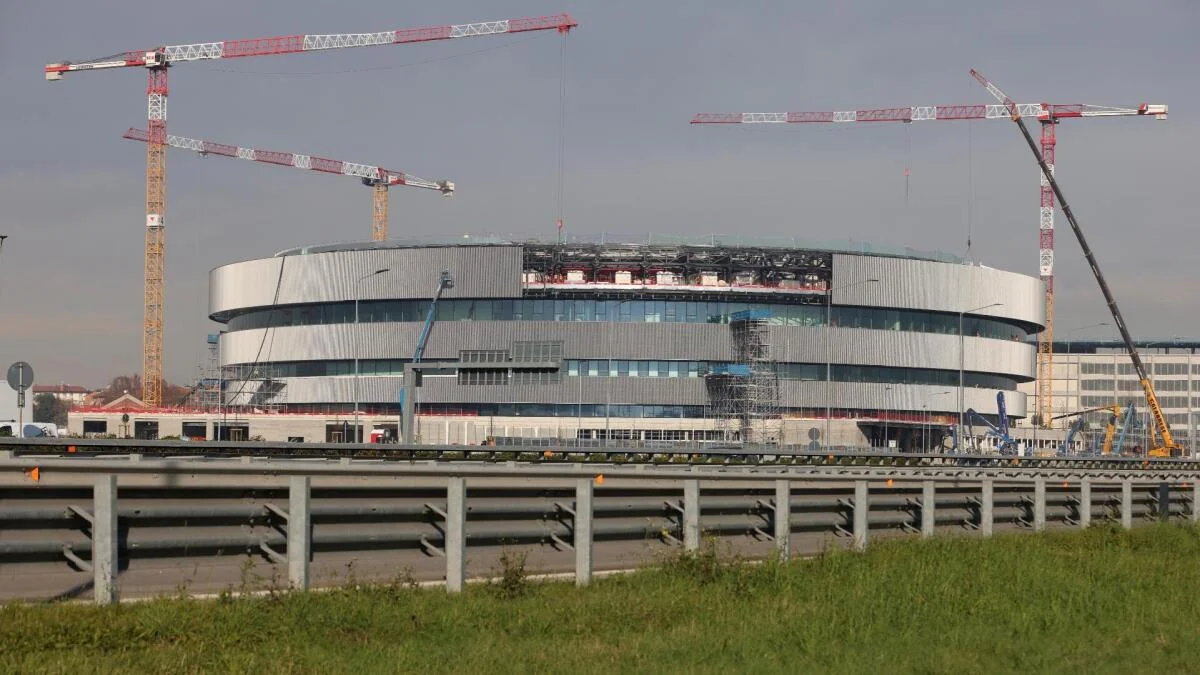
There has been growing discussion about the rink size for the NHL’s return to the Olympics in 2026. A report by The Athletic revealed that the new rink for the Milan-Cortina Games will be smaller than NHL rinks. Initially, the NHL, NHLPA, IOC, and IIHF had agreed that the Olympic ice surface would match NHL dimensions, but this agreement has changed, raising concerns among league officials. They worry about sending top players to compete on a rink that could make an already physical sport even riskier.
Due to uncertainty around rink size and the slow pace of arena construction, there’s some doubt about NHL players participating in the Olympics after a 12-year absence. The new arena’s expected completion is February 2, just days before the women’s and men’s tournaments start.
NHL rinks have been standardized at 200 feet by 85 feet since 1929, while traditional Olympic rinks have been larger, measuring roughly 197 feet by 98.4 feet. The larger Olympic sheets were once thought to encourage skill and flow, but players tend to stay on the outer “clean” ice, leading to more dangerous open scoring areas. Smaller rinks force tighter play, increasing action and decreasing shooting distances.
The 2026 Olympic rink will be about 196.85 feet long and 85.3 feet wide, shorter than past Olympic rinks and just slightly wider than NHL rinks. This could result in intense, close-quarter battles among elite players. Despite concerns, the 2022 Olympics used the same rink size without NHL players, and recent NHL Global Series games in Sweden on similar-sized rinks went unnoticed by fans. Adjustments like shortening the neutral zone might help preserve space in offensive zones.
NHL Deputy Commissioner Bill Daly acknowledged different interpretations of “NHL-sized” rinks but remains optimistic, citing positive progress and the involvement of NHL ice technicians to maintain ice quality. However, Daly emphasized player safety as a priority, stating that if the ice is deemed unsafe, NHL players will not participate.
There isn’t a public backup plan for relocating the tournament. Nearby arenas exist, but moving the event would pose logistical problems, including accommodations, scheduling conflicts, and fan plans.
Players have shared varied views. Nathan MacKinnon expressed that even small size differences can impact play, though he isn’t overly concerned. Martin Necas prefers smaller rinks, believing they make for faster, more exciting games. Matthew Tkachuk expects more physicality and action due to reduced space and looks forward to competing, a sentiment echoed by his brother Brady, who is eager to participate despite potential risks.
Fan Take: This rink size debate is crucial for hockey fans as it could affect how the game is played on the world stage, balancing speed, skill, and safety. The NHL’s Olympic return carries immense significance, not just for player pride but for the future visibility and appeal of hockey internationally.