

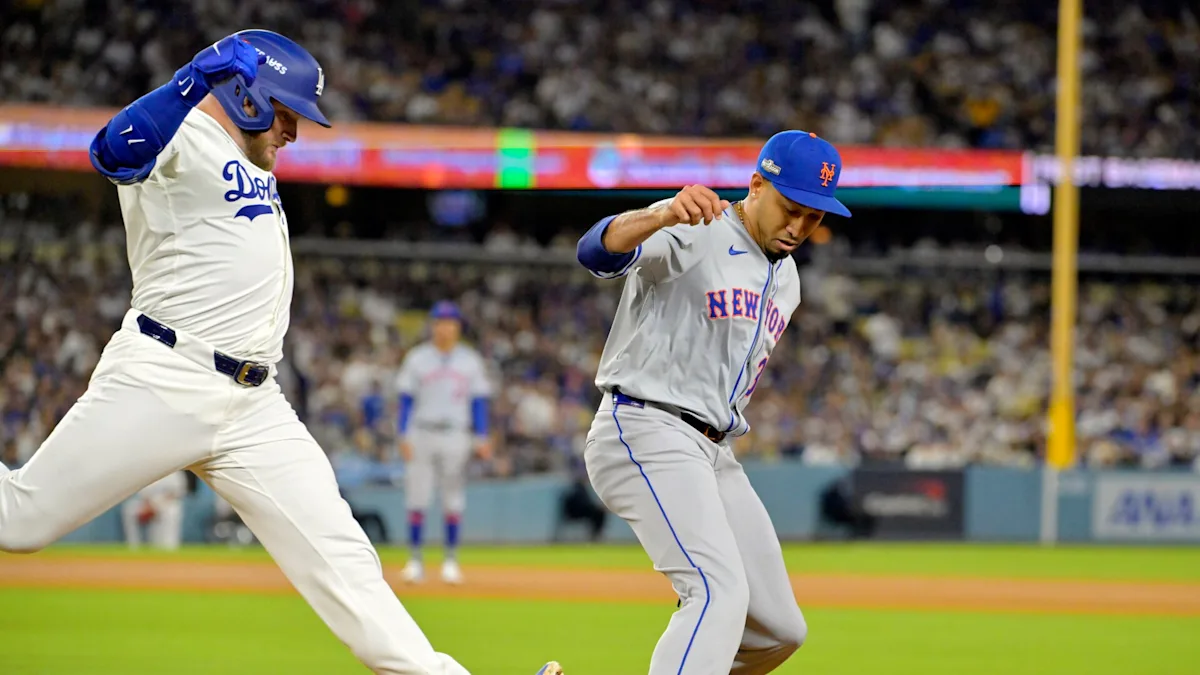
Edwin Diaz won’t receive his full $69 million contract from the until 2047, but his deal significantly increases the team’s total deferred payment obligations to over $1.06 billion, spread across nine players. Under a newly announced three-year agreement, Diaz will get a $9 million signing bonus by February 1, followed by a $14 million salary next year and $23 million for each of the following two seasons, with $4.5 million deferred annually.
The deferred payments will be distributed in ten equal parts every July 1: the 2026 amount from 2036 to 2045, the 2027 amount from 2037 to 2046, and the 2028 amount from 2038 to 2047. The hold a $6.5 million conditional team option for 2029, which may be activated if Diaz faces certain injuries or surgeries before the end of the 2028 season, and if exercised, could include a performance bonus based on games played.
During the season, Diaz plans to stay in a hotel suite and donate 1% of his income to charity. His deferred payments alone raise the ’ total deferred liability to about $1.064 billion, with peak annual payments reaching $102.3 million in both 2038 and 2039.
Alongside Diaz, the have several other high-value deferred contracts, such as Shohei Ohtani’s $680 million deal from 2034 to 2043, Mookie Betts’ $115 million from 2033 to 2044, and several others including Blake Snell, Freddie Freeman, Will Smith, Tommy E. Doman, Tanner Scott, and Teoscar Hernandez.
Diaz, a three-time All-Star turning 32 in March, had a strong performance last season with the Mets—posting a 6-3 record, 1.63 ERA, and 28 saves in 31 chances, plus 98 strikeouts in 66⅓ innings—even though the Mets failed to make the playoffs. He has recorded 253 saves in 294 opportunities over nine seasons with Seattle and New York. Diaz previously signed a $102 million, five-year contract with the Mets after the 2022 season, which included back payments through 2042, although he relinquished the $38 million owed for his final two Mets seasons.
—
Fan Take: This deal highlights the increasing prevalence of massive deferred contracts in MLB, reflecting how teams manage payroll while securing top talent long-term. For fans, it underscores how today’s player salaries and structures could shape team finances and the sport’s economic landscape decades into the future.