

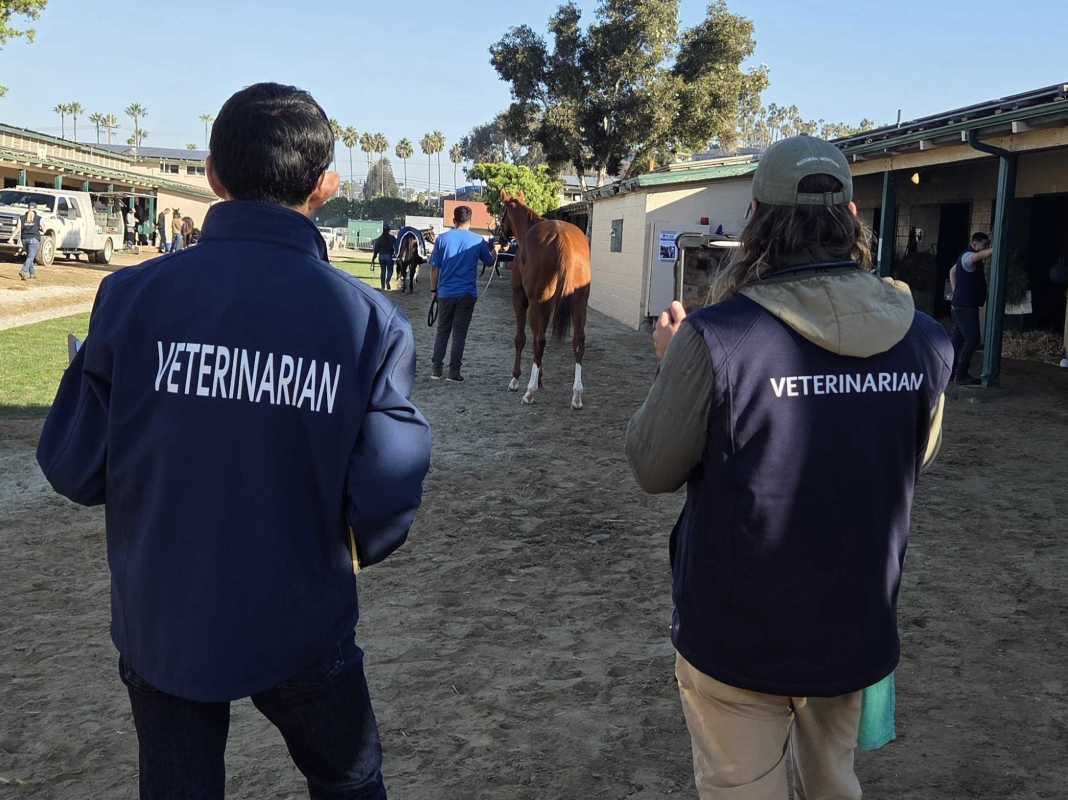
Veterinary regulators in Kentucky, California, and New York have collaborated to integrate artificial intelligence (AI) into their methods for ensuring racehorse safety on tracks. Traditionally, lameness in horses has been assessed through physical exams and observing the horse’s trot, which remains the primary evaluation step in these states. However, subtle gait irregularities can be easily missed, especially under time constraints or with unfamiliar horses, leading to disagreements between trainers and regulators.
To address this, they introduced an app called Sleip, which uses AI to analyze over 100 anatomical points in a mobile phone video of a horse in motion to detect and quantify gait asymmetries objectively. It’s important to highlight that asymmetry does not always indicate lameness; it might result from the horse’s natural buildup or other factors. New York uses the app not to decide if a horse can race but as an extra tool to support veterinarians’ judgments, performing pre- and post-work assessments and soundness checks before horses change ownership.
Likewise, Sleip helps store videos and analysis reports over time, allowing vets to compare current movement to past patterns even in a constantly changing horse population. This long-term data aids in informed decisions when combined with other screening factors. Trainers in New York have generally welcomed the app, with some integrating it into their stables to monitor horse health continuously and intervene earlier when gait abnormalities are detected.
Kentucky’s chief equine vet, Dr. Nick Smith, also supports the app, noting its value in providing an objective perspective on a traditionally subjective assessment and confirming vet evaluations. In Kentucky, the app is currently used selectively after complaints, with potential for more frequent use during the seven-day race entry process. The app helps prioritize which limbs to focus on for further scanning with advanced imaging equipment.
California recently adopted Sleip, using it to complement their existing post-entry screening process established in 2016. With a more stable horse population, California vets monitor training daily and see the app’s potential in early intervention and flagging horses for closer examination.
Sleip was first showcased by 21 vets worldwide at the 2025 Breeders’ Cup, where it was praised for setting a baseline of horse gait assessments internationally. The app is employed globally, including in the UK, Hong Kong, Dubai, Saudi Arabia, and Australia, always as an advisory tool rather than a definitive screener.
Fan Take: This advancement marks a game-changer for horse racing fans by promoting enhanced safety through high-tech monitoring that supports vets and trainers alike. By catching minor gait changes early, it could reduce injuries and improve the welfare and longevity of racehorses, making the sport safer and more sustainable.