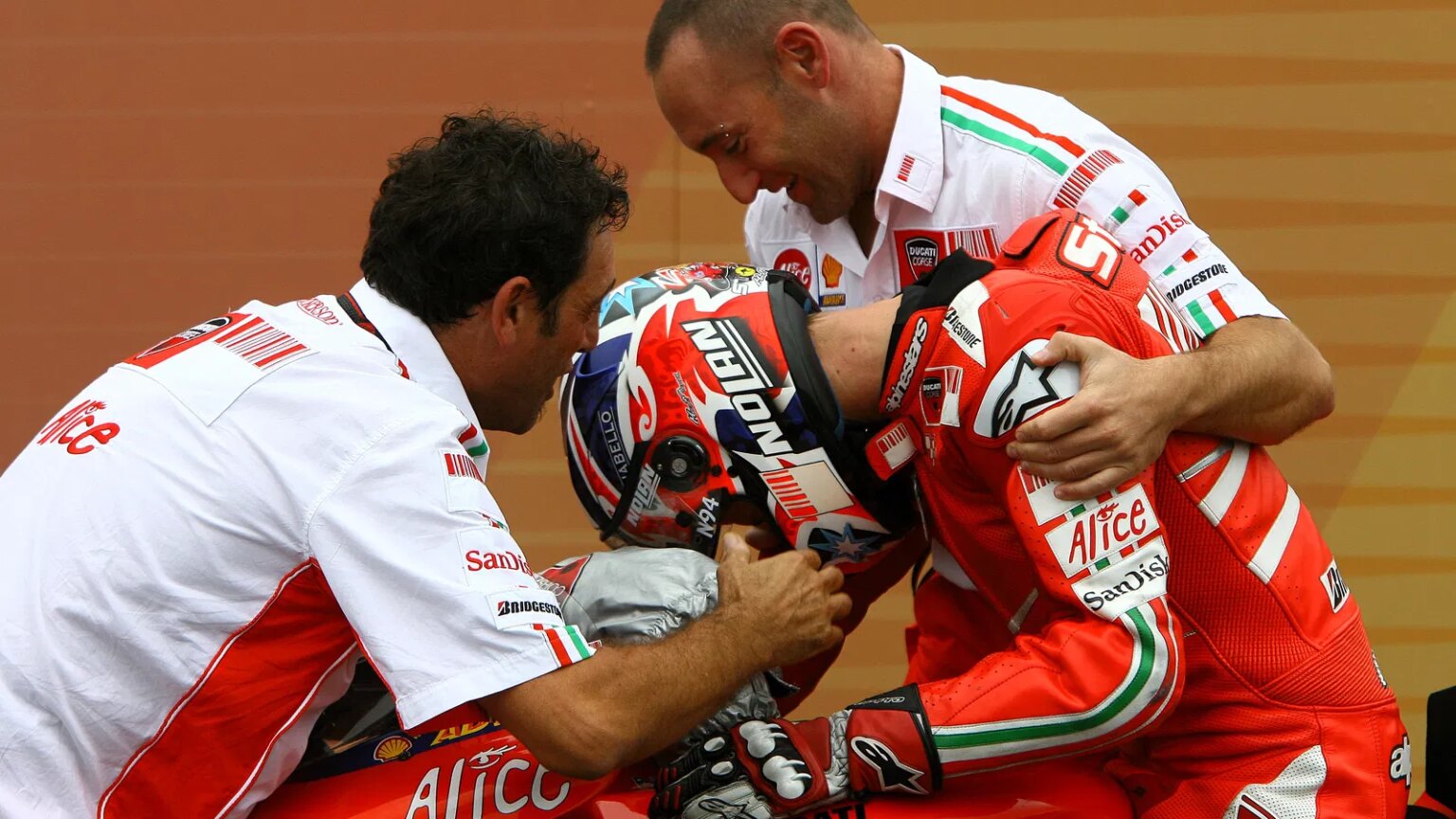
Casey Stoner stands among the top riders who have secured the 500cc/MotoGP World Championship titles with various manufacturers. The Australian made a remarkable impression by winning on his Ducati debut in 2007, capturing the brand’s first MotoGP championship with an impressive tally of 10 victories and 14 podium finishes out of 18 races.
The next best Ducati rider that year was longtime factory representative Loris Capirossi, whose seventh-place finish in the standings earned him less than half the points Stoner amassed. Reflecting on his titles, Stoner noted that the Ducati championship was the tougher of the two, describing the bike as a constant challenge to handle and maintain, with every race demanding a significant battle due to technical difficulties, including engine failures.
As the 800cc era began, Ducati’s Japanese competitors rapidly closed the gap. Stoner won six races in 2008 and finished as runner-up to Valentino Rossi, but his wins declined to four in 2009 and three in 2010 amid health issues. Nevertheless, he remained far ahead of other Ducati riders, who infrequently reached the podium. During Stoner’s four years at Ducati, Capirossi’s lone win in 2007 was the only other Ducati victory, before Stoner switched to Honda in 2011. With Honda, he profoundly outperformed his Ducati counterparts with 23 wins to just one loss.
At Honda, Stoner quickly achieved success, ending his first season with the RCV bike with 10 wins and securing his second MotoGP title. He credited Honda for the smooth championship run, despite some setup errors and tire overheating. When asked which title he valued more, Stoner expressed stronger satisfaction with his Honda title, citing long-standing criticism and a lack of recognition for the Ducati team’s efforts until his move to Honda made their skill more apparent. Stoner clocked five additional Honda wins in the injury-hit 2012 season before retiring at just 27.
Fan Take: Casey Stoner’s journey highlights the resilience and skill required to master different manufacturers’ machines, emphasizing how much rider talent matters in MotoGP. For racing fans, his story elevates appreciation for the complexities of the sport and inspires belief that breakthroughs can come with persistence and adaptability, essential traits for the future of MotoGP.