

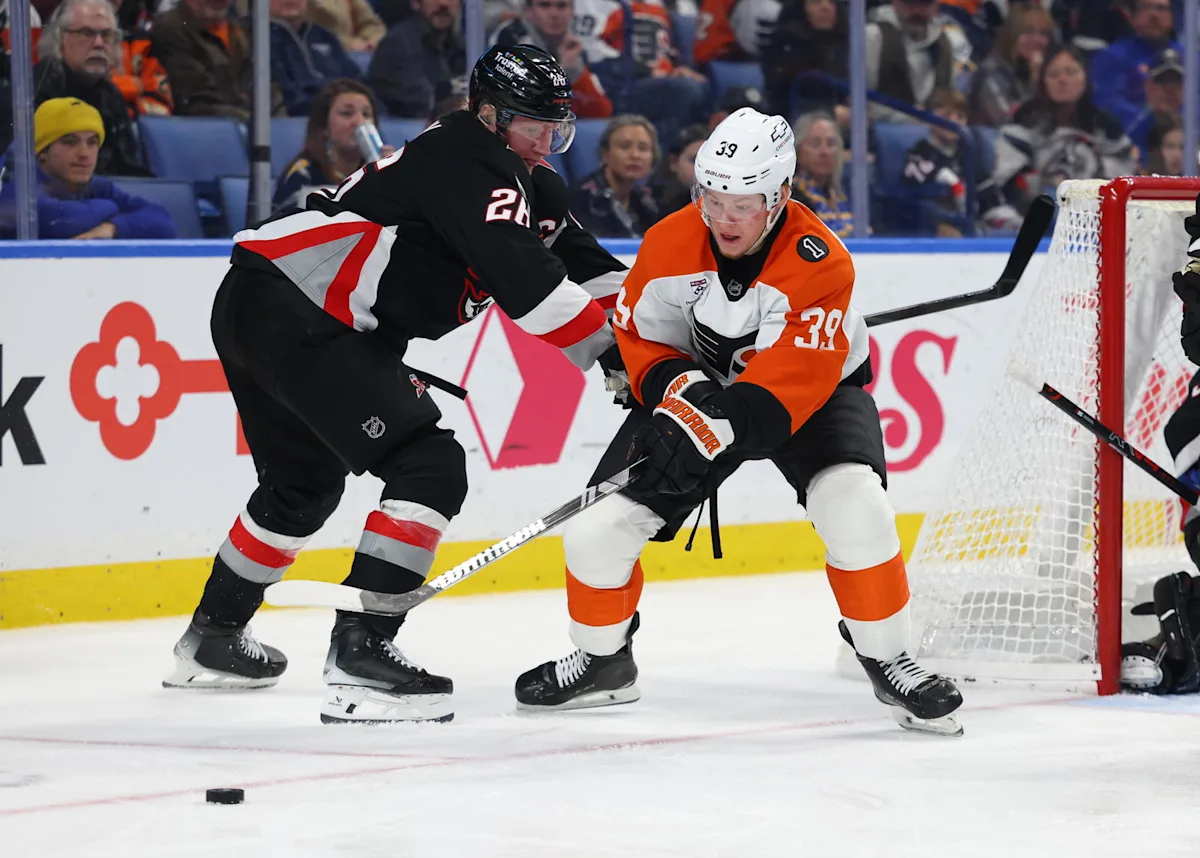
The Philadelphia Flyers’ 5-3 defeat to the Buffalo Sabers was disappointing, not just because of the scoreline but due to the style of play they exhibited. Early on, the Flyers appeared poised to take control, but defensive lapses and a faltering effort in the latter part of the game allowed Buffalo to seize and keep momentum. This game serves as a clear example of how quickly a season series can shift with each game and how fragile a team’s performance becomes when execution falters.
1. Although the Flyers started strong, they couldn’t maintain dominance. They fell behind early but rallied with effective plays, showing promise in managing Buffalo’s speed and maintaining some offensive pressure. Goals from Noah Cates, Cam Yorke, and Travis Konecny suggested the Flyers might clinch the win. However, this control waned after the second period as Buffalo picked up pace, outscoring Philadelphia significantly in the final two periods.
2. The turning point was a breakdown in Philadelphia’s defense. Instead of Buffalo overpowering them physically, they capitalized on the Flyers’ mistakes—miscommunication and slow defensive adjustments provided Buffalo with scoring opportunities. The Flyers often got caught between pressuring the puck and guarding the central ice, which Buffalo exploited relentlessly. While some positive plays came from defensemen Cam York and Jamie Drysdale, defensive consistency was lacking once Buffalo found their rhythm.
3. The lack of impact from special teams was another critical factor. The Flyers failed to score on three power plays, missing key chances to shift momentum. As Buffalo began to push harder, a power-play goal could have disrupted their flow, but Philadelphia struggled to create clean zone entries and sustained pressure on the man advantage. Buffalo’s aggressive offense overwhelmed the Flyers, who were unable to open up the ice or maintain possession, leading to quick clears and short possessions.
4. Despite the loss, individual performances remained strong. Travis Konecny scored his 10th of the season, extending his point streak to four games, while Trevor Zegras led with 20 assists and a six-game point streak, becoming the fastest Flyer to 20 assists since 2007-08. Bobby Brink and defensemen Emil Andrei and Jamie Drysdale also contributed offensively.
In conclusion, Philadelphia has demonstrated the ability to control games early in the season but struggles to maintain that control through the full 60 minutes. Under increasing pressure, their margin for error shrinks, as seen in their collapse against Buffalo. This gradual unraveling left Buffalo in firm control after taking the lead, highlighting that the Flyers need to improve their execution when momentum swings. They proved they can influence a game’s outcome but must learn to sustain that influence more effectively.
Fan Take: This game is a crucial reminder to hockey fans that momentum and defensive reliability can make or break a team’s season. For the Flyers, addressing these weaknesses is vital if they want to be consistent contenders and keep fans hopeful in what promises to be a competitive NHL season.