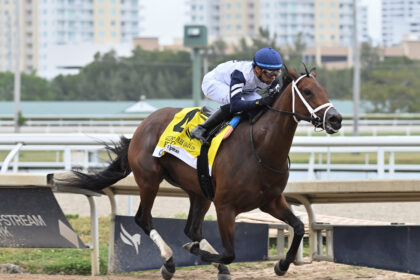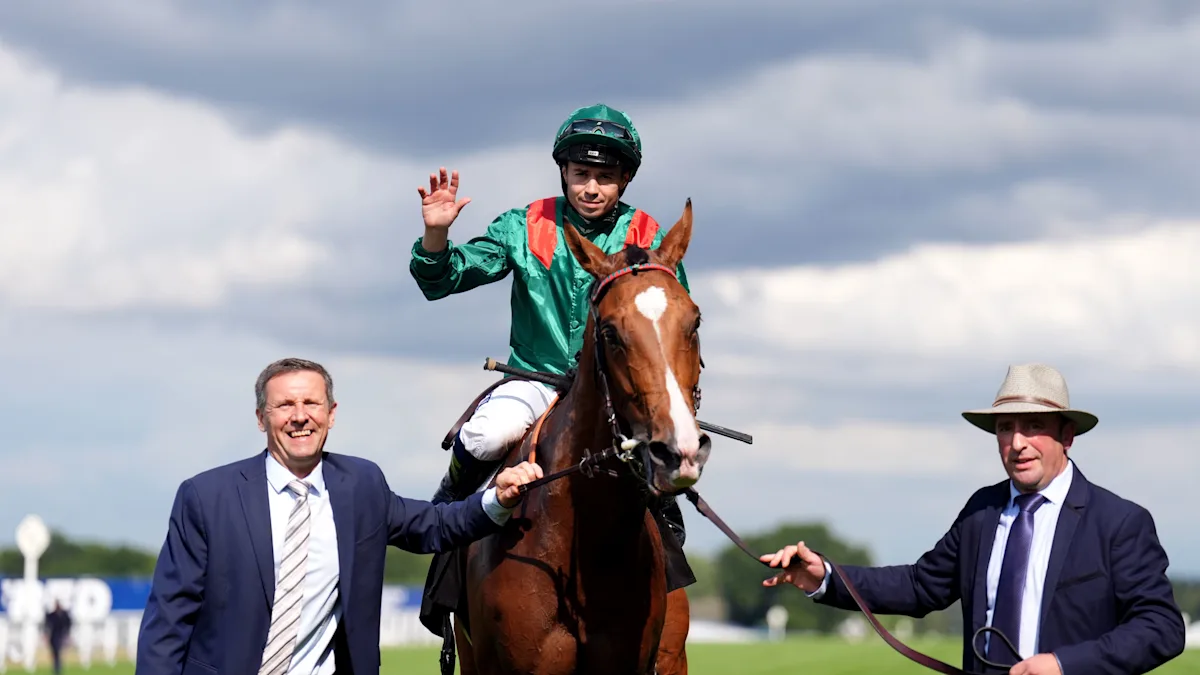
Looking back at 2025, Karandagan undeniably stood out as the champion of the flat racing season. However, earlier in June, after finishing second for the fourth straight year in Group 1—the Coronation Cup at Epsom—there were doubts about his determination.
When trainer Francis-Henri Grauffard opted out of the Eclipse at Sandown in favor of the Grand Prix de Saint-Cloud, few anticipated this move would be the start of making history at the Japan Cup in November. Nemone Rous, the racing manager for the Aga Khan Stud, which owns Karandagan, expressed unwavering confidence in the horse despite some skepticism.
Before Epsom, Karandagan had trained at Meydan and was ridden for the first time since his debut by Michael Barzalona, who was instructed to let him find his rhythm, resulting in a slower pace. After Epsom, there was a sense they might not have tested him enough in training. The day’s field was strong, with the winner, Jan Brueghel, a St Leger victor, narrowly besting Karandagan, who ran well but was overtaken late.
There was talk about Karandagan frequently finishing second, which influenced the decision to race him at Saint-Cloud instead of Sandown. Although he is a good traveler, competing closer to home and easing his workload seemed a better strategy. The race at Saint-Cloud ended up being tough, with notable horses like Aventure and Goliath, both top contenders for the Arc, being defeated.
This approach paid off spectacularly when Karandagan claimed his first Group 1 victory, signaling his growing confidence and marking a turning point in his season. He displayed impressive agility and, for the first time, led a Group 1 race, boosting his morale ahead of Ascot.
Karandagan’s affinity for Ascot is well known, and his outstanding performances there continued. The King George Stakes appeared promising, with familiar competitors like Jan Brueghel, Arc favorite Kalpana, and seasoned star Rebels Romance in the mix. The pace was slow, but Karandagan’s strength over long distances, typical of French racing, gave the team confidence.
Planning ahead, the team decided to give Karandagan a mid-season break, avoiding summer races to keep him fresh for key international events later in the year, especially targeting the Japan Cup. This decision meant skipping the International at York and the Irish Champion Stakes at Leopardstown but allowed participation in British Champions Day at Ascot before Japan.
At this stage, horses Ombudsman and Delacroix had peaked over 10 furlongs, changing the dynamics of the upcoming Champion Stakes, where Karandagan would compete against them. While there was a slight concern about shortening his race distance from 12 furlongs, his excellent shape was evident from training alongside Dallis, winner of the Arc.
The Champions Day track condition favored building speed despite being soft, helping Karandagan perform strongly. Observing his rivals, Karandagan’s team was confident as he accelerated impressively, surpassing expectations.
Despite consistently setting personal bests for three years, Karandagan faced his biggest challenge in Japan, competing against elite middle-distance horses from around the world. While Japan’s top horses earned minor accolades, none could surpass Karandagan, who broke the course record and became the first European winner in two decades.
Rous highlighted the intense preparation and qualification hurdles, emphasizing Karandagan’s composure and stamina, praising jockey Mikael for his skillful race management, maintaining contact without exerting too much too soon. Their strategic approach proved his mental toughness and endurance.
Francis-Henri Grauffard’s training was lauded for its excellence, with Karandagan being the last elite horse ready for the Dubai season. Now rested at home, plans for 2026 include possibly entering Karandagan in the Cima Classic if he resumes training, though decisions will be made over time. Attention is also turning towards Dalis as a potential international contender for the Aga Khan team.
Fan Take: Karandagan’s remarkable journey from consistent runner-up to record-breaking champion highlights the strategic depth and resilience that makes horse racing thrilling. His success on the international stage not only elevates the sport’s global prestige but also inspires a new generation of fans and competitors alike.