
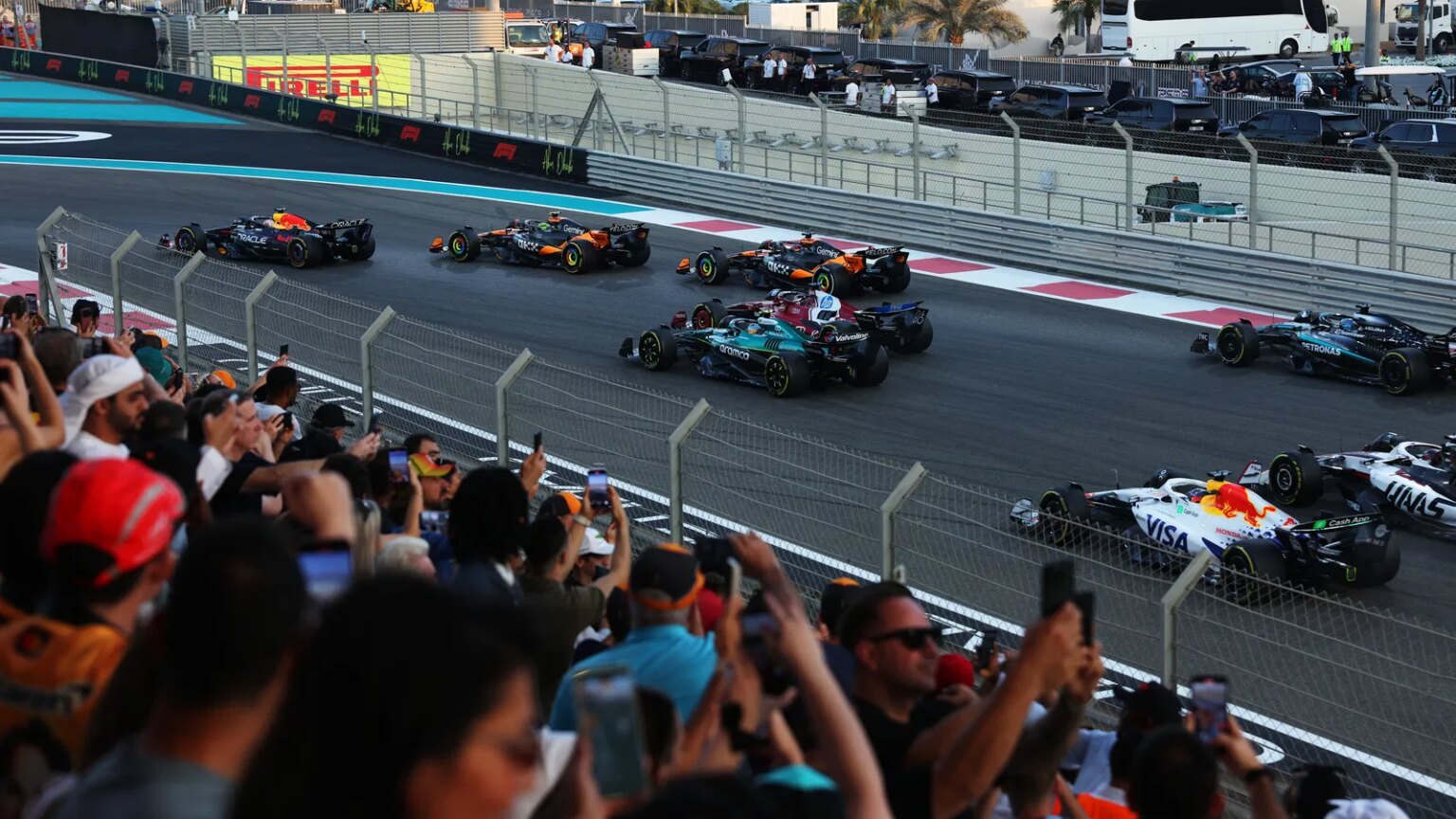
Once the 2025 Formula 1 season concluded in Abu Dhabi, the focus swiftly shifted to the upcoming 2026 season. The 2026 calendar will consist of 24 races, kicking off with the Australian Grand Prix on March 8th and wrapping up at Abu Dhabi on December 6th.
Significant regulatory changes are set for 2026, marking the most substantial update in F1’s 75-year history. These changes involve new design rules affecting the chassis, aerodynamics, and power units, which are expected to alter the competitive landscape. Notably, the Drag Reduction System (DRS) will be discontinued, replaced by a new movable wing system designed to enhance race overtaking and car following.
To accommodate these new regulations, there will be expanded pre-season testing, starting with a private test in Barcelona at the end of January, followed by two official tests in Bahrain in February, before the season officially begins in Melbourne.
The pre-season test schedule is as follows:
– Private Testing in Barcelona from January 26th to February 3rd
– Official Test 1 in Bahrain from February 11th to 13th
– Official Test 2 in Bahrain from February 18th to 20th
A highlight of the 2026 calendar is the addition of a brand-new race in Madrid, Spain, which will accompany the traditional Spanish Grand Prix at Barcelona. Madrid takes the place of Imola, which will not appear in the 2026 schedule.
The full 24-race calendar includes iconic venues like Melbourne, Shanghai, Suzuka, Sakhir, Jeddah, Miami, Montreal, Monaco, Barcelona, Spielberg, Silverstone, Spa, Budapest, Zandvoort, Monza, Madrid, Baku, Singapore, Austin, Mexico City, São Paulo, Las Vegas, Qatar, and Yas Marina.
Sprint races will continue to be part of the championship with six events scheduled, including the British Grand Prix at Silverstone, which last hosted sprints in 2021. Other sprint races will take place in China, Miami, Canada, the Netherlands, and Singapore.
The driver lineup for 2026 features well-known names such as Lewis Hamilton and Charles Leclerc with Ferrari, Max Verstappen and Isaac Hajar at Red Bull, George Russell and Kimi Antonelli at Mercedes, Fernando Alonso and Lance Stroll at Aston Martin, and a host of emerging talents across teams like McLaren, Takayama, Hearth, Racing Bulls, Audi, and Cadillac.
Fan Take: The sweeping rule changes in 2026 could dramatically reshape the competitive order and racing dynamics, injecting fresh excitement into the sport. Fans should gear up for a season of closer racing, more overtaking, and the emergence of new rivalries, making it a pivotal year for Formula 1’s future.