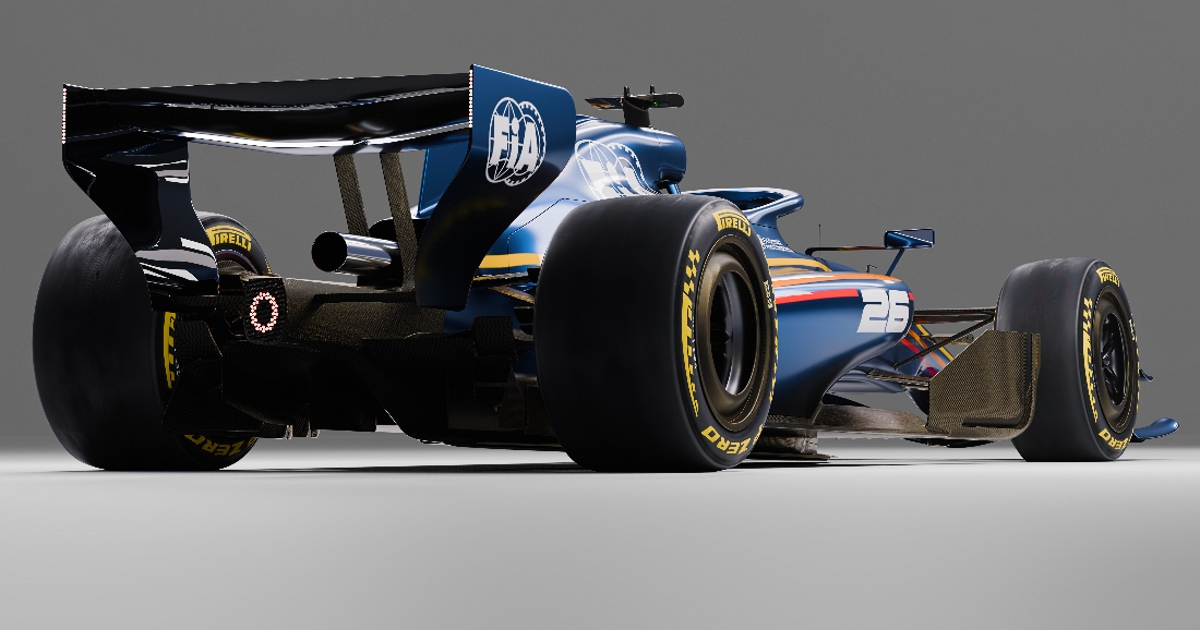
The FIA believes it has made significant progress towards achieving its goal of improving F1 from 2022 onwards, but there are some areas it wants to continue improving under the next set of regulations.
2022 saw the introduction of new cars with ground-effect aerodynamics, aimed at changing the way downforce is generated and allowing the car to track more precisely. This is part of wider changes designed to make the sport more sustainable, including budget caps and restrictions on aerodynamic testing, and FIA single-seater director Nicolas Tombazis said controlling costs was a big improvement compared to recent times.
“I think we have taken important steps in the right direction in most of these goals, but I can never say that we have been completely successful in all of them. I would not give us an A star,” Tombazis said. “I would give him a B or C or something like that, but I think we’ve moved in the right direction.
“Let’s take it one by one. From a sustainable sport perspective, we introduced financial regulations. Obviously, due to delays in technical regulations due to COVID-19, financial regulations were introduced at the very end of the previous cycle (2021), but they came into force properly during this cycle.”
“I think financial regulation has been a success overall. Financial regulation has brought a lot of financial sustainability and profitability to sports and teams, contributing to a more level playing field and turning teams into assets. Even the bottom of the grid, the last teams in terms of performance, are economically sound and not at risk of collapse. Whereas previously there were some teams that were always on the borderline of financial ruin.”
“So I think you can argue that financially we are definitely moving in the right direction. Has the financial regulation been a complete success? No, I think we have learned a lot. We have revised it for the 2026 regulation, but after about five years of experience, we realized how complex it is to manage the financial regulation of a team with such different business models, ways of operating, etc.”
“So this is a very complex issue, and we have a very good team working on it, but it’s very complex and it makes it even more difficult to regulate the sport. But overall, I can absolutely say that I can’t imagine not having financial regulation at this point. So I think it’s been a success.”

Tombazis said some of the gains from the previous ruleset were erased by the team’s aerodynamic development. Qian Jun/MB Media/Getty Images
Ahead of the introduction of new aerodynamic and power unit regulations, Tombazis said the previous ruleset started from a strong position but had evolved in a way that the FIA was unable to prevent the effects of dirty air from becoming a problem again by the end of the cycle.
“Technically speaking, I think we have certainly reached a level where the cars can compete more closely with each other,” he said. “Where we didn’t give ourselves full marks is that there were a few things…I wouldn’t say loopholes, but certainly some areas of the regulations were a little too permissive, and they allowed teams to adopt solutions that created outwash and, dynamically speaking, undermined some of the very good work on overtaking.
“So, very early in 2022, we were talking about how closely everyone could follow, and everyone was really happy, but I would say that today it’s pretty difficult. So in that respect, I would say we didn’t have as much control over that parameter as we would have liked.”
“In terms of closer races, I think the goal of closer races in terms of performance differences has been achieved quite objectively. If you take the start-to-finish type of statistics, I think the performance differences have already started to narrow since the first year of the regulations, and they have further reduced as they converged. So I think that was a good thing.”
“But like I say, if the aerodynamic deterioration hadn’t happened, I think the car would have been able to get into the DRS zone really much more easily today. So I think that’s definitely something we learned.”
“Obviously there were some technical challenges with these kinds of parameters, such as the stiffness of the car. I think there are things we need to learn and I hope we can move forward next year.”