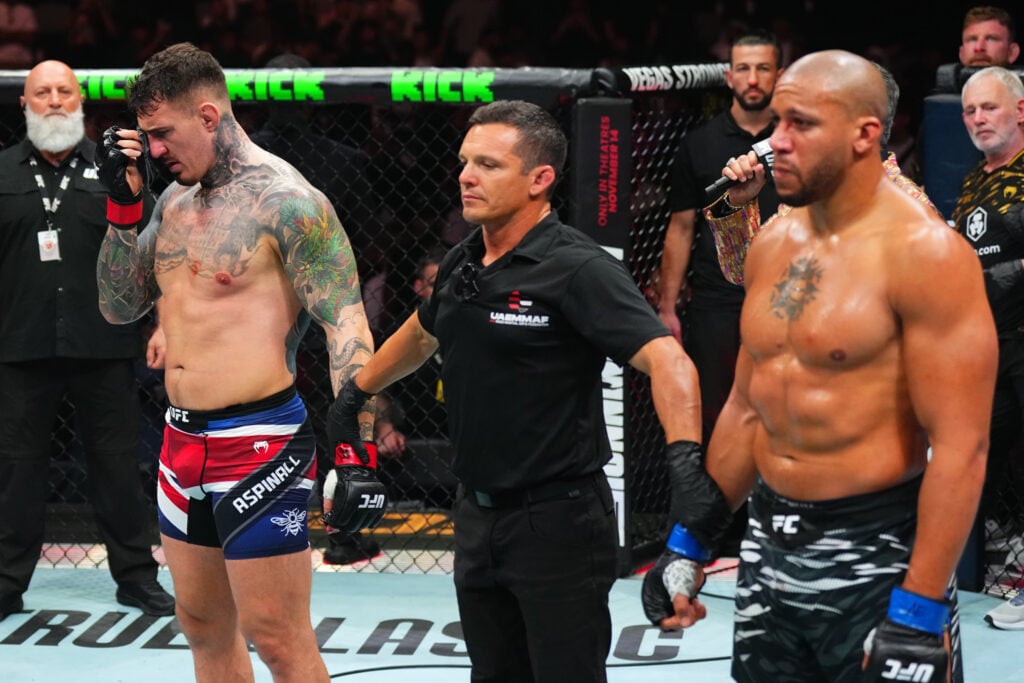
Tom Aspinall sought guidance from a fighter who truly understands the challenges he faces. Unfortunately, Aspinall is set to undergo surgery on both eyes, leaving the timeline for his return to the Octagon uncertain. The UFC heavyweight champion’s first title defense was abruptly halted after Cyril Gane accidentally poked him in the eye. While Aspinall is currently prioritizing his recovery, he remains motivated for a rematch with Gane. A UFC legend, who strongly supports Aspinall, offered encouraging advice, relating from his own experiences as a fighter.
Michael Bisping reacted to Aspinall’s eye injury by criticizing how the UFC handles eye pokes. Having suffered serious eye injuries himself, Bisping empathizes deeply with Aspinall. After his 2013 loss to Vitor Belfort, Bisping concealed the fact that he was legally blind in one eye to continue competing at a high level. He recounted how he suffered multiple retinal detachments and glaucoma, warning that eye injuries are particularly damaging and recovery never fully restores vision. Bisping cautioned against rushing back too soon from such injuries, saying this was a hard-learned lesson from his own career.
Former middleweight champion Bisping, who felt Aspinall made errors heading into UFC 321, acknowledged attempts to aid Aspinall’s healing but emphasized that rushing back can have severe long-term consequences for eye health.
Meanwhile, Joe Rogan also expressed concern about Aspinall’s future fighting prospects during the JRE MMA Show #172. He highlighted the seriousness of Aspinall’s condition, mentioning the potential for permanent vision issues despite surgery. Rogan referenced Bisping’s remarkable and rare ability to fight at the highest level with only one functioning eye, calling it an exception rather than the norm.
Fan Take: This update is crucial for fight fans as it underscores the physical risks elite fighters face and the delicate balance between recovery and competing again. Aspinall’s situation could reshape how the UFC manages eye injuries, potentially leading to stricter medical protocols and longer recovery times for the sake of fighter safety.