

On Thursday, Trinity Rodman celebrated her new contract with the Washington Spirit in Los Angeles, making her the highest-paid female soccer player globally. Reflecting on the lengthy negotiations that led to this announcement, Spirit executives emphasized that the NWSL’s new high-impact player (HIP) rules played a significant role in enabling Rodman’s return, a crucial development for a team that previously struggled under salary cap constraints.
However, the excitement surrounding these new rules is tainted by controversy. Just a week before Rodman’s celebration, the NWSL Players Association filed a complaint stating that the HIP rules contravene federal labor laws rather than collective bargaining agreements. This situation raises important questions about whether the new policies are sufficient to enable NWSL teams to compete effectively against ambitious foreign clubs for elite talent.
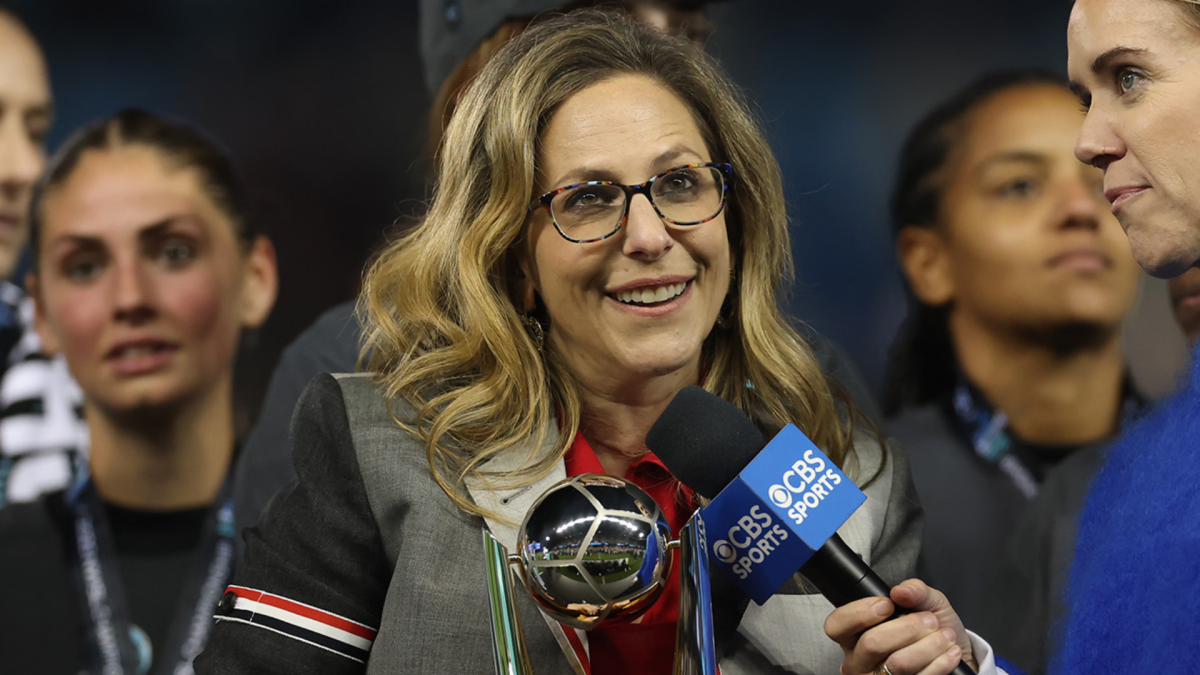
NWSL Commissioner Jessica Berman described the HIP rule as a necessary interim measure to drive fiscal responsibility while enhancing league investments. “My primary role is to be a careful steward of capital,” Berman stated to CBS Sports, emphasizing the need for investments in facilities, coaching, and overall business operations.
In contrast, Megan Burke, the executive director of the NWSLPA, argues that the HIP rule fails to address the pressing need for the league to lead rather than merely keep pace with international developments in women’s soccer. “While the U.S. has historically dominated in women’s soccer, we now find ourselves trying to match other nations that are stepping up in their commitment,” Burke explained.
Unique Conditions for Eligibility
Under the HIP rules, each NWSL team can allocate an extra $1 million toward player salaries without impacting the salary cap, allowing for a total of $3.7 million in player spending for the 2026 season. A key feature of these rules is a list of criteria that players must meet to qualify, including standards based on minutes played for the U.S. Women’s National Team and being featured on year-end honor lists. The criteria aim to be objective yet have drawn criticism; as Burke pointed out, fair market value cannot be solely determined by external recognitions, often influenced by media perception.
Berman defended the criteria, stating they were intended to ensure objectivity so that a recognized player’s value is not skewed by a single entity’s judgment. She also noted that the HIP rule could contribute an estimated $15 million over the length of the current collective bargaining agreement, asserting that the investment must align with the league’s growing business needs.
Berman acknowledged some limitations with the HIP rules, admitting they exclude a few high-profile player categories. Burke concurred, pointing out that the existing standards fail to fairly assess player value and that media opinions should not influence roster makeup.
Collective Bargaining Dispute
The crux of the NWSLPA’s discontent lies in the assertion that the league did not engage in collective bargaining concerning the HIP rule, a claim the NWSL disputes. Berman stated that discussions about the rule began in 2022 and insisted that the league fulfilled its obligations under the collective bargaining agreement (CBA).
Burke contested this, arguing that after the NWSL Championship, the association was presented with criteria that complicated negotiations. Following internal discussions, they expressed concerns about the direction of the HIP rule, but were met with swift league action, causing frustration among players.
The NWSLPA contends that the league mischaracterizes the HIP rule as a mere roster classification when it is essentially a salary classification, which requires union approval to enact. Burke highlighted the discrepancies and lack of transparency in the negotiations.
Striving for Competitiveness
While concerns over whether Rodman would remain in the NWSL were prevalent, the bigger picture echoes through the league’s structure as players like Naomi Girma, Alyssa Thompson, and Emily Fox depart for international clubs. Rodman’s choice to stay raises questions about whether the NWSL can genuinely compete with Europe’s top clubs.
Berman continues to champion the NWSL’s overall growth, highlighting significant investments aimed at transforming the league into a premier destination in women’s soccer. Still, Burke expresses skepticism about whether current efforts can match the established infrastructure and investments seen in European leagues.
According to Burke, although recognizing the positive developments in team investments, the urgency remains in boosting player compensation. The proposed salary increase of $1 million per team is seen as modest compared to needs, emphasizing that immediate financial enhancements would affirm their commitment to nurturing domestic talent.
The NWSLPA is advocating for a salary cap increase that encompasses all players, reflecting their desire for a genuine seat at the negotiation table. Burke stressed the importance of good faith negotiations moving forward.
Fan Take: The outcomes of these discussions have significant implications for the future of women’s soccer, as they directly impact player retention and competitive balance within the league. For fans, witnessing the evolution of the NWSL and its capacity to contend with elite international clubs is critical in driving the sport’s popularity and sustainability in the U.S.