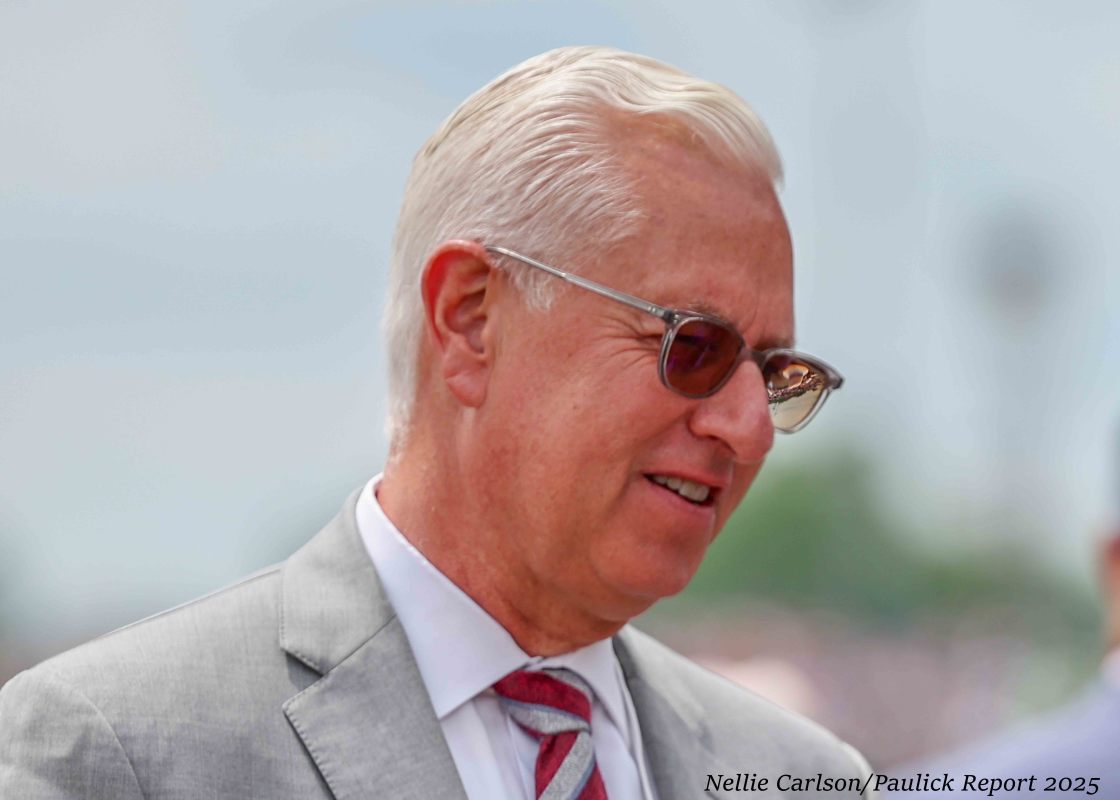
For most trainers in the Thoroughbred racing world, winning the Kentucky Derby is a once-in-a-lifetime achievement. However, for Hall of Fame trainer Todd Pletcher, clinching the 2010 Derby with Super Saver felt more like a relief than sheer joy.
On the Paddock Pulse podcast, hosted by Leah O’Meara and Leah Alessandroni, Pletcher shared that capturing the Derby title was “hard to put into words.” Before that win, his record stood at 0-for-24, so securing the victory lifted a huge weight off his shoulders. “I had to get off because I felt like I had a monkey on my back,” he explained.
Pletcher called his second Derby win with Always Dreaming in 2017 “the cherry on top.” He also discussed how the Kentucky Derby’s unique pressures complicate preparations. “When you have these routines every day and everything is flowing and everyone is organized and everyone is doing their job, everything falls into place,” he noted. “But when you have a race like the Derby, everything becomes more pressure.”
Reflecting on his career, Pletcher highlighted three horses that have meant the most to him: Jersey Girl, who in 1998 earned her first Grade 1 Stakes victory; Rags to Riches, the first filly since 1905 to win the Belmont Stakes and named Champion 3-Year-Old Filly in 2007; and Marathat, acquired at the Keeneland September Yearling Sale but destined to remain in Pletcher’s barn.
He expressed frustration that Rags to Riches isn’t in the Hall of Fame despite her incredible achievements. “I knew she didn’t have the longest record (5 wins in 7 races, including 4 Grade 1 wins) and I think that’s why people criticized her and why she wasn’t inducted,” he said. “But for me, being the only filly in over 100 years to win the Belmont, and doing it against a horse like Curlin, is still the most thrilling race I’ve ever been a part of.”
In 2019, Pletcher led a group aiming to purchase Marathat at the Keeneland Sale with a $1 million budget. Shadwell Estates ultimately bought the daughter of Curlin for $1.05 million. Although she was initially slated to be trained by Ciaran McLaughlin, he soon announced his retirement as a trainer.
Pletcher fondly recalled meeting Rick Nichols and the Shadwell team, saying, “She was on the roster, and I said, ‘Oh, that was my favorite horse at the September Sale.’ I was lucky enough to get her… She was exactly what we expected — just a sweetheart of a filly.”
He also spoke about setting his sights on a training career early and the lessons he learned from mentors like D. Wayne Lukas and Charlie Whittingham before starting his own stable in 1996.
Leah Alessandroni emphasized that the discussion wasn’t about trophies, but rather about “what it takes to stay grounded, disciplined and accountable year after year in such a demanding industry.” O’Meara added, “We wanted to create a space to explore the leadership aspects of training—the parts of the job that don’t always make headlines but are essential to long-term success.”
The Paddock Pulse podcast presents a thoughtful alternative to traditional racing media by featuring candid, short interviews with insiders about their careers, values, and experiences. The hosts, Alessandroni and O’Meara, have gathered a collection of 21 episodes, including the recent interview with Pletcher. New episodes are available here and on all major podcast platforms.
This piece originally appeared in the Paulick Report’s News section on January 23, 2026.
Fan Take: Todd Pletcher’s candid reflections remind horse racing fans that behind every headline victory is years of dedication and pressure. Understanding these challenges deepens appreciation for the sport and highlights the resilience required to succeed at the highest level, inspiring future generations of trainers and enthusiasts.