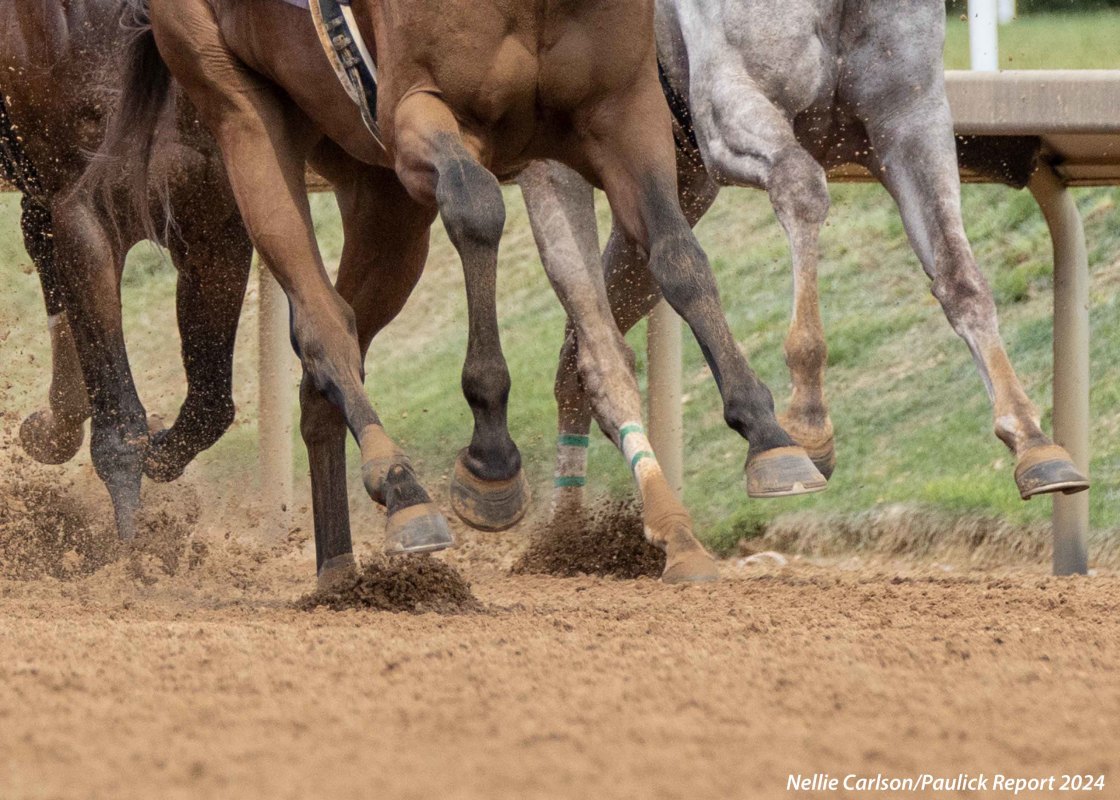
A regulatory veterinarian’s morning typically starts with soundness exams, a thorough evaluation of a horse’s gait, limb condition, and overall health aimed at preventing serious injuries on race day. While these visible inspections help jockeys, much of the work happens behind the scenes through detailed data reviews and pre-test screenings that identify concerns well before physical checks begin.
Under Horse Racing Integrity and Safety Authority (HISA) regulations, veterinarians must also perform “post-entry inspections,” which occur after a horse is entered in a race but prior to race day. This involves an in-depth review of veterinary treatment histories and lifetime performance data to detect subtle issues early, enabling authorities to request additional information, restrict participation, or recommend specific interventions. These steps help safeguard both horse welfare and the integrity of the sport.
The expansion of HISA’s veterinary treatment database, which compiles records from across state lines, has created an immense volume of information for regulatory vets to analyze. It can take six to eight hours, or more, to thoroughly assess the data for just one race, in addition to the time spent on hands-on horse evaluations.
Recently, two innovative tools—HISA Horse In-Sight and HISA CHECK√—have been introduced to assist veterinarians by converting complex performance histories, metrics, and treatment records into clear, actionable risk profiles. This advancement highlights how big data transforms vulnerability into preventive insight, helping save lives on the track.
Big Data and AI
Since launching its racetrack safety program in 2022, HISA has registered over 90,000 horses, each with detailed medical records ranging from routine shots to injury treatments. Given the sheer amount of data, expecting veterinarians to manually review all records and histories is impractical.
HISA CEO Lisa Lazarus recognized the need for a rapid way to process this data, especially in jurisdictions with fewer regulatory veterinarians. “Nearly all the long-term impactful value we generate for the industry stems from collecting, storing, and analyzing data,” she stated.
HISA partnered with Palantir, a U.S. software firm specializing in AI-driven platforms that convert large, complex datasets into actionable insights. Since December 2023, Palantir’s technology has helped HISA create models that efficiently flag horses potentially at risk of injury.
These AI tools are intended to complement, not replace, veterinarians’ clinical judgment. Both HISA Horse In-Sight and HISA CHECK√ help identify high-risk horses, enabling vets to focus their inspections and assessments more effectively.
Steve Keech, HISA’s CTO, called the partnership a “force multiplier,” praising Palantir’s fast and sophisticated machine learning capabilities that provide veterinarians with better information, leading to improved outcomes for horses.
While Palantir’s services come with a high price tag—reflected in a 2026 HISA budget line item exceeding $1.6 million along with other tech vendors—Lazarus noted the company offers discounted rates as part of its commitment to social good. She added that Palantir’s tools significantly reduce labor, accelerating development from an expected 18 months down to about one month, making the investment highly worthwhile.
Palantir’s platform is user-friendly even for non-technical HISA staff, empowering them to quickly answer complex questions and streamline decision-making throughout the organization.
HISA CHECK√
Dr. Shari Silverman, a regulatory vet with two decades of experience, joined HISA in 2024 to lead technical efforts optimizing Palantir’s tools for veterinary use. The first tool developed was HISA CHECK√, which assigns a single numerical risk score to each horse by evaluating 55 risk factors.
Though a composite score doesn’t definitively predict injury, it serves as a useful, evidence-based way to rank horses for further examination. This prioritization helps focus limited resources on the animals most in need of evaluation.
Risk factors vary but include aspects like long layoffs, repeated joint treatments, previous injuries, accumulation of fast furlongs, veterinary listing history, changes in trainers or riders, and shifts in racing or training patterns.
The latest version of CHECK√ employs machine learning to weigh over 200 risk factors and categorizes horses into red, yellow, or green risk profiles. This makes at-a-glance analysis simpler without relying solely on numerical scores.
Dr. Silverman emphasized that a high CHECK√ score signals the need for closer inspection rather than indicating a horse will definitely be injured. “Few horses score above 16,” she said, noting the tool’s primary purpose is to alert veterinarians rather than dictate decisions.
Additionally, the tool monitors whether a horse is likely to have a “bad outcome,” such as withdrawing from races or being placed on veterinary lists.
Lazarus pointed out that CHECK√ rarely misses horses who later experience problems (false negatives) and that such cases are thoroughly investigated using Palantir’s data analysis to improve the system continually. While the system generates about 15% false positives, she regards this as an acceptable trade-off to prioritize prevention: “It’s better to keep a close watch on a horse that turns out fine than to miss one at true risk.”
HISA Horse In-Sight
For detailed reviews, HISA Horse In-Sight offers a deeper dive by combining race history, exercise data, and veterinary records into interactive graphs covering a horse’s entire career. This comprehensive view helps regulatory veterinarians track health and performance trends efficiently.
Features include:
Full visualization of races, workouts, scratches, and more, with quantification of fast furlongs run.
Filters to customize views by treatment type, injury outcome, or vet listing reason.
Tools to compare multiple horses or those in the same race, enhancing insight on treatments and injuries.
Dynamic timelines to analyze history over chosen periods.
Downloadable reports for research and mortality investigations.
The first version, launched in late 2024, allows vets to access key information quickly, while version 2.0—released summer 2025—added features like displaying CHECK√ scores per start and distinguishing treatment records by anatomical location.
Veterinarians have found Horse In-Sight especially valuable for post-entry screening and investigating fatalities, though it’s less practical for on-the-spot stall-side exams. HISA supports users through webinars and expert assistance from Dr. Silverman.
Lazarus highlighted the tool’s growing indispensability: any delay in sending reports leads to numerous calls from anxious veterinarians.
Together, HISA CHECK√ and Horse In-Sight illustrate how technology can enhance veterinary judgments by consolidating scattered data into clear risk indicators and career-long visualizations. This enables earlier problem detection, resource prioritization, and timely, well-supported decisions—all aimed at safeguarding horses and the sport.
While imperfect, with ongoing calibration needed to reduce false positives and refine rare adverse event reviews, early outcomes are encouraging. The hope is that these innovations lead to fewer catastrophic injuries, prolonged healthy careers for horses, and safer racetracks for everyone involved.
This article was originally published by Paulick Report on January 26, 2026.
Fan Take:
This breakthrough in data-driven veterinary oversight is a game-changer for horse racing fans who care deeply about the safety and longevity of the horses. By harnessing AI and big data, the sport moves closer to preventing tragic injuries, promising a future where horses can compete longer and safer, which ultimately preserves the integrity and thrill of racing.