

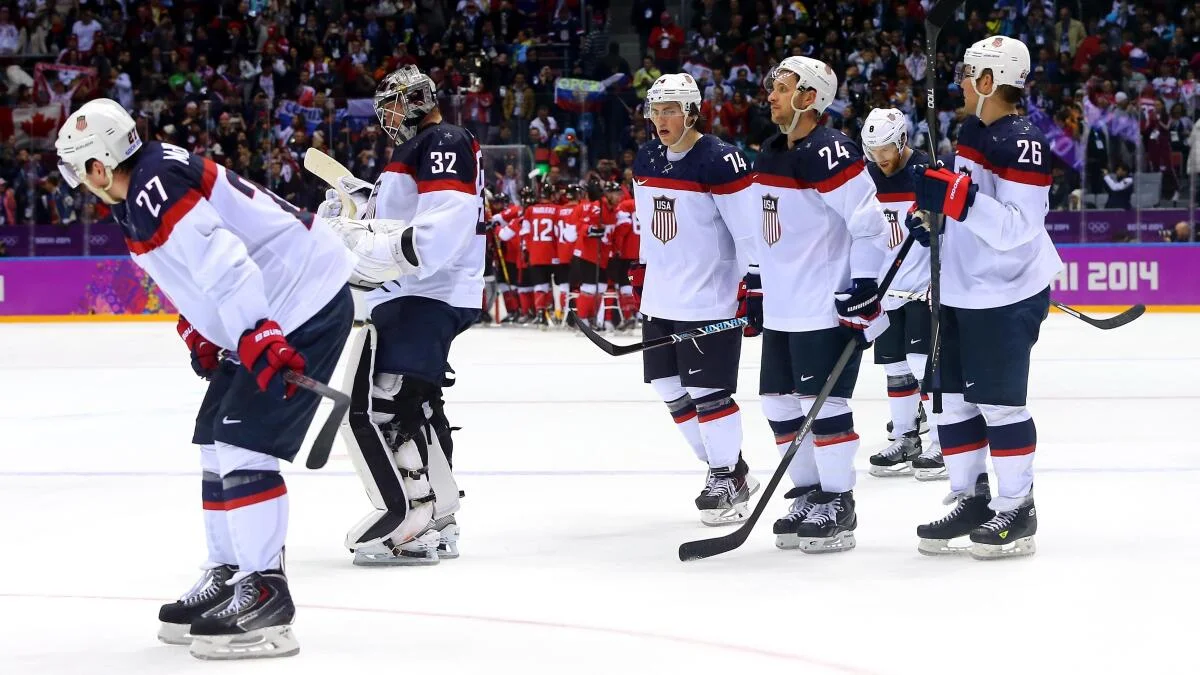
When the U.S. men’s hockey team competes in the 2026 Olympics in Milan-Cortina, they aim to overturn their disappointing track record of international performances. Since NHL players began participating in the Olympics in 1998, Americans have yet to win a medal on foreign soil. The question remains: will that change next month?
While Team USA has performed well in North American-hosted Olympics, earning silver medals in Salt Lake City in 2002 and Vancouver in 2010, their results in European tournaments have been less impressive. In three attempts abroad, the best they’ve finished is fourth place, with a total of six wins.
Their performance at the 2006 Turin Olympics was particularly poor, marked by a goal difference of -5, with only one win over Kazakhstan, a draw with Latvia, and a semifinal loss to Finland. Such disparities in results raise questions about the influence of local fans or travel fatigue — though experts suggest these factors are unlikely to be the sole reasons. Regardless, the U.S. team has a history of returning home empty-handed, which would be shocking if not outright devastating—until now.
Looking ahead to 2026, there are promising signs of progress. Historically, the U.S. struggled to develop top-tier talent compared to countries like Canada, Sweden, and Russia. However, recent achievements, especially in the World Junior Championship where the U.S. has won seven titles—including back-to-back in 2024 and 2025—highlight significant growth. This turnaround correlates with a surge in youth hockey participation, with registrations more than doubling from the early 1990s to over half a million and the establishment of the U.S. National Team Development Program, which has developed hundreds of NHL prospects.
Most of the 2026 Olympic roster features players born between 1991 and 2002, underscoring how USA Hockey’s targeted development efforts have paid off. Unlike the teams of 1998 and 2006, which lacked this caliber of players, the 2014 team saw some improvements, notably falling just short of medals. Today’s American squad boasts better skill and experience, especially in goal, with elite goaltenders like Connor Hellebuyck, Jake Oettinger, and Jeremy Swayman—whose achievements far surpass those of past Olympic goalies.
In terms of tournament strategy, the U.S. benefits from a favorable bracket, avoiding some of the strongest European teams until potentially the knockout rounds. Their path through the preliminary phase looks manageable, with the toughest challenge likely being against Germany. With such an advantageous position, combined with their improved squad, the possibility of capturing a first-ever Olympic hockey medal on European ice feels within reach.
Fan Take: This could be the year that the U.S. finally breaks its overseas ice curse, marking a new chapter of international success that would elevate the sport’s profile in America. For fans, it’s an exciting sign that American hockey is on the rise and ready to contend on the world’s biggest stage.