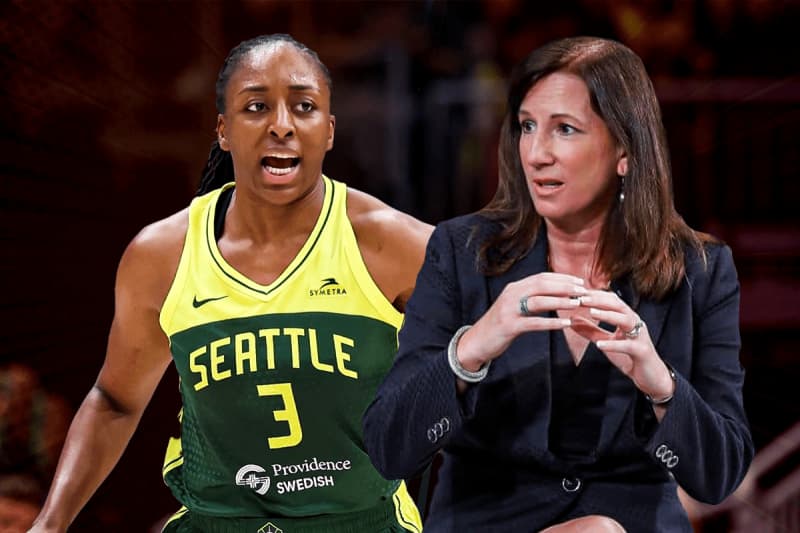
The long-awaited negotiations between the WNBA and its players have reached a critical stage, with WNBPA President Nneka Ogwumike delivering a firm message to Commissioner Cathy Engelbert and league officials. Ogwumike emphasized that WNBA players are done settling for symbolic achievements; with the 2026 season fast approaching, they demand substantial revisions to the league’s financial framework to reflect their true value.
Ogwumike highlighted the discrepancy between the league’s growing revenues and the players’ compensation, stating, “When you look at how much revenue we’re making, it’s basically a decimal point. All we’re asking for is our fair share. And that’s more than a million.” Her clear stance comes amid mounting pressure on league leadership to offer players meaningful changes rather than token benefits.
In October 2024, WNBA players chose to opt out of the previous collective bargaining agreement, which was set to last through 2027. This means the current deal expires on October 31, 2025, and negotiations will continue into 2026 with no resolution yet in sight. The league environment has transformed dramatically since the last deal was signed—WNBA viewership and participation have surged, franchise values have doubled, and the league secured a landmark 11-year media rights agreement worth approximately $2.2 billion, possibly more with additional partners.
Despite these successes, complications remain. While the 2025 maximum player salary was around $250,000, the latest offer increases the top base salary to $1 million, plus revenue-sharing bonuses. Yet, Ogwumike and players believe this still falls short of fair compensation.
One major sticking point is the complexity created by a 2022 deal in which the WNBA sold a 16% stake to raise funds post-pandemic—a move intended to support marketing and global expansion but which tangled ownership and revenue streams. Some insiders suggest the league might repurchase this stake to streamline finances as it enters a new growth phase. Meanwhile, players are pushing for roughly 30% of gross league revenue, but the league proposal is under 15% of net revenue. The league warns that meeting the players’ demands could lead to nearly $700 million in losses over the contract term, which keeps negotiations at a stalemate.
Nonetheless, Ogwumike remains optimistic, emphasizing the players’ unified confidence: “The energy, the experience from the players’ perspective, I felt it was nothing but uplifting and positive. Negotiations involve a certain amount of leverage. The players know their worth. They know their worth. That’s what we want. That’s what we deserve.”
With training camps and major roster decisions looming, the pressing question is whether the WNBA and WNBPA can bridge their divides before the 2026 season tips off. Fans are eager to see a breakthrough that reflects the league’s booming growth and the players’ value.
Fan Take: This showdown is pivotal for WNBA fans because it could redefine how the league rewards its stars in this era of unprecedented growth. A fair deal won’t just benefit players financially—it could set a new standard that elevates the entire sport’s legitimacy and future sustainability.