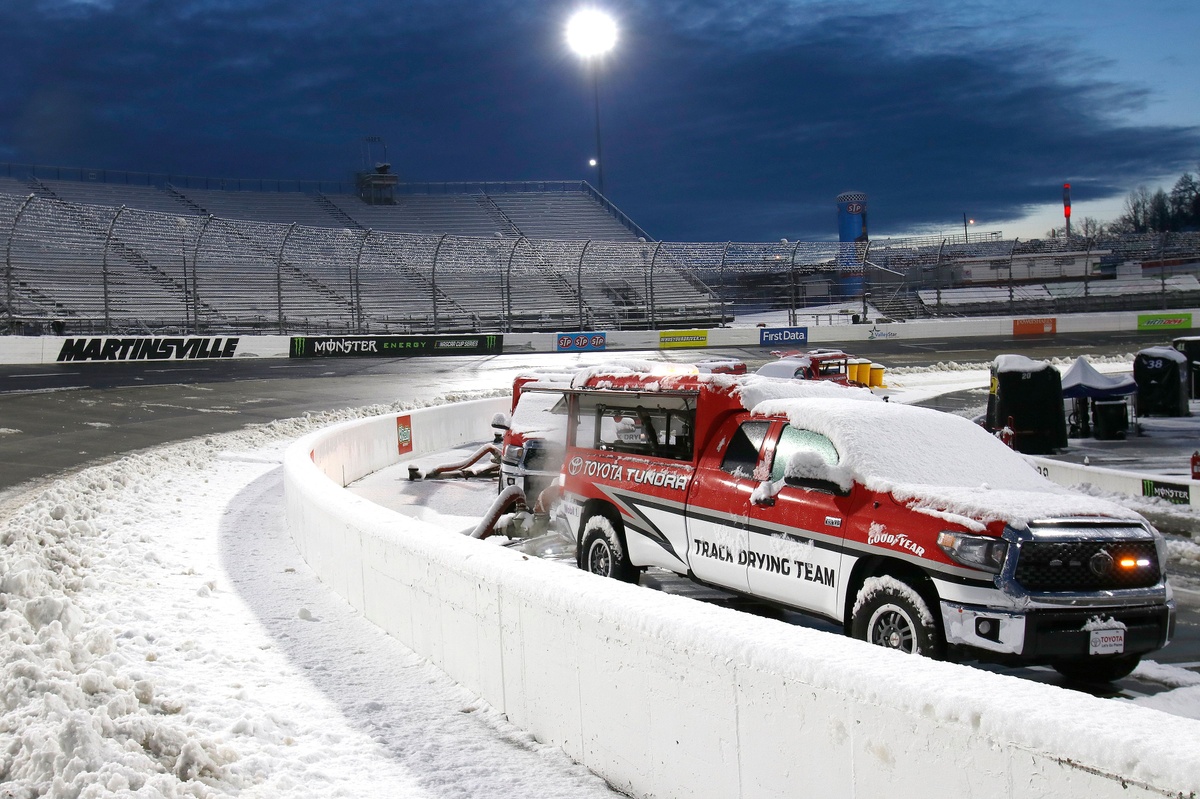
After recent snowfall in Winston-Salem, North Carolina, temperatures are expected to struggle to reach 30°F on Sunday as NASCAR prepares to race at Bowman Gray. With lows around midday and the race set to start at 8 p.m. ET, unless postponed to Monday, chilly winds will make it feel even colder, likely in the single digits.
But how cold is too cold for NASCAR events? On February 25, 1990, NASCAR ran one of its coldest Cup Series races in modern history at Richmond, Virginia. At the green flag, temperatures were just 31°F with a high barely reaching 32°F, essentially at the freezing point of water. CBS broadcaster Ken Squire highlighted the biting cold, noting the strong wind making conditions harsher.
Teams faced challenges such as blocked radiators, helicopter camera malfunctions, and crew members bracing against muscle stiffness from cold waits. Tire grip was a major concern; since tire warmers were banned, Alan Kulwicki’s team resorted to covering tires with tarps to keep them warm. Ricky Rudd started from the pole, while seven-time champion Richard Petty and Dale Earnhardt, who switched to a backup car after a crash in practice, began at the back.
The race started smoothly until Rob Moroso spun on lap four, leading to minor chaos. The focus then shifted to Earnhardt’s impressive climb from last to first. Although Rusty Wallace led late, Mark Martin’s strategic two-tire stop helped him lead the final 15 laps and secure the victory, with Earnhardt and Wallace finishing second and third. Despite the cold, the race was free from severe weather—unlike several other notable cold-weather NASCAR events.
For instance, the 2006 Bristol race, known as the “Snowbowl Derby,” featured a snowball fight, a snowman in the pits, and even a winning snow angel by Kurt Busch. The 2008 Atlanta race faced near-blizzard conditions with strong winds, cancelling qualifying but not the race itself. Other cold snaps have hit Texas in 2018, Martinsville in 2018 and 2022, and 2023’s final event at Auto Club Speedway, where a mix of snow and rain forced schedule changes.
These icy and snowy experiences have tested NASCAR teams and fans alike, showcasing the sport’s resilience and adaptability in various extreme weather conditions.
Fan Take:
This look back at NASCAR’s coldest races highlights the sport’s incredible toughness and the unique challenges teams face in harsh weather. For fans, these races stand out as thrilling moments where strategy, endurance, and passion keep the competition alive despite the cold, underscoring why NASCAR remains so captivating year-round.