
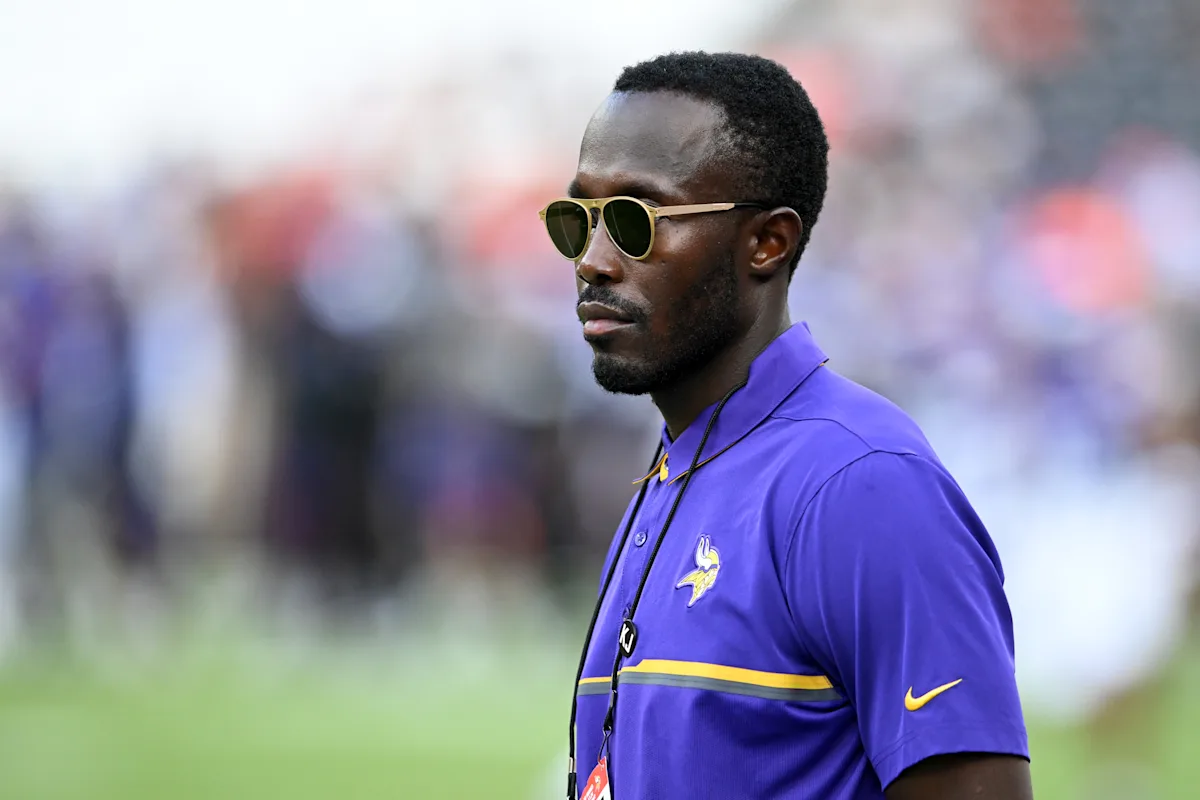
A few months after the Minnesota Vikings brought in Kwesi Adofo-Mensah as general manager and Kevin O’Connell as head coach, I met with each during offseason practice to dig into their thinking and long-term plans. We talked about how they intended to upgrade the roster and what level of talent they believe is necessary to compete for championships.
Adofo-Mensah’s approach to quarterbacks stood out. In May 2022 he told me that the one asset you truly worry about wearing out is the quarterback, because having a top-tier QB makes a team much more likely to win a Super Bowl. He added that it was unlikely his team already possessed that kind of player.
Those remarks are relevant again after the Vikings dismissed Adofo-Mensah following four seasons and a final stretch of organizational delay. Front-office thinking on quarterbacks is often revisited after such moves — teams can change course — but Adofo-Mensah’s decisions reflected a common NFL principle: if you don’t believe a player at a key position can elevate you to a title, you’re reluctant to commit a massive contract.
When Minnesota chose not to re-sign Sam Darnold last March, several factors influenced the choice. The team had 2024 top-10 pick JJ McCarthy on the roster, expected to be fully healthy by the season’s start. They also believed they had a shot to bring back former Giants starter Daniel Jones when he became available in November. And Adofo-Mensah’s philosophy about championship-level talent — his idea that you must be honest about whether you’ve reached that standard — played a central role.
He framed it bluntly during a 2022 OTA roundtable: if you don’t meet the necessary standard, you can’t win, and the biggest mistake is convincing yourself otherwise. While Adofo-Mensah often described talent thresholds with more data-driven language than some executives, the core of his thinking matched longstanding team-building orthodoxy: be realistic about where you are in a competitive cycle, protect draft capital to find elite talent, and avoid overpaying for a quarterback who hasn’t proved he’s a definitive winner.
Darnold’s 2024 season was the best of his career — he completed 66.2% of his passes for 4,319 yards, 35 touchdowns and 12 interceptions — and the Vikings went 14-3 in the regular season. Yet the team lost the final regular-season game and their wild-card contest, and Darnold’s performance in those two games dipped: he completed 53% of 81 attempts, had one touchdown and one interception, and took nine sacks in the playoff loss to the Los Angeles Rams. Given that track record and the presence of McCarthy on the roster, Minnesota opted not to match offers that would have pushed a large guaranteed sum onto its books. Seattle’s deal, according to Spotrac, guaranteed Darnold $37.5 million at signing and $55 million in total guarantees; the Vikings declined to present a three-year, $150 million proposal.
Minnesota also failed to retain Daniel Jones when the Indianapolis Colts handed him a $13 million deal to start. Jones produced solid numbers in Indianapolis — completing 68% of passes for 3,101 yards, 19 touchdowns and eight interceptions and helping the Colts to an 8-5 record before suffering a season-ending Achilles tear.
Adofo-Mensah said recently that he often lost sleep over these choices but defended the process: poor outcomes don’t automatically mean the decision-making was wrong. He described setting a standard for the quarterback position with the coaching staff — a level of play they believed was necessary to unlock an explosive offense and allow the rest of the team (defense, special teams) to perform within a winning scheme. The goal, he said, was to build depth and competitiveness at quarterback so the team could play the style required to win.
Owner Mark Wilf framed the firing as a cumulative judgment rather than a single failed move. “We looked at our decision cumulatively,” he said, explaining that ownership lacked confidence in continuing through another offseason, draft and free agency with the existing structure. Wilf emphasized a desire to build a winning program and create lasting success, and to avoid rash reactions — favoring pragmatic, thoughtful and methodical choices.
There are counterexamples in the league that complicate Adofo-Mensah’s thesis: this season showed that a team can reach a Super Bowl with a quarterback who lacks All-Pro honors, playoff victories, or an entrenched reputation as an elite passer. That model depends on surrounding the QB with a strong running game, smart scheming, and a top defense — and crucially, giving the quarterback time to develop. Darnold’s resurgence with his fifth team in Year Seven — aided by three seasons in systems influenced by the Shanahan-McVay philosophies — is a reminder that patience and fit can produce late-career breakthroughs. Likewise, JJ McCarthy has minimal NFL snaps and only a couple of years studying pro concepts; his career trajectory is still unfolding.
As the Vikings search for a new GM, that tension — between protecting the quarterback position and being patient enough to let a signal-caller grow into the role — will likely shape their approach. Darnold’s revival underscores that players and schemes, given time, can coalesce into high-level results, much like Patrick Mahomes did after waiting behind Alex Smith. Wilf reiterated the club’s intent to avoid knee-jerk moves and to pursue change deliberately as they evaluate the franchise’s next steps.
Fan Take: This matters because how Minnesota handles its next quarterback and front-office hire will influence whether teams keep prioritizing short-term guaranteed deals or double down on patience and draft development across the league. The Vikings’ decision signals that teams are still wrestling with the balance between protecting the quarterback spot financially and trusting long-term scheming and development — a debate that could reshape roster building and the QB market.