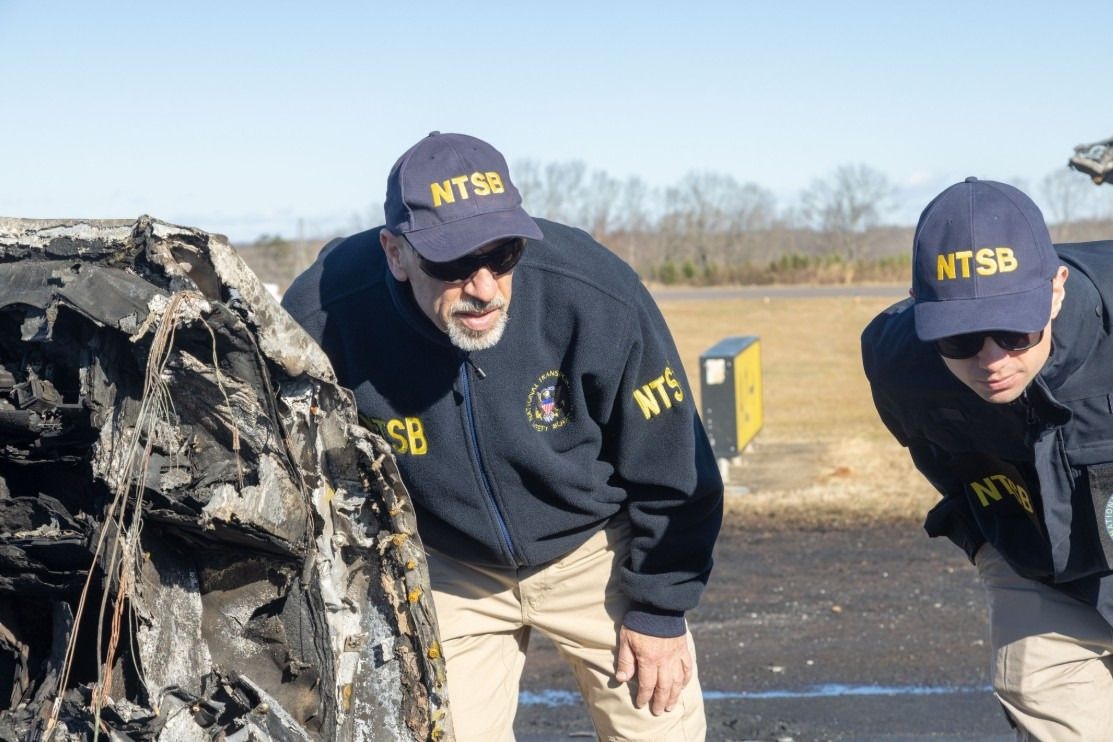
Following a 43-day inquiry into the tragic plane crash at Statesville Regional Airport in North Carolina, which claimed the lives of NASCAR veteran Greg Biffle, his immediate family, two pilots, and another passenger, the National Transportation Safety Board (NTSB) has shared its preliminary findings. The comprehensive final report is expected within 12 to 18 months. This initial report does not assign fault but outlines key facts to guide the next steps of the investigation.
According to the report, Dennis Dutton occupied the pilot’s seat on the left side of the Cessna Citation 550 aircraft, while his adult son, Jack Dutton, sat on the right. Although Jack was a licensed pilot, he was not qualified to function as a first officer on this specific plane model. The airplane can be flown by a single pilot who holds the appropriate license; however, Dennis Dutton did not have this certification either. The NTSB’s report highlights that Dennis held type ratings for several aircraft, including the CE-500, but his CE-500 rating required him to have a second-in-command, which he lacked. Jack had accumulated 175.3 flight hours in single-engine landplanes and held a first-class medical certificate but was not licensed as required to be the second-in-command.
Greg Biffle was a rear-seat passenger and possessed a private pilot certificate along with various aircraft ratings. The report indicates that complications began during engine startup and taxiing. After the left engine initially failed to start, both engines were running by 9:53 a.m., but during taxi, a thrust reverser indicator light came on despite the associated engine not running. Passengers noticed discrepancies in engine power, with the left engine displaying more force, yet the pilot proceeded with takeoff at 10:06 a.m. Attempts to initiate an IFR flight plan with air traffic control failed due to controller workload.
Further discussions in the cockpit revealed concerns such as differing engine turbine temperature readings and altimeter faults. Control shifted briefly to the right-seat passenger at about 4,500 feet altitude, and control was then returned to the left-seat pilot, who requested flaps and landing gear deployment. The landing gear indicator light did not illuminate as expected, and cockpit voice recordings captured acknowledgments of “problems,” but no detailed resolution plans. The cockpit voice recorder and GPS stopped receiving data at the moment of impact, estimated at 10:15:23 a.m.
The crash site investigation detailed the first impact point near the runway’s approach lighting system, with substantial debris spread and intense ground scorching along the debris path toward the final wreckage area. The plane remained largely intact before impact but was extensively damaged by post-crash fire. Tragically, the accident resulted in the deaths of Biffle, his wife Christina, his daughter Emma, his son Ryder, and NASCAR colleague Craig Wadsworth. The report also confirms that no parts separated from the plane before the crash.
The full detailed NTSB report is accessible online for those seeking a comprehensive review of the findings.
Fan Take: This heartbreaking loss resonates deeply within the NASCAR community, highlighting the risks many drivers and their families face beyond the racetrack. The findings underline the critical importance of strict adherence to licensing and safety protocols, which could inspire enhanced safety measures in team travel moving forward, ultimately shaping the sport’s culture around safety vigilance.