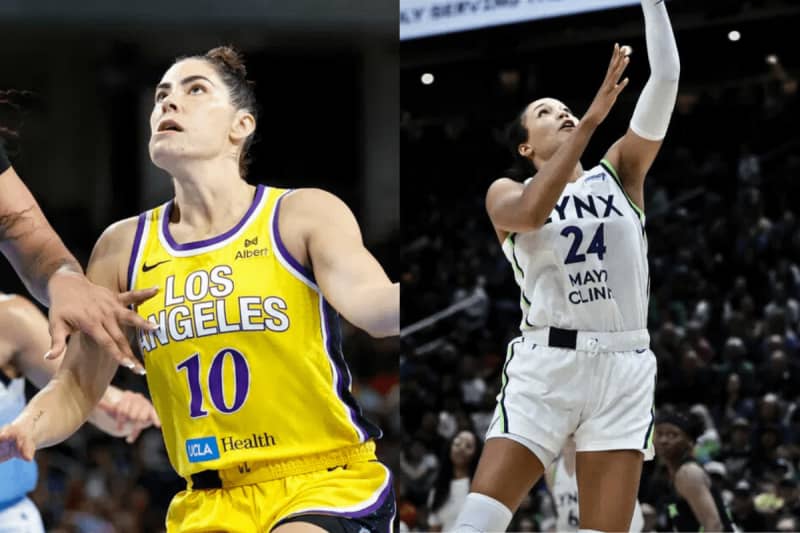
Two prominent WNBA players, Kelsey Plum and Napheesa Collier, faced substantial criticism for missing a key collective bargaining agreement (CBA) meeting in New York, a situation further complicated by their involvement with the new league, Unrivaled. According to ESPN, the meeting was considered “useful” as it focused more on openly exchanging philosophies and viewpoints rather than presenting new proposals.
Contrary to expectations, the WNBA did not bring a counteroffer to Monday’s meeting. Instead, the league informed the players’ union that it would begin formulating a formal response to the union’s latest proposal. “They volunteered at the start that no proposal was prepared,” Nneka Ogwumike told Front Office Sports. “We were hoping otherwise, so that set the tone.” While the players’ association was understandably frustrated, the league’s commitment to draft a formal response offers renewed optimism for progress in the negotiations.
Plum and Collier were expected to participate as vice presidents of the WNBPA but did not manage to attend, sparking significant backlash on social media. A lighthearted video of Plum pushing Collier on an airport trolley went viral, with some fans criticizing the timing and messaging given the high stakes of the CBA discussions. Comments ranged from incredulity to calling their behavior “clownish,” reflecting fans’ frustration over their absence from such an important meeting.
The duo’s absence was reportedly due to travel delays from Miami, where Unrivaled players were staying. Although they eventually caught a flight to New York, adverse weather likely prevented their timely arrival. Fans expressed disappointment, with one commenting, “They’re professional WNBA players yet they keep missing critical CBA meetings. It’s pathetic.”
Despite a smaller in-person group, the union was well represented with roughly 40 players, including executive committee members, attending via Zoom. On the league side, Commissioner Cathy Engelbert was joined by representatives from several teams and believed negotiator Sue Bird.
In early December, the league proposed a maximum annual salary of $1.3 million and an average salary exceeding $530,000, tied to a revenue-sharing model that deducts a percentage from combined team and league income. The players quickly rejected this, demanding a substantially higher salary cap of $10.5 million with a revenue-sharing structure that ensures players receive a portion before deductions.
The WNBA is reportedly preparing a revised proposal since it declined to formally counter the players’ ask, considering it unrealistic. Meanwhile, some fans suspect that Plum and Collier’s priority on Unrivaled over WNBA matters reflects poorly on their commitment. One fan stated, “Conflict of interest. Missed the meeting wearing Unrivaled gear. Let’s leave it to the new generation of players who seem more serious.”
This skepticism dates back to a few months ago when Collier publicly disagreed with Commissioner Engelbert, leading to perceptions that Unrivaled was leveraging the WNBA’s situation to gain momentum. Despite their insistence that Unrivaled is designed as an offseason alternative to playing overseas—and not a competitor—concerns about conflicts of interest remain.
Why that perception shifted is unclear, but what’s evident is that players are advocating for what they believe benefits them: better pay, improved benefits, and higher professional standards. Revenue sharing remains a foundation of the negotiations, but no commissioner is willing to agree to terms that undermine housing, retirement security, facilities, and staffing.
Given ongoing weather disruptions, it’s plausible Plum and Collier were genuinely hindered by circumstances beyond their control. Regardless, there is little doubt that Collier, Plum, and Brianna Stewart are dedicated to pushing the league toward a fair agreement. A lockout would have broad negative effects on the entire women’s basketball ecosystem.
Fan Take: This story highlights the growing pains as the WNBA pushes for fairer compensation and working conditions—issues crucial not just for players but for the sport’s future. For fans, the negotiations represent a pivotal moment that could redefine the league’s professionalism and sustainability for years to come.