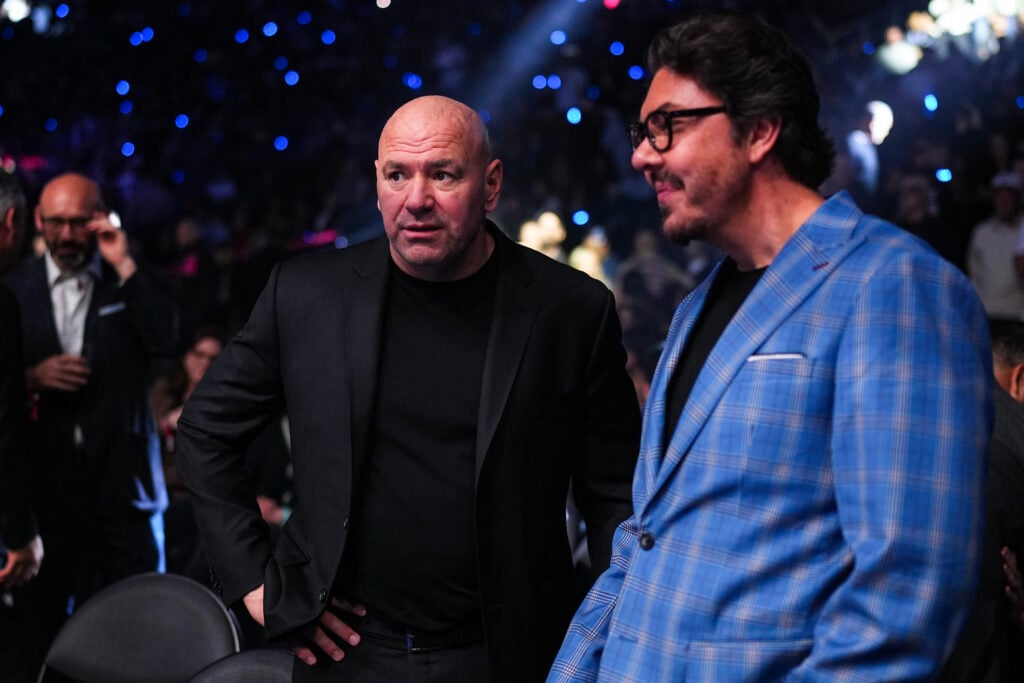
There has been increasing discussion lately about Dana White’s involvement in the UFC. After the featherweight title rematch headlining UFC 325 received criticism, White simply told fans who disliked the outcome not to watch the event—yet, the rematch’s result mirrored the first fight less than a year later.
The main event held in Sydney on Saturday was not the first time UFC matchmaking decisions have been questioned in 2026. Meanwhile, White was absent from the Australian event as he focused on the Zuffa Boxing card, prompting speculation that the UFC president’s role in the promotion might be diminishing compared to previous years.
Recent developments in an ongoing lawsuit have shed light on this. Last December, Judge Richard F. Boulware scheduled a hearing to address whether the UFC destroyed key communications relevant to antitrust litigation. White was compelled to testify alongside UFC legal staff, during which he was probed about matchmaking responsibilities. He revealed that ever since Hunter Campbell joined, White himself no longer handles matchmaking decisions.
This statement confirmed suspicions voiced by insiders like Nate Wilcox and Fight Opinion, who argued that Dana White’s operational control over the UFC has waned—a fact White openly admitted under oath. White remains under contract and is unlikely to leave the UFC soon, but his focus appears divided as he pursues ventures like Power Slap and Zuffa Boxing. Critics point to a decline in creative promotions and questionable matchmaking as signs of the promotion’s shifting priorities.
Hunter Campbell, who became UFC’s Chief Business Officer in 2019 after starting as an attorney, has grown into a pivotal figure in the company’s daily operations. Documentaries like the 2024 series Fight Inc: Inside the UFC highlighted his substantial influence. Many now view Campbell as White’s likely successor, especially given White’s own admission that he stepped away from matchmaking several years ago. The UFC’s ability to give fans the matchups they want has been key to its success, but recent criticism suggests this process may be faltering without White’s direct involvement.
Fan Take: For fight fans, understanding Dana White’s reduced role is crucial, as it signals a potential shift in how the UFC is managed and how fights get made. This could pave the way for new leadership styles that either reinvigorate or further complicate matchmaking and the overall fan experience in MMA.