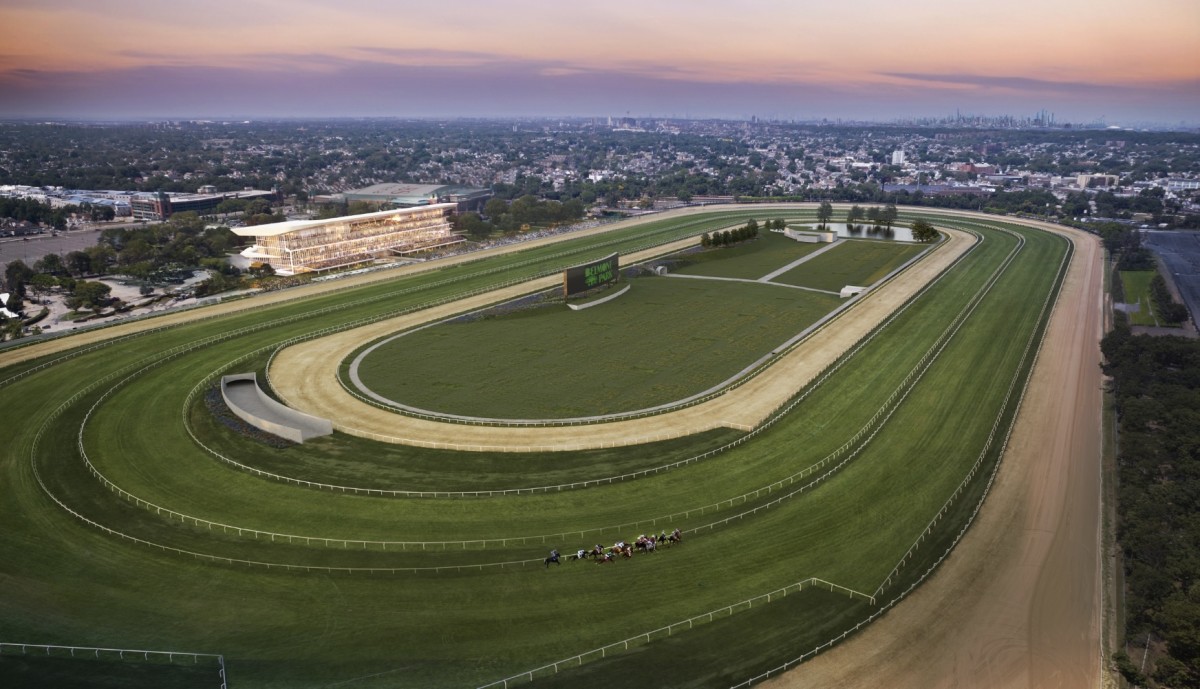
January proved harsh for track operators in Florida and northern Louisiana, as snow and freezing temperatures forced cancellations even as far south as Oaklawn Park in Hot Springs, Arkansas. Contrary to popular belief, the so-called “all-weather” synthetic surface Tapeta, used at tracks like Turfway Park, Woodbine, Gulfstream Park, Presque Isle Downs, and Maryland’s Fairhill Training Center, couldn’t save race days from winter’s grip. However, the new one-mile Tapeta track debuting for training this month at Belmont Park holds promise to revolutionize winter racing in New York starting next year.
Many leading trainers from colder northern states traditionally head south during winter, leaving fewer competitors at northern venues like Aqueduct’s Winter Games, which often features fields with less than seven horses, making races less appealing for simulcast bettors compared to the fuller summer and fall cards at Saratoga or Belmont. Consequently, average daily betting at Aqueduct during winter is less than half that of those bigger meets. The New York Racing Association (NYRA), set to unveil the revamped Belmont Park this September, hopes the Tapeta surface will entice jockeys and trainers to keep their stalls filled during winter—accounting for about a quarter of NYRA’s 196 scheduled race days this year.
Canadian and American Hall of Fame trainer Mark Casse, who leads the field in Tapeta expertise, is excited about the new track. Casse, who shifted from Polytrack to Tapeta at Woodbine in 2016, winters in Florida where he works on a hybrid Tapeta surface in Ocala and races at Gulfstream, while also sending horses to compete on Tapeta at Turfway Park. “We rarely stay upstate year-round, but this year we will. We’re really excited and expect a strong presence,” Casse said in a recent New York Thoroughbred Horsemen’s Association (NYTHA) webinar intended to address skepticism about Tapeta in New York’s racing community. He added, “It’s great for New York—horses will have more chances to run.”
Belmont’s Tapeta should reduce scratches in warm, damp weather when races move from wet grass to the synthetic surface. For trainers like Kevin Attard from Toronto, who races at Woodbine from April through December, the new track could mean an earlier start in a climate more similar to Florida’s. Woodbine’s horses averaged nearly six starts each in 2024. Belmont and Turfway Park are roughly equal distances from Toronto, making travel manageable. Yet, while Kentucky offers state-bred bonuses that benefit locals, New York purses and recent increases in stakes money—from $135,000 to $150,000 in winter—make Belmont an attractive option for out-of-state runners. Attard isn’t shy about his plans: “I’d like to bring 25 to 30 horses to New York next winter if I can.”
NYRA is discussing reciprocal incentives with Woodbine officials to encourage horses to race on Tapeta in both New York and Ontario. Similar collaborative efforts are strengthening Mid-Atlantic racing across Maryland, Virginia, and Delaware, aiming to boost regional competition and support breeding outside Kentucky. New York breeders are already producing top turf runners and could benefit from an extended race calendar. For example, Ontario stallion Reload led North American progeny earnings in 2025, aside from the late Super Speedy, and New York’s Bucchero—known for his synthetic surface winners—may soon become even more influential.
The journey of Tapeta’s development is notable. While “all-weather” suits UK synthetic tracks with milder winters, the term is misleading in harsher American climates. Tapeta traces back 30 years to British jump trainer Michael Dickinson, who created the surface primarily for practice at his Maryland farm and Fairhill Training Center. The name Tapeta, pronounced “tapee-ta,” means “carpet” in Latin. Its main components include silica sand for drainage and cushioning, polymer fibers for flexibility and stability, and wax as a binder and moisture barrier. Earlier blends included recycled rubber granules, but these were dropped after darkening the surface.
Joan Wakefield, Dickinson’s wife and business partner, notes that the formula has evolved through 12 iterations, with the latest installed at Belmont after a 2022 trial on the pony track. In 2023, NYRA CEO David O’Rourke led an industry committee at the request of the Horse Racing Integrity and Safety Administration (HISA) to evaluate surface-related injury rates following a spate of racehorse fatalities. Findings indicated that Tapeta is safer, especially for horses most vulnerable on cold-weather dirt tracks.
Casse has over 10,000 synthetic track starts since 1979 and recalls just two fatal synthetic track accidents—in 2015 and 2023. He points out that soft tissue injuries are much more common and severe on dirt than on synthetic surfaces, and that horses rehabbing tendon injuries on Tapeta often recover better than on dirt. “Synthetic is easier on the horses, less stressful,” he emphasized, noting faster recovery times after synthetic races. Graham Motion, another Fairhill-based trainer who joined the NYTHA webinar, shared that unlike on dirt, synthetic racing doesn’t seem to cause respiratory issues from track kickback.
Wakefield explained that Tapeta has a softer base and firmer top layer compared to dirt, with the wax softening in summer heat to loosen the surface. Different wax grades are used to suit climates—Gulfstream’s is more heat-resistant, while Woodbine’s is designed to harden in cold weather. However, the “all-weather” label has limits: Woodbine once canceled races due to snow making the surface slippery, and turfway Park postponed their Synthetic Championship race because of winter storms and travel problems.
Maintenance remains crucial—Tapeta can absorb up to two inches of snowfall by mixing it in, but heavier snow must be removed mechanically. Haloing keeps the track surface brittle in freezing conditions, reducing kickback. Another advantage of Tapeta is its performance in wet conditions: it handles moisture well and even tightens and speeds up after rain, according to Casse. Proper aeration is essential to maintain drainage, as sand breakdown can lead to clogging. Fairhill replaced its Tapeta after 18 years, and the upkeep savings compared to keeping a dirt track open in winter are substantial.
Synthetic tracks have seen ups and downs in the U.S.—California mandated them two decades ago but saw their phase-out by 2015, with several major tracks closing. Belmont’s new facility will offer options for dirt, turf, or synthetic racing, but Saratoga remains without synthetic, leading to scratches and small fields on wet turf race days. Motion believes the new Tapeta could benefit Saratoga as well, though it may face some resistance.
In summary, the Tapeta surface at Belmont Park has the potential to extend the racing calendar, improve horse safety, and stimulate cross-border competition, marking a significant development in North American horse racing.
Fan Take: This development is exciting because it could transform winter racing by keeping horses healthier and fields fuller during colder months, enhancing the sport’s appeal year-round. For fans, it means more competitive races and potentially fewer weather-related cancellations, strengthening the overall racing experience.