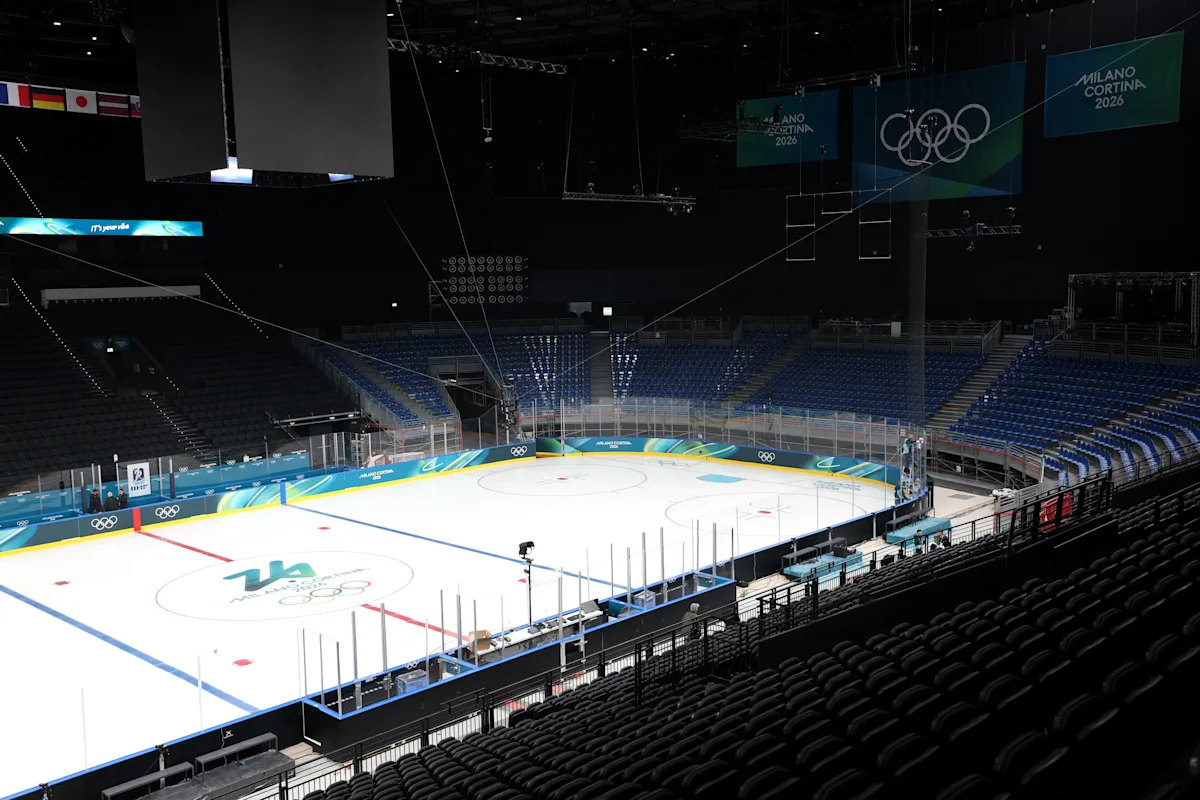
In Milan, on June 24, 2019, the International Olympic Committee decided to give Italy the honor of hosting the 2026 Winter Olympics. Nearly 2,500 days later, Italians are still struggling to finish the Santa Giulia Ice Hockey Arena, which will host one of the most anticipated ice hockey games in over ten years.
As of Wednesday, just a day before it was set to open to the public for the women’s match between France and Italy, the arena was still under construction. Workers, including those in orange safety vests, were busy completing last-minute tasks on the concourse, installing merchandise stands, and cleaning up dust and debris left from ongoing work. Meanwhile, arena staff in dark blue jackets with “Milano Cortina 2026” branding worked to clear dust from crowd management features, while others scrubbed walls, restocked concessions, and set up signage amid the sounds of forklifts and fresh paint.
Even the areas that had been prepared for public entry showed signs of being finished only recently: sinks still bore production labels, messages scrawled on sticky notes and painter’s tape decorated the doors, and wires protruded from the walls. Nonetheless, the overall seating area, especially the ice rink itself, appeared in good condition. This gave Olympic officials confidence that the venue would be ready in time. Christophe Dubi, the IOC’s Secretary-General, reassured everyone that while some parts of the arena weren’t fully completed, they wouldn’t impact the Olympic experience, emphasizing that everything made available to the public would be of the highest standard.
The athletes playing there, including NHL players, appeared unconcerned about the unfinished aspects. Most expressed excitement about participating in the Olympics, especially after the NHL had previously declined to send players to Beijing and Pyeongchang. Brady Tkachuk, for example, highlighted that focusing on the competition itself mattered most, regardless of minor construction issues.
Less than two months prior, the project had faced significant hurdles. NHL Deputy Commissioner Bill Daley had publicly threatened to pull NHL players from the Olympics over construction delays and ice quality concerns, insisting player safety was paramount. The arena project had been delayed by nearly a year due to a lawsuit from a nearby religious order, which claimed the construction encroached on their property and breached noise regulations. Construction’s slow progress was further compounded by the fact that the ice surface itself is slightly shorter than the standard NHL size, raising questions about compliance with international standards.
Despite ongoing work, a recent test match revealed that the quality of the ice exceeded expectations, even though the venue’s exterior remained incomplete, with large gaps allowing drafts and affecting temperature control. Many players noted that, once the ice was being skated on regularly, its quality improved noticeably. In the end, even with construction dust and unfinished areas, the arena demonstrated resilience and progress, underscoring the commitment of the organizers to deliver a viable Olympic venue on time.
Fan Take: This story highlights the resilience and determination behind the scenes at the Olympics, reminding fans that ideal conditions aren’t always possible but the spirit of competition remains intact. For hockey fans, it’s a reassurance that the game will go on, and the focus will be on the passion and skill of the players rather than construction setbacks.