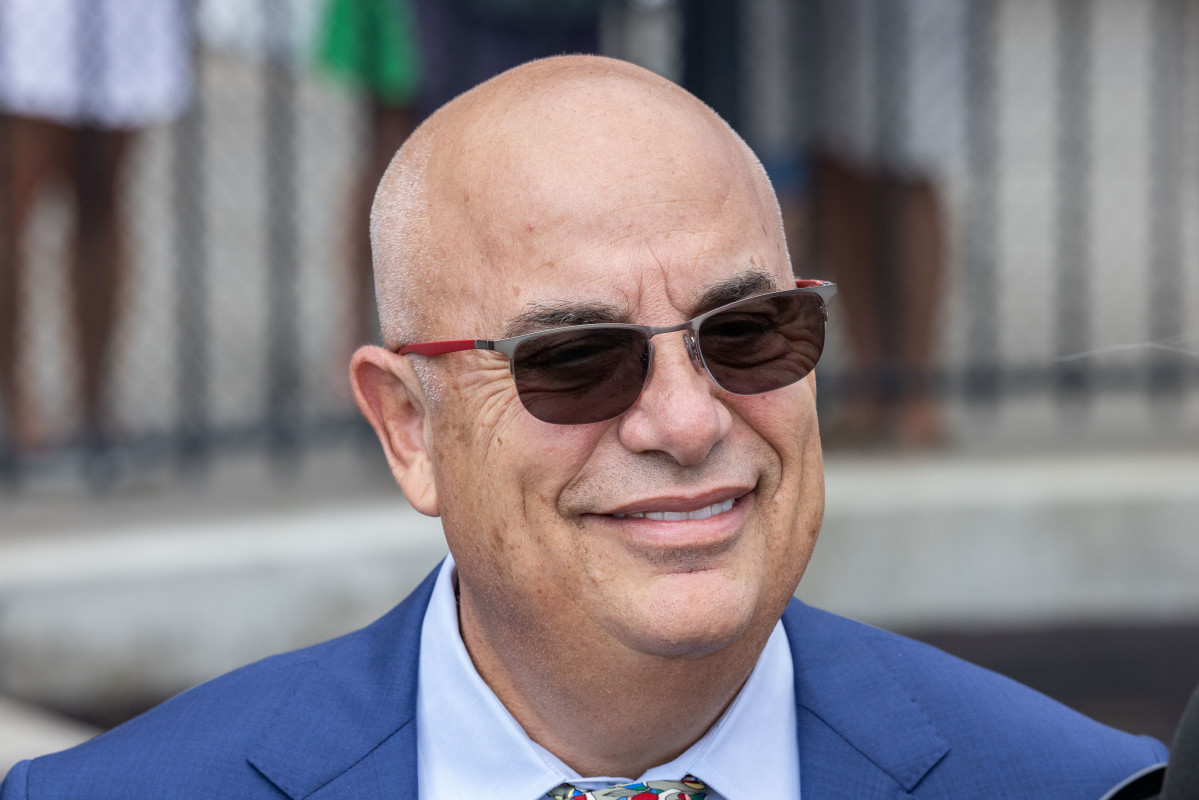
Since obtaining his trainer’s license in 1979, Mark Casse has amassed an impressive 4,143 wins, and his horses have earned over $274 million in purses. Honored 16 times with the Sovereign Award for outstanding training, Casse is enshrined in both the Canadian Horse Racing Hall of Fame—where he holds the record for most wins at Woodbine—and the National Horse Racing Hall of Fame in Saratoga Springs, New York.
Earlier this week, Casse was appointed chairman of the Ocala Breeders Sales Company (OBS), succeeding his father, Norm Casse, who led the organization since its founding in 1974 and was instrumental in building the prominence of two-year-old horse sales.
Following in their father’s footsteps, Mark’s son Norman has become a trainer, while younger son Colby is gaining hands-on experience at Casse Racing’s facility in Ocala, Florida.
In a recent discussion with Ray Pawlik, publisher of the Pawlik Report, Casse reflected on his career and operations. Despite a financially strong year with $23 million in earnings and a record 1,486 starters in 2025—second only to Steve Asmussen—Casse explains that success comes from a team effort. He credits his wife Tina for managing the finances, enabling him to focus on training. Many employees have been with him for decades, and the operation runs like a well-oiled machine, which clients who visit immediately notice.
He adds that his passion for the work drives his commitment, even when taking short vacations, suggesting that the love for the craft is fundamental to staying on top.
Casse’s Ocala farm and training center play a central role in his operation year-round. Hosting about 110 horses on the track, the facility breaks all the two-year-olds they plan to train themselves, rather than outsourcing that early stage to others. Utilizing technology like the Sleip app for gait analysis helps them evaluate horses and decide if rehabilitation at their center is needed, where they have top veterinary support and facilities including swimming pools, cold spas, and vibration tables.
Their training track is dirt, though nearby OBS offers Tapeta surfaces for turf horses to train on, and other facilities like Palm Meadows provide top turf courses, allowing flexibility to move horses according to their needs. Casse emphasizes their strategy revolves around adapting to conditions and races by shifting horses to different circuits, including Churchill Downs, Belmont, Woodbine, and Colonial Downs.
Regarding regulations, Casse notes that Canadian medication rules closely align with U.S. HISA standards, making cross-border racing manageable. He stresses that serious injuries are handled with thorough records and accountability in both countries.
Casse also discussed his strategic decision to shift focus from the Louisiana Fairgrounds to Oaklawn, citing his preference for racing where stringent rules and fair play are enforced, a stance he felt was lacking in Louisiana. Oaklawn’s success, including a 45% win rate and competition with Steve Asmussen, shows the benefits of that approach.
Talking about his career, Casse admits he has yet to win the Kentucky Derby despite multiple Breeders’ Cup victories, Triple Crown race wins, and Canadian Classics. He remains hopeful and dedicated to achieving that lifelong dream.
Looking ahead to 2026, Casse highlights promising horses like Silent Tactic and Strategic Risk as his top Derby prospects, while acknowledging the challenges in their campaigns. He maintains cautious optimism and values horses with strong potential for sustained careers.
Reflecting on his father’s influence, Casse shares touching memories of their time together at the track, emphasizing the personal connection and passion for racing that runs in his family. He recalls his father’s focus on meticulous details and competitiveness, traits that continue to inspire him.
As the newly appointed OBS chairman, Casse praises the tremendous growth of the 2-year-old sales market and credits the expert participants involved. He notes the increasing success of horses purchased through OBS sales at major race events as a key driver of that growth. The enhancements in Ocala’s equestrian facilities, led by the Roberts family, have also positively impacted the industry.
On Florida racing’s future, Casse expresses his belief that the sport should shift from South Florida to locations like Tampa or Ocala, better suited for horse racing. This vision aligns with his hope of continuing the family legacy and providing opportunities for his sons in the business.
This article was originally published on February 11, 2026, by Paulick Report in their Features section.
Fan Take: Mark Casse’s deep-rooted family legacy and innovative approach underscore his pivotal role in shaping North American horse racing’s future. His insight into operational excellence, humane training practices, and strategic market positioning offers hope for sustaining and growing the sport in a competitive, evolving landscape.