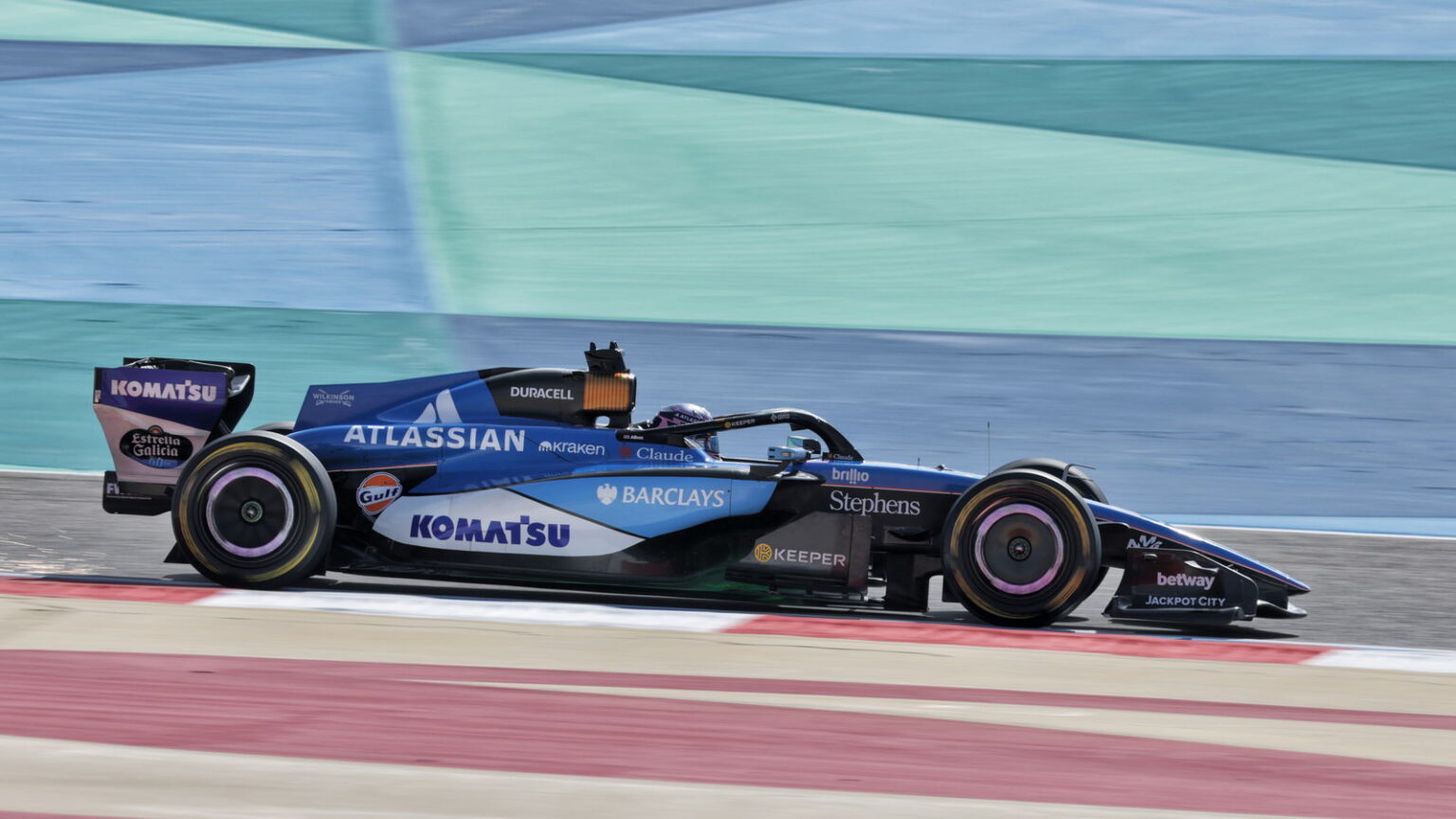
Alex Albon has emphasized that grasping the energy management of the 2026 F1 power unit is crucial for Williams to narrow the gap during the Bahrain test sessions.
Williams missed the FW38’s initial track running at the Barcelona shakedown late last month because of production delays, whereas all other F1 teams managed to participate. The car then took part in a filming day at Silverstone last week before its official unveiling on the first day of Bahrain testing.
During the opening two days, Albon and Carlos Sainz completed over 130 laps as the team tried to recover lost ground. “We’re still catching up, but for the most part, we’ve completed the necessary mileage,” Albon shared with the official F1 website on Thursday.
“We’re gaining a lot of insight. There’s no magic formula here—we missed valuable data that would have come from finishing the Barcelona test,” he added. “That said, the current plan is productive. We just need to focus clearly and follow through.”
Missing track time in Barcelona hurt particularly this preseason, given the significant regulatory changes for 2026. Team principal James Vowles expressed confidence that virtual testing and simulator work helped mitigate some of the impact.
However, Albon noted that the other teams likely already have a firm grasp of how the new power units operate, a key area where he and Sainz are still building their understanding. “Carlos and I are still learning about energy deployment,” he said. “Most drivers probably have a good handle on it, but we’re still figuring out how to manage push laps, battery harvesting, and efficiency in driving.”
Despite the challenges, Albon remains positive: “Honestly, we’re enjoying it and progressing toward our goals.”
The Bahrain testing wrapped up on Friday, with a second three-day session scheduled for February 18-20 at the same track.
Fan Take: This insight into Williams’ struggle to master the new 2026 power unit highlights the real challenges teams face in adapting to major technical shifts. For racing fans, it signals an intriguing battle ahead as teams race not just on the track, but in figuring out complex energy strategies—potentially reshaping how races are won in the near future.