

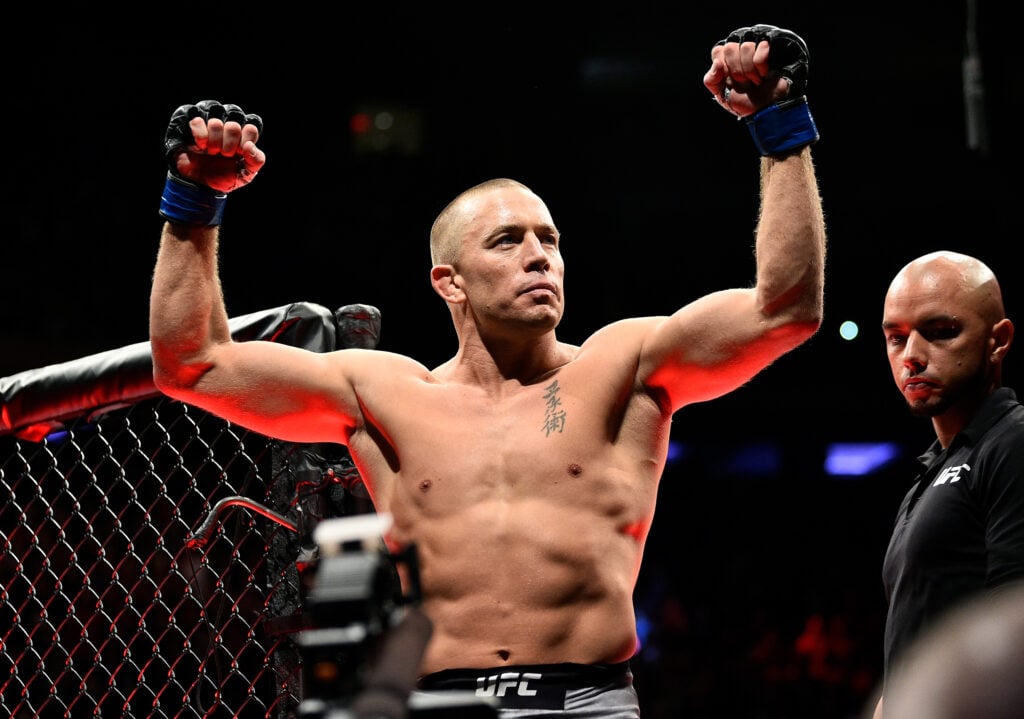
Few athletes in MMA have retired with the same grace as Georges St-Pierre. The iconic former UFC middleweight and welterweight champion is widely regarded as one of the sport’s all-time legends. Over his distinguished career, the Canadian set numerous records and delivered unforgettable performances inside the Octagon.
St-Pierre secured a two-division championship in 2017 by defeating Michael Bisping at UFC 217, marking his final fight before retirement. While many fans hoped for his return, believing he left the sport prematurely, Joe Rogan believes fighters should aim for a retirement similar to that of the former double titleholder.
On a recent episode of the Joe Rogan Experience podcast, the longtime UFC color commentator praised St-Pierre’s career and emphasized the importance of retiring before serious injury sets in. Rogan pointed out the risks of CTE and brain trauma suffered by fighters who extend their careers too long. He highlighted St-Pierre as a prime example of a fighter who exited MMA healthy and is thriving post-retirement.
Rogan recounted observing troubling neurological symptoms in other fighters, such as slurred speech and memory loss, contrasting that with St-Pierre, whom he described as mentally sharp and actively engaged in life outside the sport. “He is the best-case scenario for a great MMA champion who has a successful and happy life outside of MMA,” Rogan said. He also noted they have spent time together and that St-Pierre is in excellent condition physically.
In a recent Bloody Elbow fan vote on the greatest MMA fighter ever, St-Pierre’s name inevitably came up as well. More than 1,000 readers participated in the debate, with St-Pierre finishing a close second, garnering just under 25% of the votes. The only fighter to outvote him was Jon Jones, who claimed the top spot with 34.62%. Other legends like Khabib Nurmagomedov, Demetrius Johnson, Fedor Emelianenko, Anderson Silva, Amanda Nunes, Conor McGregor, and Daniel Cormier followed behind.
Fan Take: Georges St-Pierre’s story underscores the importance of health and timing when it comes to retirement in MMA, serving as a blueprint for new fighters aiming for longevity both inside and outside the cage. As the debate over the greatest MMA fighter of all time continues, acknowledging the health risks and quality of life post-retirement adds another layer to how we evaluate these legends and their legacies.