

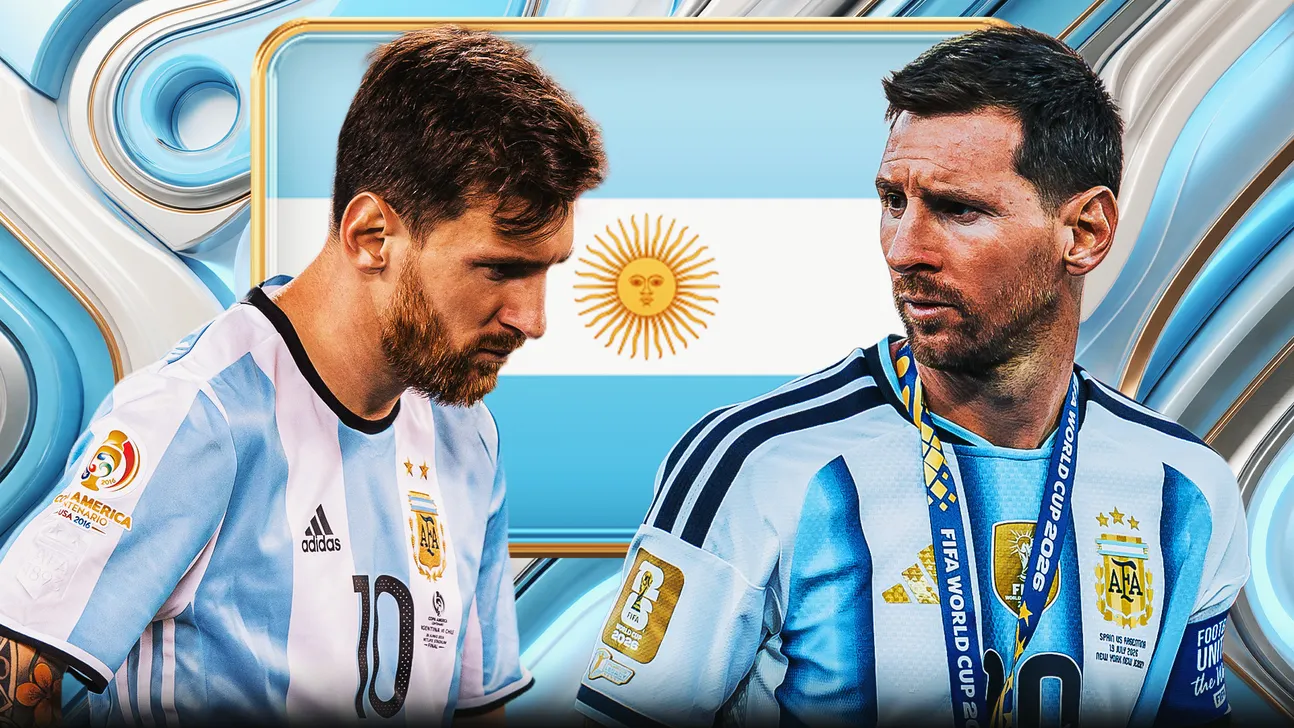
As tears flowed down Lionel Messi’s face following last month’s FIFA World Cup final, where Spain triumphed over his Argentina in extra time, the legendary player likely realized he would never wear the iconic sky-blue-and-white Albiceleste jersey again.
On Monday, Messi confirmed his retirement from the national team, a chapter that included three World Cups and five Copa América finals, culminating in victories at the last two Copa tournaments and the 2022 World Cup. In an Instagram announcement, the 39-year-old expressed his decision to step away from international competition after 207 matches and 125 goals. This decision was solidified by the passing of his father, Jorge, earlier this month in Rosario, the family’s hometown, further anchoring his resolve.
This time, there is no turning back.
It’s fitting that Messi’s final performance on such a grand international stage occurred at an 80,000-seat stadium just outside New York City—where he had initially walked away from representing his country nearly a decade ago. In the aftermath of Argentina’s loss to Chile on penalties during the 2016 Copa América Centenario, Messi stunned the world by announcing he wouldn’t play for Argentina anymore. At the time, he was 29 and in the prime of his career, having already collected numerous accolades, including four UEFA Champions League titles and five Ballon d’Or awards, even amid a lack of international trophies.
Media representatives present that day quickly shifted their focus from covering a significant match to reporting the biggest story in the sports world. Ultimately, however, reasoning prevailed, and Messi never actually missed a game.
In his recent post, Messi expressed gratitude to Argentina’s fans, stating, “I always fought and left everything on the field for this jersey, to bring you joy and make you feel proud to be Argentine through football. Thank you for all the affection over these past 20 years. I will miss hearing you from the pitch so much.”
In reality, it’s the soccer fans who owe him thanks. By continuing to play, Messi provided enormous joy not just to his fellow Argentinians but to soccer enthusiasts across the globe. After crashing out in the 2018 World Cup against eventual champions France, Messi led Argentina on an unforgettable journey, securing a victory over fierce rivals Brazil in the Maracana for his first senior title in 2021.
His crowning achievement finally came when he netted eight goals, including two in the crucial World Cup final against Les Bleus, helping Argentina to win their first World Cup since Diego Maradona’s team in 1986.
That tournament was widely viewed as Messi’s final opportunity to secure the one title missing from his collection, and he had indicated prior that the 2022 World Cup would be his last. However, even after the victory, he extended his commitment, signaling he would continue as long as coach Lionel Scaloni wanted him.
By 2024, Argentina had secured their third title in quick succession, mirroring the legendary Spanish team of 2008-2012 as the only nations to win consecutive continental championships alongside a World Cup title.
As speculation swirled about whether Messi could last until 2026, the questions about his effectiveness loomed large; age and injuries are inevitable in sports. Yet once the World Cup commenced, Messi’s capabilities were undeniable.
He dazzled by scoring a hat trick in Argentina’s 3-0 victory over Algeria during the group stage and finished with eight goals, becoming the tournament’s all-time leading scorer. His incredible assists in a comeback against England further showcased his talent, and he almost equalized in extra time against Spain, with a near-goal thwarted by a save.
In many ways, his summer performance—despite the loss—was even more remarkable than four years earlier, given the strength of the supporting players at his disposal.
Messi has gifted his fans not one, but two comebacks from retirement. Until Monday, some might have hoped he would continue to represent Argentina for another four years, but hindsight showed this might have been unrealistic.
The retirement of such a legendary figure as Messi marks the end of an era in football. For those of us who witnessed his remarkable journey, it’s a bittersweet farewell.
“I’ve given everything I had; I have nothing left to give,” he wrote. “I leave with the peace of mind and pride of having given you—alongside my teammates—moments we once only dreamed of. It was an incredible experience to live this with you all.”
It has truly been a privilege, Lionel. The pleasure has been ours.
Fan Take: This retirement signifies the end of an incredible chapter in soccer history, prompting reflection on Messi’s immense impact on the sport. For fans, it’s a reminder of the joy and inspiration he brought, and it raises questions about the future of Argentine soccer and the legacy he leaves behind.
Source: www.foxsports.com