

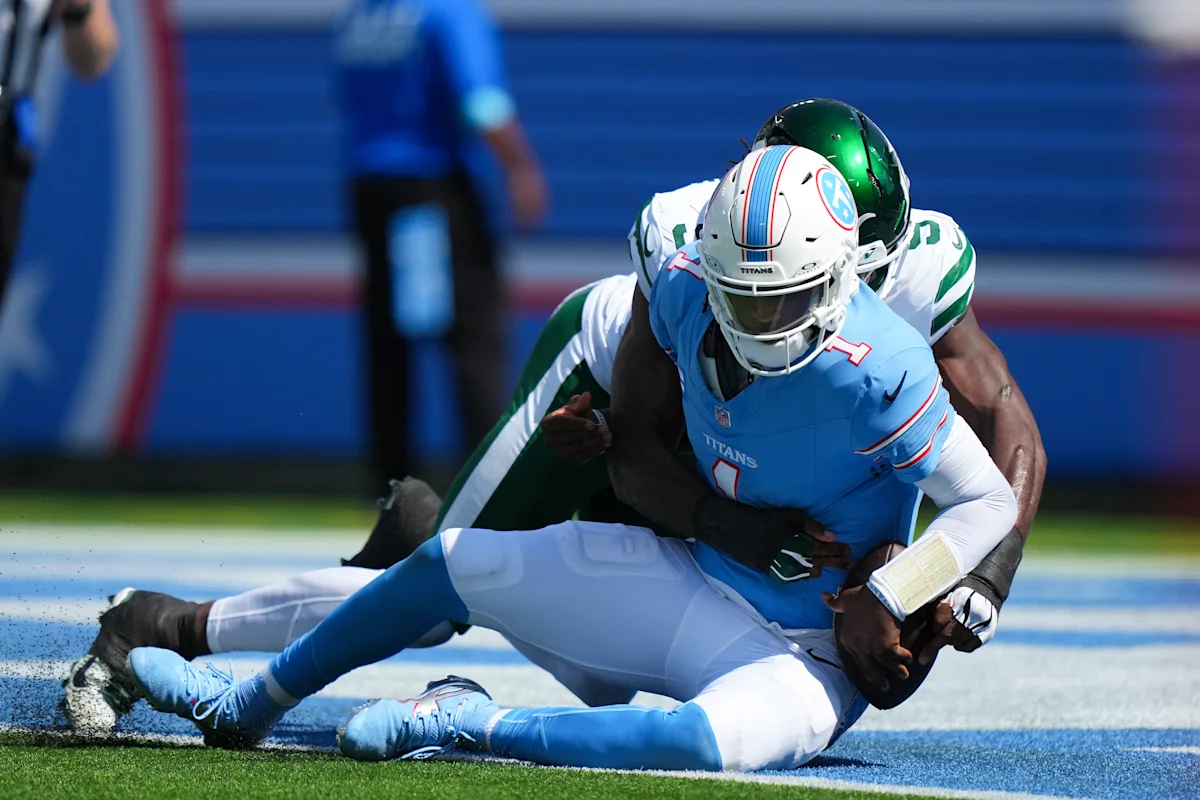
Cam Ward’s rookie year was rough. By most metrics he fared worse than J.J. McCarthy did last season, though few made a fuss at the time.
Part of that was circumstance. The Titans didn’t have a single primetime or standalone game, which kept Ward’s mistakes out of a bigger spotlight. Analysts who dug into his tape often highlighted standout plays and blamed the surrounding situation for his struggles — which weren’t entirely unfair. With a new coaching staff and upgrades around him, many expected improvement this year.
It’s early to make definitive judgments, but an opener at home against the New York Jets — with a healthy supporting cast and fresh legs — was one of the better chances to show progress. Instead, Ward looked much the same. Over the game’s first nine possessions (about 55 minutes), Tennessee managed only a field goal, a fumble and seven punts, finishing with seven first downs, 130 yards and trailing 23-3. Ward’s stat line of 140 passing yards was inflated by garbage-time work; 57 of those yards and his lone touchdown came on a late drive after the Jets had practically checked out. A trick-play moment in which Ward flipped the ball to himself ended in a sack and typified how forced some of the creativity felt.
Ward admitted his disappointment and insisted the offense is better than it showed, saying the offseason work will pay off soon. The caveat, though: the Jets, while improved, gave up the highest passer rating last year and ranked 32nd in defensive DVOA, so this was a very winnable matchup that the Titans still couldn’t capitalize on. Next up is a home date with the Eagles’ stout defense, which could expose more problems.
Fans booed on Sunday, and when first-year head coach Robert Saleh was asked about supporters already showing apathy after one game, the scene felt depressingly familiar: new coaches, many new teammates, but the same quarterback and the same disappointing results. After 18 starts Ward still shouldn’t be written off, but tangible signs of growth are overdue. Preseason and practice reports were mixed, and what looked shaky in August showed up again on Sunday. Draft pedigree alone is a thin reason for confidence this early in year two.
Panic meter for Ward: Too soon to cut bait, but alarm bells are warranted.
Meanwhile, Anthony Maye’s recent criticism has been louder than his play justifies. His three interceptions in the Patriots opener were ugly, but social-media denunciations have been extreme. Maye’s five lackluster outings going back to the postseason came against top defenses (Chargers, Texans, Broncos, and two games versus the Seahawks)—the Texans, Broncos and Seahawks were top-five units and the Chargers top-10 in DVOA last year—and one of those Denver contests was played in a blizzard. He’s also dealt with a shaky offensive line and injuries to key weapons, like A.J. Brown and TreVeyon Henderson. Still, Maye’s 2025 season was outstanding (he nearly won MVP), he’s only 24, and he’s competing at the NFL level. Expect him to stabilize; he simply needs to play better than he has of late.
Panic meter for Maye: Much less urgent than social media makes it seem.
The Colts’ opener was alarming. After a terrific start to last season that stalled when Daniel Jones tore his Achilles, Indy went into Week 1 and got thumped 41-23 by Baltimore. Historically, teams that lose by 14+ in Week 1 make the playoffs only about 18.8% of the time, and teams that lose at home in Week 1 have just a 21.8% playoff rate versus 29.5% for road losers, per RotoWire. The Colts’ defense surrendered over 500 yards, and Jones’s adjusted EPA per play was among the worst of the Week 1 quarterbacks. Coming off a major injury, Jones looked far from the player who carried the offense last season, and this is a pivotal year for coach Shane Steichen and GM Chris Ballard.
Panic meter for the Colts: Very concerning — perhaps Baltimore is elite, but Indy did not look prepared.
The Chargers’ 26-14 loss to the Arizona Cardinals was jarring mostly because Los Angeles didn’t look competitive. Arizona outgained the Chargers 393 to 268, picked up more first downs and had a better yards-per-play mark. Week 1 weirdness happens — several recent champions lost their openers — so it’s possible this was an anomaly. Still, the Chargers looked off on both offense and defense.
Panic meter for the Chargers: A bad result, but likely a one-off until proven otherwise.
Fan take: Early-season performances like these matter because they shape perceptions of young quarterbacks, influence front-office decisions, and can quickly alter coaching job security. If these trends hold, they could accelerate roster changes and shift how teams approach the draft and free agency.
Source: sports.yahoo.com