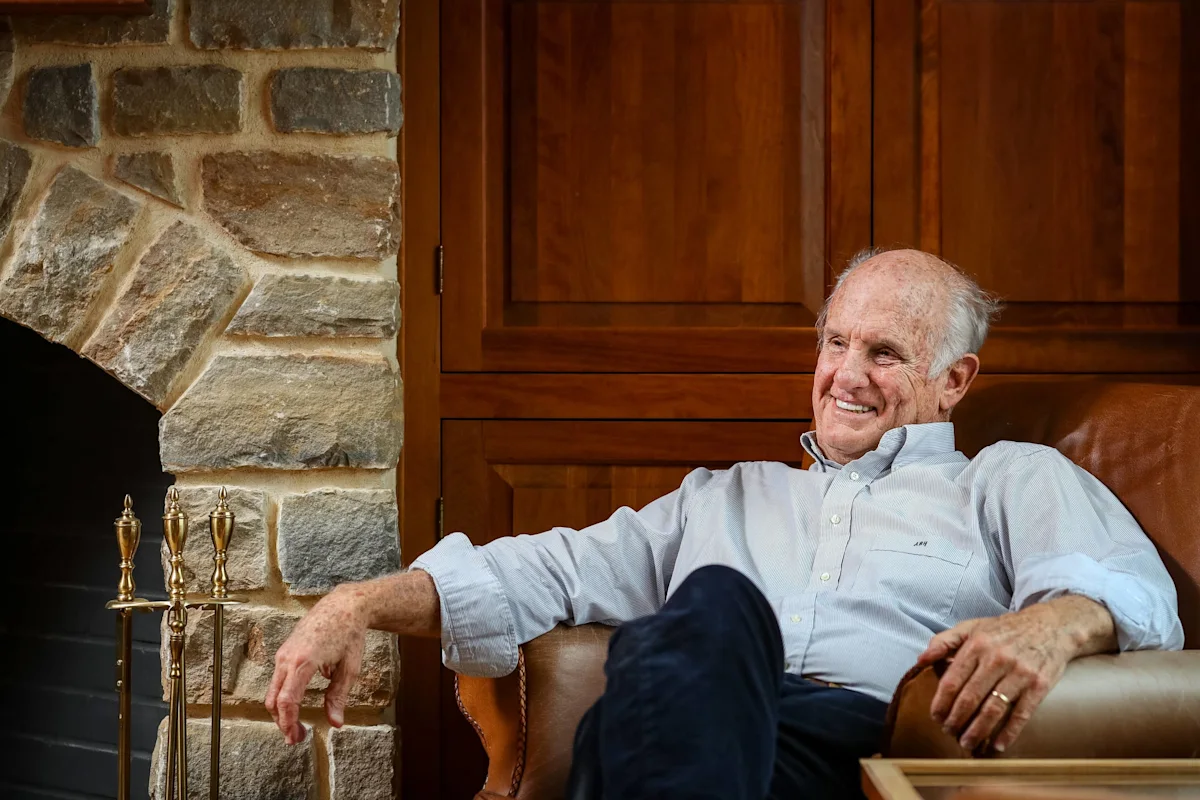
Arthur B. Hancock III, the esteemed owner of Stone Farm in Paris, Kentucky, and a towering figure in the world of Thoroughbred racing, passed away peacefully at his home surrounded by family on Friday, September 18. He was 83 years old and had been bravely fighting pancreatic cancer for the past two years.
Born on February 22, 1943, Hancock was much more than just an exceptional horseman. He was a multifaceted individual—a talented musician, writer, philosopher, and poet—known for his sharp wit and folksy charm. A pioneer in advocating for Thoroughbred aftercare, Hancock dedicated years to combating what he saw as the damaging influence of “drugs and thugs” in racing.
Hancock’s legacy includes owning two Kentucky Derby winners: Gato Del Sol in 1981 and Sunday Silence in 1989. Throughout his career, he helped nurture over 200 stakes winners at Stone Farm, situated next to Claiborne Farm, established by his grandfather in the early 1900s. When his father, Arthur B. “Bull” Hancock Jr., passed away in 1972, expectations were high that 29-year-old Arthur would assume control of Claiborne. Instead, the trustees appointed his younger brother Seth, all the while sidelining Arthur—a decision that deeply affected him.
Under Seth’s guidance, Claiborne remained a powerhouse in breeding and stallion operations, famously welcoming Triple Crown winner Secretariat. Driven by this family rivalry, Arthur vowed to expand Stone Farm beyond Claiborne’s reach. Starting from an initial 100 acres purchased from Claiborne, he gradually acquired neighboring land, ultimately growing Stone Farm to 3,800 acres—400 acres larger than Claiborne. The most significant acquisition came after Gato Del Sol’s Derby win when he added 1,200 acres formerly owned by William du Pont.
Hancock humorously described this purchase as “a frog trying to eat a watermelon,” noting the huge debt incurred. Despite this, a loyal farmhand, Sam Ransom, reminded him that while Stone Farm might be bigger in size, Claiborne remained “big otherwise,” highlighting the different kinds of prestige.
Financial difficulties plagued Hancock throughout the late 1980s, especially after the bloodstock market collapse in 1986, with yearly interest payments around $1.5 million and asset values plummeting to 30 cents on the dollar. However, 1986 also marked the birth of Sunday Silence at Stone Farm—a colt who would prove pivotal in Hancock’s fortunes.
Bred by Oak Cliff Thoroughbreds, Sunday Silence struggled to attract interest early on, with bloodstock advisor Ted Keefer dismissing him outright. At the 1987 Keeneland July Yearling Sale, bids stalled, and Hancock ended up retaining the horse with a buyback price of $17,000. Later, a California sale also failed to generate demand. Hancock convinced Hall of Fame trainer Charlie Whittingham to take a half share in exchange for training fees, and under Whittingham’s care Sunday Silence blossomed.
Sunday Silence triumphed with wins in major races including the San Felipe Stakes, Santa Anita Derby, Kentucky Derby, and Preakness Stakes before being edged out in the Belmont by Easy Goer. Their fierce rivalry climaxed with Sunday Silence narrowly winning the Breeders’ Cup Classic, earning him Horse of the Year and 3-year-old male Eclipse honors.
An injury cut short Sunday Silence’s 4-year-old season, and though Hancock initially struggled to find buyers for a stud share, he eventually sold the horse to Japanese breeder Zenya Yoshida for $11 million. This partnership transformed Japanese racing, as Sunday Silence became a foundation stallion, deeply influencing the breed and establishing Japan as a global racing powerhouse.
Hancock’s success didn’t end there. He also bred the 2000 Kentucky Derby winner, Fusaichi Pegasus, sold for a record $4 million and later syndicated for $70 million. Stone Farm continued to produce numerous stakes winners under his guidance.
Known for the farm’s motto, “We’re trying to raise you a good horse,” Hancock emphasized raising horses on vast land to build strength rather than delicacy. A Vanderbilt University graduate with a wild youth, he evolved into an outspoken advocate for stricter medication rules and animal welfare, co-leading efforts for federal legislation realized in the 2020 Horseracing Integrity and Safety Act.
His contributions earned him numerous honors, including induction into the National Museum of Racing Hall of Fame as a Pillar of the Turf in 2025. Hancock was also an accomplished Bluegrass musician, poised for posthumous induction into the Kentucky Music Hall of Fame.
In a 2025 interview coinciding with his autobiography, “Dark Horses: A Memoir of Redemption,” Hancock illustrated the importance of quality land, water, dedicated people, smart breeding choices, and luck in raising great horses—principles that defined his lifelong philosophy.
Arrangements for his memorial remain pending.
This story was first published by Paulick Report on September 18, 2026.
Fan Take: Arthur B. Hancock III’s passing marks the loss of a transformative figure in Thoroughbred racing—a man whose vision not only shaped Stone Farm into a powerhouse but also significantly influenced the integrity and future of the sport. His tireless advocacy and breeding legacy reinforce the vital connection between tradition, innovation, and ethics that fans and the industry must continue to uphold.
Source: sports.yahoo.com