

A few years back, boxing enthusiasts were excited about a group of four promising lightweight fighters—Ryan Garcia, Gervonta Davis, Teofimo Lopez, and Devin Haney—dubbed the “Four Princes.” They were seen as hungry young talents ready to battle for dominance in the 135-pound division. However, these fighters have surprisingly only squared off twice so far: Davis knocked out Garcia in seven rounds in April 2023, while Garcia defeated Haney by majority decision the following year at super lightweight. That win was later overturned after Garcia tested positive for performance-enhancing drugs.
Since then, all but Davis have moved up from lightweight to welterweight, competing 12 pounds heavier. Despite now being in the same weight class once again, it’s unlikely any of them will face off in the ring again due to complicated politics and egos involved. This is a letdown considering their early promise.
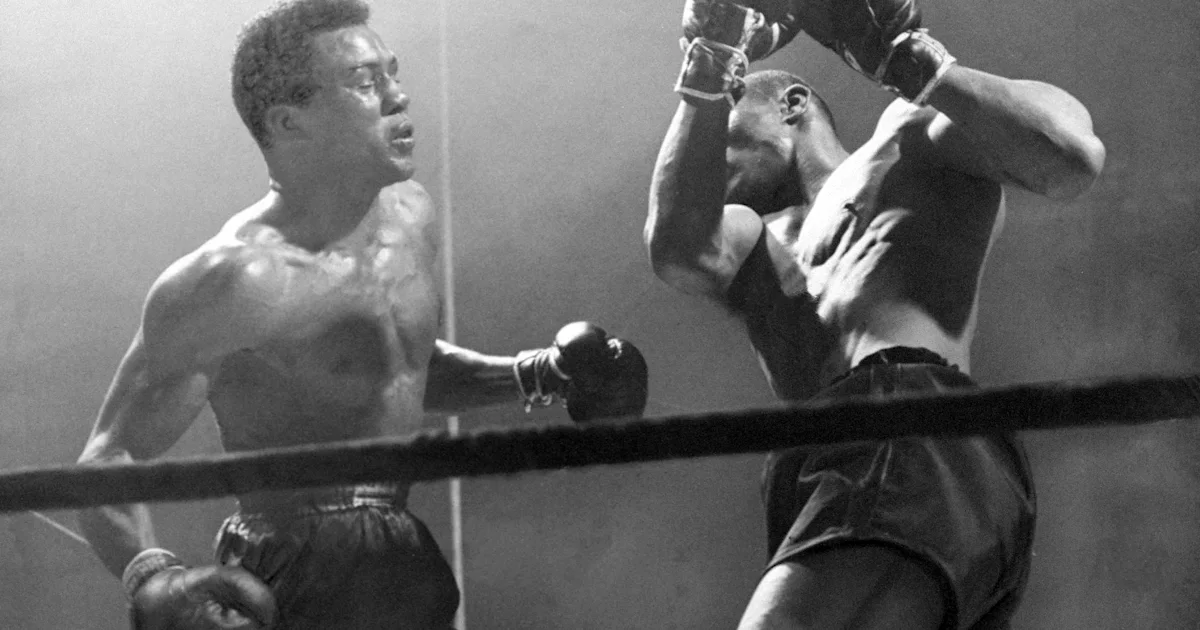
In contrast, the lightweight division once boasted three future Hall of Famers—Bob Montgomery, Beau Jack, and Ike Williams—who repeatedly challenged each other to prove their supremacy. Montgomery, born in 1919 in South Carolina, moved to Philadelphia as a teen, working in a laundry and training in a tough gym known as “The Slaughterhouse.” Beau Jack, originally Sidney Walker from Georgia, endured harsh “Battle Royales” as a youth and was supported in his boxing pursuits by golf legend Bobby Jones. Ike Williams, also from Georgia, grew up fighting on the streets of Trenton, New Jersey, before excelling in both boxing and other sports in high school. All three shared humble backgrounds shaped by the Great Depression and turned to boxing as a means to better support themselves.
Boxing historian Bert Sugar praised Beau Jack’s aggressive, relentless style and ranked him 52nd among the greatest fighters. Williams, ranked 60th, was known for his reach and powerful combinations, with 61 career knockouts testifying to his knockout power. Though not on Sugar’s top list, Montgomery earned respect for his relentless forward pressure and earned the nickname “The Philadelphia Bobcat.”
Turning professional in the late 1930s and early 1940s, Montgomery, Jack, and Williams fought ten times between 1943 and 1955, with five of those bouts contesting the lightweight title. Their battles drew massive crowds and captivated boxing fans nationwide—a stark contrast to the limited interaction among today’s top lightweights.
Their rivalry began in 1943 when Montgomery and Jack fought at Madison Square Garden for the NYSAC title in front of over 18,000 fans. After trading rounds, Montgomery secured a victory, though the public didn’t fully acknowledge his championship status due to his previous losses to Sammy Angott. Jack would regain the title in a rematch later that year.
Williams entered the picture in 1944, suffering a painful knockout to Montgomery in their first meeting but later becoming a key part of the trio’s rivalry, facing both Jack and Montgomery multiple times. Their fights were marked by fierce exchanges, tremendous skill, and sheer heart, often going the full distance and thrilling audiences.
Montgomery and Jack fought four times within 15 months, splitting their bouts two apiece, while Williams went on to beat both rivals in several encounters. Their title fights and rematches helped define an era of gritty, honest competition born of mutual respect and the willingness to face the best—qualities that forged their Hall of Fame legacies.
Between 1948 and 1955, Williams and Jack met four more times, including a brutal title bout in 1948, which Williams won by TKO. Their intense rivalry, along with the ferocity of all three men’s battles, produced some of the most memorable lightweight contests in history.
Looking back at their 10 fights, with only three ending by knockout, the trio showed resilience and sportsmanship through more than 109 rounds of combat. Statistically, Williams led their head-to-head matchups, but more importantly, all three embraced the challenges and risks of facing elite opponents repeatedly—cementing their place in boxing history.
This fearless approach to competition is a stark contrast to the recent era represented by Garcia, Davis, Lopez, and Haney, who would do well to follow the example set by these legends. Only by consistently testing themselves against each other can today’s fighters build lasting legacies and truly elevate the sport.
Fan Take: For fight fans, this recounting serves as a reminder of the golden era’s fierce rivalries that fueled the sport’s growth and excitement. If today’s top lightweights can find a way to overcome politics and ego, they too could deliver unforgettable battles that reinvigorate boxing’s legacy and thrill a new generation of fans.
Source: sports.yahoo.com