
Fantasy football writer Hayden Winks shares his FLEX running back rankings and Week 1 analysis, and will update his positional rankings throughout the week.
More rankings and analysis from Hayden Winks
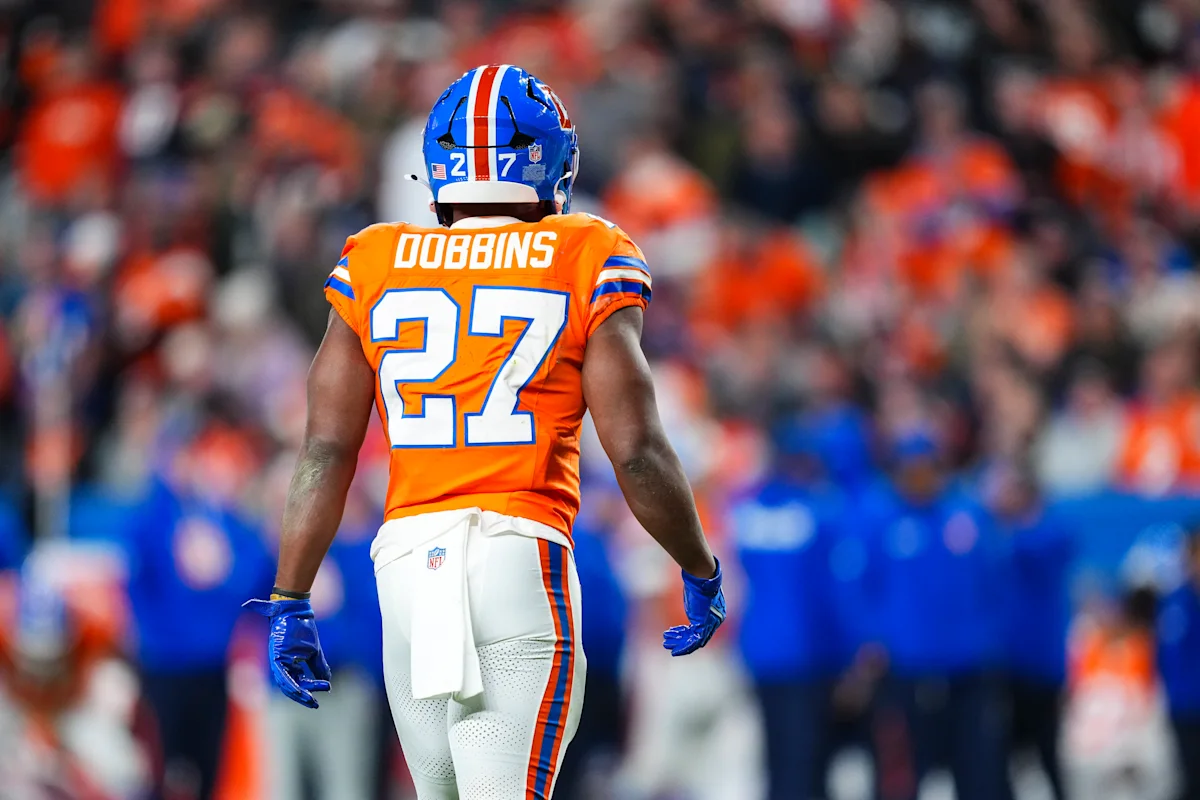
31. J.K. Dobbins (at KC) — 58.5 projected total yards
Dobbins averaged 77.2 rushing yards per game but offered limited upside last year, finishing as the RB25 in half-PPR while ranking 29th in usage across 10 games as Denver’s primary back. The Broncos now have more internal competition with RJ Harvey entering Year 2 and fourth-round addition Jonah Coleman, which dampens Dobbins’ ceiling. The matchup is also tough: Kansas City was among the better defenses against fantasy RBs last season and added interior pieces Khyris Tonga and first-round pick Peter Woods this offseason. Denver’s road team total is a low 20.25 (26th) on Monday Night Football in a loud setting for Patrick Mahomes’ return, and the betting market projects only 56.5 total yards — Dobbins is a playable half-PPR FLEX but not exciting.
32. Chris Rodriguez Jr. (vs. CLE) — 40.5 projected total yards
Winks is higher on Rodriguez than consensus. Jacksonville signed him for two years and $10 million to be a true rotation piece, and with pass protector LeQuint Allen Jr. dinged up, Rodriguez could see extra snaps early as Bhayshul Tuten isn’t trusted in those situations. Rodriguez has prior ties to OC Liam Coen from Kentucky (440 yards in a season) and profiles as a short-yardage, goal-line finisher with run-through-tackles, tackle-breaking traits. With Jacksonville projected for 24.5 points (ninth) as 8.5-point home favorites — and the Browns missing Myles Garrett — Winks prefers Rodriguez to the market’s 38.5-yard line and views him as a startable FLEX.
33. Aaron Jones Sr. (vs. GB) — 46.5 projected total yards
Jones was a top-20 half-PPR RB in 2024 but slipped to RB35 last year amid worse QB play; at age 31 he’s showing a bit of lost explosiveness and a career-low yards-per-carry. Jordan Mason complements him well, especially near the goal line, and Jones is likely to remain a part-time veteran between RB20 and RB35 while healthy. The matchup is favorable: the Packers are without Micah Parsons and appear to be starting rookie Chris McClellan at NT; in the five games without Parsons to close last year they yielded 139 rushing yards per game. Minnesota projects to score well (10th in team points); betting markets have Jones near 48.5 yards and he’s stronger in full-PPR formats due to his receiving usage.
34. Kenneth Gainwell (at CIN) — 48.5 projected total yards
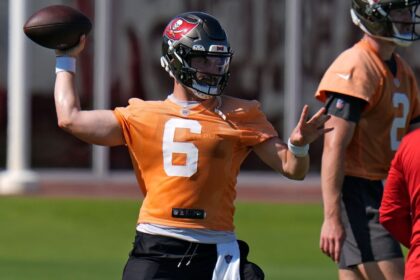
Gainwell was productive last year (RB22 on RB21 usage in PPR) in a very different offensive environment; this season he should remain involved, especially with Sean Tucker not ready for Week 1. The Buccaneers could use him alongside Bucky Irving in a change-of-pace mix. Game script in Cincinnati could help — Tampa Bay is a 3.5-point underdog and the game could open up — and the Bengals have been vulnerable to receiving backs in recent matchups, making Gainwell a useful flex option if the passing game to backs materializes.
35. Blake Corum (vs. SF)
After the Rams began rotating Corum into nearly every other drive behind Kyren Williams starting in Week 9, Corum finished as RB32 on RB41 usage; he brought more explosiveness and decisive reads, and likely earned a roughly 60/40 split in his favor for red-zone snaps. San Francisco enters Week 1 banged up up front — Nick Bosa is being rushed back, Mykel Williams and Alfred Collins are out — and the Rams could lean on the run against a depleted defensive line. Corum is a high-upside, high-risk FLEX play who makes sense only as a desperation or matchup-based option this week.
36. Kyle Monangai (at CAR) — 37.5 projected total yards
After Chicago’s Week 5 bye, Monangai played like a mid-range fantasy option (RB36 on RB37 usage across 14 games with D’Andre Swift healthy) and rotated drives late in the year, becoming a goal-line candidate when his series came up. He missed the latter part of camp with a knee issue but has been off the practice report and shouldn’t be limited. The Panthers were among the worst defenses vs. fantasy RBs last year, though additions and the return of Derrick Brown make the matchup closer to neutral. Chicago is a 3.0-point road favorite with a 24.75 team total (eighth), so Monangai can be considered as a depth FLEX depending on your roster.
37. Jordan Mason (vs. GB) — 51.5 projected total yards
In 11 fully healthy games together, Jones held a 46% carry share and averaged 9.2 expected half-PPR points per game versus Mason’s 34% and 5.4; Jones also had a clear edge in targets (3.4 to 0.8), which made him the preferred fantasy option. Preseason indications suggest Jones will open the year slightly ahead, though Mason could have increased roles at times. The Vikings are 1.5-point favorites at home with the 10th-highest team total; Green Bay’s run defense ranked middle of the pack and performed poorly late in the season without Parsons. Mason’s Week 1 value will hinge on touchdown luck — he projects 51.5 yards and about 7.3 half-PPR points and showed he can produce (94 rushing yards in Week 18 last year when Jones was out).
38. Tyler Allgeier (at LAC) — 35.5 projected total yards
More clarity on his status and role could come later in the week, especially with questions around Jeremiyah Love’s ankle.
39. Jonathon Brooks (vs. CHI) — 45.5 projected total yards
Brooks has a recent groin issue and was limited in midweek practices; given his injury history it would be preferable to see a full practice before treating him as a reliable flex option. Carolina’s plan is a downs-based rotation — a base runner on early downs and a complementary third-down back — and Chuba Hubbard appears likely to start the base role to open the season. The Panthers are 21.75-point dogs (20th) in Chicago; while Carolina could find some success against a weak Bears defense, it’s unlikely both backs produce enough to justify starting Brooks in most lineups Week 1.
40. Jacory Croskey-Merritt (at PHI) — 40.5 projected total yards
Croskey-Merritt is listed as Washington’s starter, a lower-cost option the team hopes can supplant Rachaad White’s role, but he’s an inconsistent runner and isn’t guaranteed goal-line work. Sharing backfield snaps with an explosive rushing QB like Jayden Daniels could create big-play opportunities, but the matchup is hostile: Washington’s offensive line is banged up (missing LT Laremy Tunsil and dealing with center issues) and they’ll face dominant interior defenders Jalen Carter and Jordan Davis. Washington projects to lose by about 5.5 points; historically Croskey-Merritt had just 2.9 half-PPR points on 13 carries (2.2 YPC) vs. the Eagles in Week 18, and markets peg him for roughly 6.7 half-PPR points this week.
Fan Take: These Week 1 RB rankings matter because early workload and matchups can set season-long trajectories for backs in crowded rotations, affecting waiver-wire activity and trade value. How teams split carries and use receiving backs against different defenses could accelerate the league-wide trend toward committee backfields and increase the premium on versatile, pass-catching running backs.
Source: sports.yahoo.com