

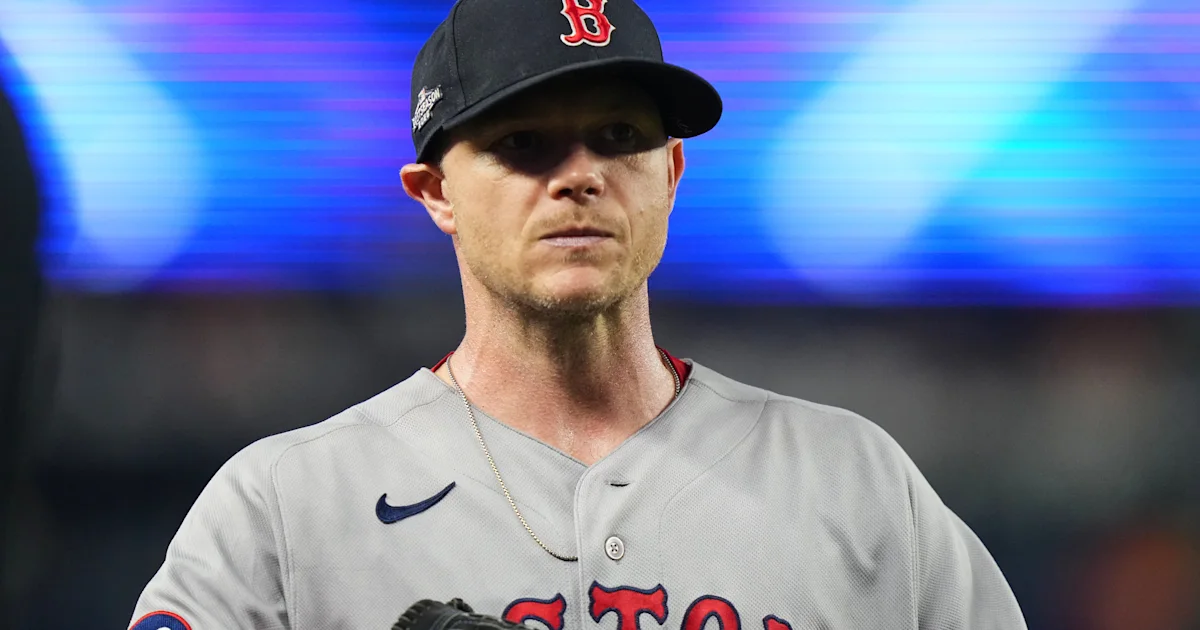
The Boston Red Sox were knocked out of the MLB playoffs on Wednesday, and two key players voiced their frustrations with the team’s leadership following the defeat. Starting pitcher Sonny Gray and All-Star first baseman Willson Contreras openly expressed their dissatisfaction after Boston’s Game 2 loss to the New York Yankees, a series that ended with the Yankees sweeping the Red Sox by a combined score of 18-2.
The pivotal moment in Game 2 came when manager Chad Tracy decided to pull Gray in the fifth inning. Up until that point, Gray had pitched well, surrendering only a solo home run to Luis García Jr., but found himself with runners on first and third with two outs. Despite Gray pitching 70 pitches and feeling strong, Tracy replaced him with left-handed reliever Erik Miller to face lefty hitter Cody Bellinger. This move backfired as Miller allowed a run-scoring single to Bellinger, followed by another hit to García, though a daring Yankees baserunning decision limited further damage.
The situation worsened an inning later when Boston brought in ace Garrett Crochet, who was making his first appearance since April due to shoulder and lat injuries. Crochet couldn’t record an out, and the game quickly unraveled further after Tracy summoned Garrett Whitlock. Gray wasn’t shy about questioning the decision to remove him, asserting confidently that he was still effective facing the lineup a third time and would have preferred to stay on the mound.
Tracy, who was officially promoted to the full-time manager position just last week, seemed to base his choice on concerns over the commonly feared “third-time-through-the-order” penalty. However, Gray’s statistics suggest he hasn’t been significantly affected by this, holding opposing hitters to a low batting line in their third at-bats against him this season. Additionally, lefty/righty matchup considerations were at play: Gray has been more effective against lefties, while Bellinger tends to perform better against left-handed pitchers.
While Miller has better stats against left-handed hitters, it’s debatable whether this switch truly benefited the Red Sox. Tracy acknowledged Bellinger’s reverse splits but placed faith in his bullpen, explaining that they had a strong late-inning group ready to handle situations. Contreras’s reaction to Gray’s removal was subtle but telling; he mimed zipping his lips, signaling his disagreement. Beyond this, Contreras openly criticized the team’s heavy reliance on data-driven strategies under chief baseball officer Craig Breslow, emphasizing that experience and veteran leadership are also crucial to winning games.
When asked about the team’s faltering performance down the stretch and in the playoffs, Contreras declined to share his honest thoughts, indicating ongoing frustration within the clubhouse. This discord is not new; there have been previous reports of player dissatisfaction with Breslow’s leadership, notably around the firing of manager Alex Cora and Rafael Devers’ public feud with the front office.
Ultimately, success on the field reflects on the front office, and Breslow’s tenure since replacing Chaim Bloom in 2023 has yet to yield either 90 wins in a season or a playoff series victory in three years. The Red Sox appear to be at a crossroads, needing both results and harmony moving forward.
Fan Take: This tension between players and management is a crucial storyline for baseball fans, highlighting the challenge of balancing analytics with veteran intuition. How the Red Sox address this internal strife could shape not only their future but also influence how other teams approach leadership and decision-making in the modern game.
Source: sports.yahoo.com