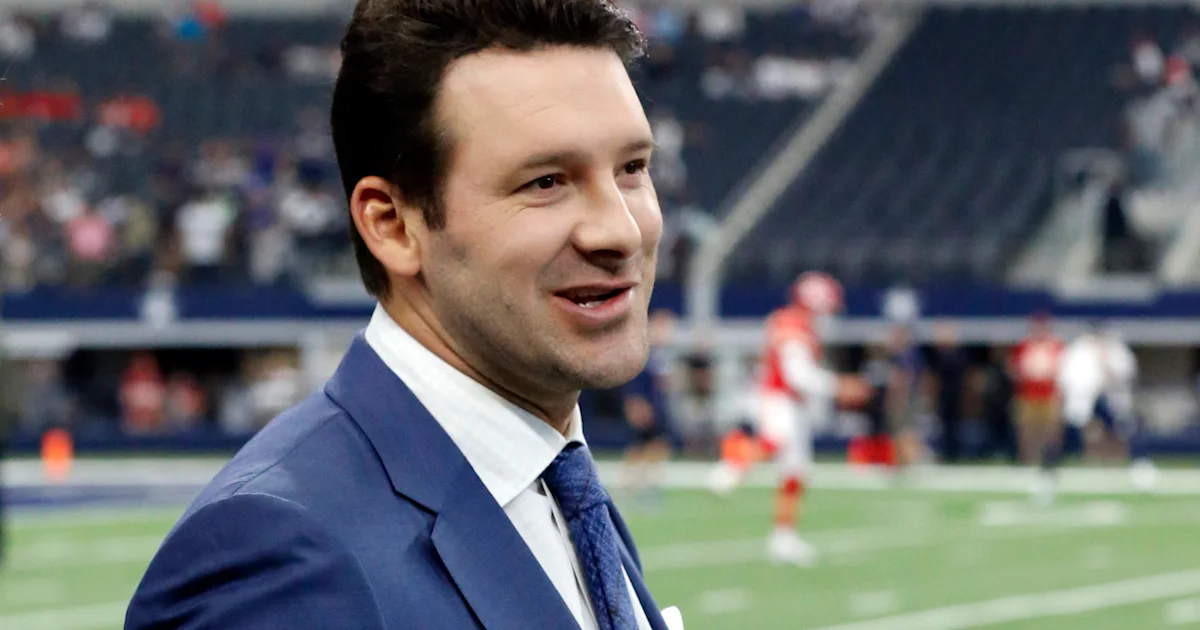
The prolonged uncertainty surrounding Tony Romo’s future at CBS has ended.
CBS said it and Romo have agreed to go their separate ways. Romo, who had been the network’s top NFL color commentator alongside play-by-play voice Jim Nantz, had been on leave after his July 23 arrest on suspicion of operating while intoxicated following a golf outing in Wisconsin. J.J. Watt filled the No. 1 color role for CBS’s premier NFL broadcasts during the first three weeks of the regular season. Romo entered a no-contest plea to OWI charges on Sept. 1.
In its announcement, CBS thanked Romo for nine years with the network and confirmed Watt will remain Nantz’s partner with reporter Tracy Wolfson for the lead broadcast the rest of the season. The network said its other announcing teams — including Ian Eagle, Ross Tucker and Evan Washburn — will be unchanged.
Romo issued his own statement to Front Office Sports saying he plans to take time off to concentrate on his health and family before exploring future opportunities. In a separate statement when he pleaded no contest, Romo acknowledged developing a dependence on pain medication after multiple back surgeries from injuries sustained during his 13-year career as the Dallas Cowboys’ quarterback, and said attempts to stop those medications led to an “over-reliance” on alcohol. He added that these explanations are no excuse and accepted responsibility for his actions.
Romo joined CBS in 2017 and was immediately placed on the network’s top broadcast team; his knack for predicting plays quickly made him a breakout star in the booth. In 2020 he signed a 10-year, $180 million deal with CBS. In recent seasons his performance as a commentator drew more criticism, a factor that may have influenced the network’s decision to part ways while several years remained on his contract.
Fan take: This matters to NFL viewers because Romo’s exit replaces one of the most recognizable and polarizing voices in game broadcasts, and it could change the tone and chemistry of CBS’s top broadcasts. For the sport, it underscores how off-field issues and performance critiques can reshape high-profile media roles that influence how fans experience games.
Source: sports.yahoo.com