

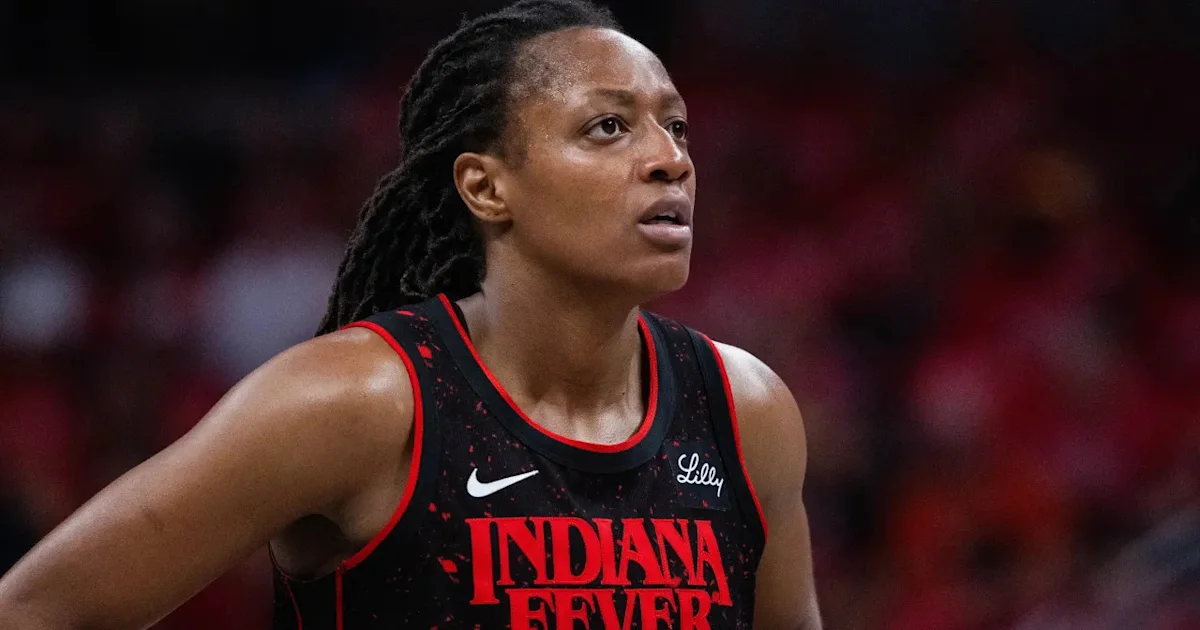
The Indiana Fever’s 2025 season concluded on Thursday, but discussions about the team continue to dominate headlines—mainly due to off-court controversies. The spotlight has once again shone on the Fever’s fanbase following a minor altercation between Aces star A’ja Wilson and a Fever supporter during Game 2. Even after Las Vegas secured victory in Game 3, the incident remained a focal point during Indiana’s post-game interviews on Saturday.
Indiana’s General Manager, Amber Cox, strongly refuted claims that Fever fans are uniquely abusive compared to other WNBA fanbases. She emphasized that such accusations are unfounded and urged for an end to these negative portrayals, highlighting that no Fever fan was identified by players for misconduct or removed from games this season. While reports detail that multiple Indiana fans were ejected during the 2025 season and some players have criticized the Fever’s crowd, officials have also cleared certain interactions, such as when two spectators were removed from courtside seating after complaints but not formally ejected for violating conduct rules.
Regarding these fanbase criticisms, Indiana players expressed more subtle frustrations. Star guard Kelsey Mitchell opened up about the challenging experience of handling abuse from fans, especially being part of a team under intense scrutiny due to teammate Caitlin Clark’s spotlight. Mitchell called for more understanding, praising the organization while revealing the emotional toll of their professional journey. Similar comments were shared by Aliyah Boston in 2024, underscoring the ongoing struggle to balance public perception and personal resilience. With Mitchell entering free agency, Indiana faces a critical challenge in maintaining its key players amid these pressures.
The Fever’s fanbase has become divisive in recent years, drawing criticism from various players. Notably, team figures like Clark and Sophie Cunningham have attracted political attention, with Clark targeted by a GOP-backed letter demanding tougher consequences for violence directed at her, and Cunningham sparking controversy by publicly supporting trans-exclusionary viewpoints framed as protecting women’s sports. These stances have contributed to a tense atmosphere, especially in a league celebrated for its predominantly Black and LGBTQ+ demographics. The resulting polarization has fueled confusion over the genuine fan support for Indiana, with some opposing players reportedly receiving threats linked to games against the Fever.
This complex situation paints a picture of a fanbase that, while not representing the majority, carries a reputation for controversy and heightened intensity. Whether this perception can improve remains uncertain, but it undeniably adds a layer of complexity to the Fever’s culture and the broader WNBA environment.
Fan Take:
This ongoing tension surrounding the Indiana Fever’s fanbase highlights the growing pains of the WNBA as it gains visibility and influence. For fans and stakeholders, how the league manages the balance between passionate support and respect will shape the future culture of women’s basketball and its ability to foster an inclusive, positive environment.
Source: sports.yahoo.com