

In some games, the outcome seems to follow the scouting predictions. The Tampa Bay Rays, who have the best record in the AL, are known for aggressively pressuring opposing defenses, while the New York Yankees have a reputation for not having flawless fielding. These aspects were evident during Game 2 of the ALDS on Monday. The Yankees committed three errors and four defensive blunders in the first five batters, handing the Rays a 1-0 advantage early on.
Remarkably, the Yankees and their likely AL Cy Young Award winner, Cam Schlittler, managed to escape the first inning down by just one run despite Schlittler throwing only 19 pitches. The inning could have been far more damaging for New York. Here’s a breakdown of what happened and how the Rays capitalized on the Yankees’ defensive lapses.
1st Batter: Ryan McMahon’s Error
Yandy Díaz, Tampa Bay’s leadoff hitter, hit a ground ball that should have been a routine play, but Yankees third baseman Ryan McMahon mishandled a chest-high hop, allowing the ball to get past him. This was a clear error and should have resulted in an out. The following batter, Jonathan Aranda, then singled on a well-placed grounder that McMahon couldn’t reach, resulting in runners on first and second with no outs just three pitches into the game.
3rd Batter: Jazz Chisholm Jr.’s Error
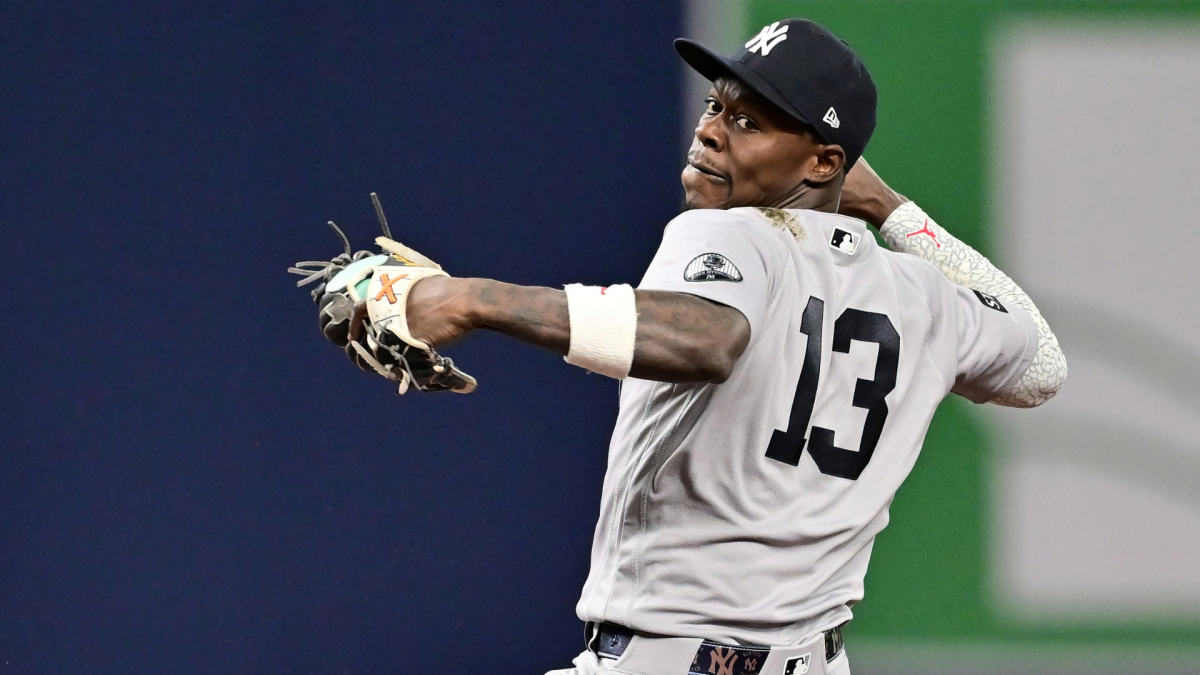
Junior Caminero, who led MLB in ground ball double plays last year, hit a grounder to the shortstop that wasn’t going to lead to a double play due to the distance the ball had to be fielded. However, Jazz Chisholm Jr. forced the throw to first, which went wide, allowing the runner Díaz to score Tampa’s first run. While the initial fielding by George Lombard Jr. was solid, Chisholm’s throw was unnecessary and costly. The right play in that scenario would have been to hold the ball and take the out, but instead, Tampa Bay scored a run and advanced the runner to second with only one out.
4th Batter: Austin Wells’ Error (Catcher Interference)
With a runner on second and one out, Schlittler thought he had struck out Liam Hicks on a called third strike. However, Hicks made contact on a half-swing that hit catcher Austin Wells’ mitt. Replay ruled this as catcher interference, an error that gave Hicks first base instead of an out. This type of error has become more frequent recently due to catchers trying to frame pitches and reaching forward, leading to more contact. The Yankees had seven catcher interference calls during the regular season, with Wells responsible for four of them.
5th Batter: Failed Double Play Opportunity
Chandler Simpson, the fastest player in baseball, is tough to double up. During the regular season, he grounded into just six double plays, a low number considering his many ground balls. In this inning, Simpson hit a grounder to Chisholm at second base, but Chisholm’s throw pulled Lombard off the bag. Lombard recovered to get one out, but the chance for a double play was lost due to the poor throw. While it was a fielder’s choice and not an error, the play was still suboptimal.
Schlittler then got Victor Mesa Jr. to ground out to second base, ending the inning with runners stranded on third and first. Except for Aranda’s single, Schlittler retired his batters cleanly. The Rays kept hitting ground balls to infielders, but the Yankees continuously failed to convert those into outs.
Heading into the ALDS, one of the biggest questions was whether the Yankees’ infield could withstand Tampa Bay’s style. The Rays led MLB in bunt hits and were second in infield singles during the regular season, a testament to how much they make opposing defenses earn every out. The Yankees have struggled with clean defense for years, and this issue haunted them again in Game 2.
As Yankees manager Aaron Boone said before Game 1 about playing at Tropicana Field, “They obviously play great here at home, and they’re built for this place. It’s important we take care of the ball and get the outs that should be outs. If we do that, I feel like we have a good chance.”
Fan Take:
This game highlighted the crucial role defense plays in playoff baseball, reminding fans that even the best pitchers can be hampered by sloppy fielding. For baseball enthusiasts, it underscores the importance of fundamentals and could signal a shift toward valuing defensive precision as much as offensive firepower in postseason strategy.
Source: www.cbssports.com