

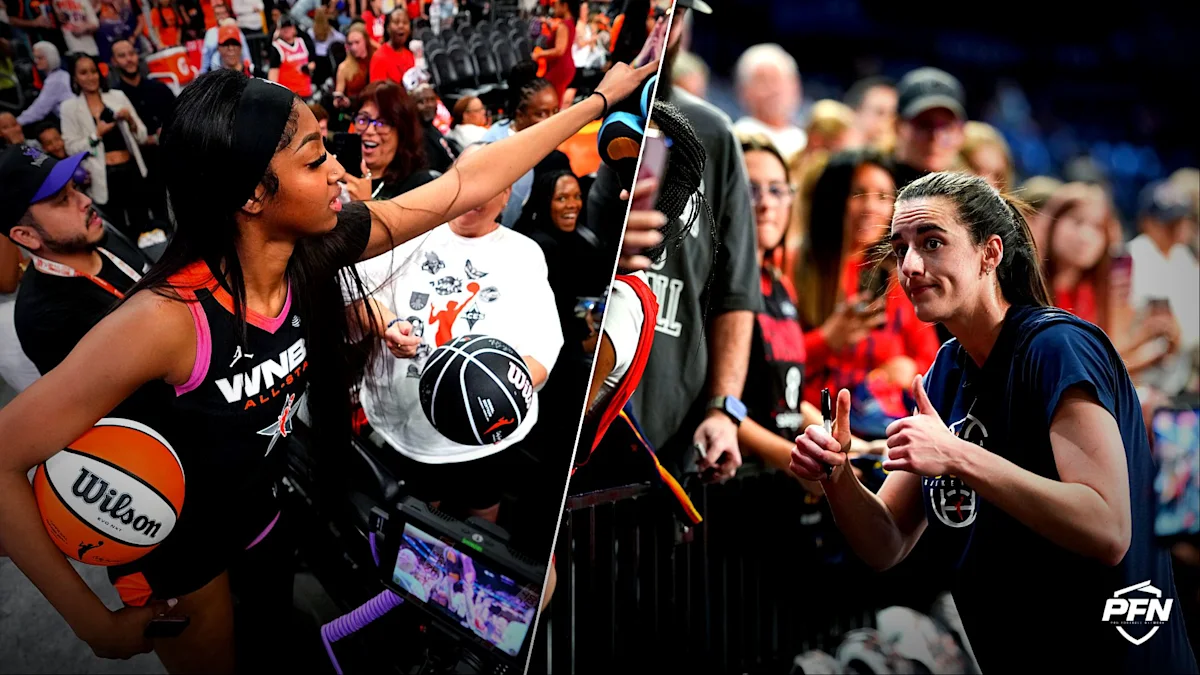
Caitlin Clark’s early exit from the 2026 WNBA playoffs dealt a significant setback to the league in terms of both viewership and fan engagement. Meanwhile, Angel Reese, who many consider the next most popular star after Clark, advanced to the semifinals.
Controversy erupted when reports circulated that the Atlanta Dream had closed off the upper bowl of State Farm Arena for Reese’s Game 1 against the New York Liberty, creating the illusion of a full lower bowl in a smaller crowd. This allegation quickly went viral and sparked widespread discussion online.
Journalist Etan Thomas shared a video suggesting that WNBA attendance was still strong without Clark. However, House of Lowlights countered this by highlighting the taped-off upper section of State Farm Arena, arguing it concealed a much smaller actual attendance: only 9,745 fans in a 17,000-seat arena.
This revelation provoked mixed reactions, with some fans criticizing the WNBA’s management of Reese’s drawing power. Sports columnist Christine Brennan expressed surprise over the difference in attendance, noting that while only 9,745 showed up for the playoff game in Atlanta, Clark drew over 17,000 fans for each of two recent regular-season games. Right-wing social media figure Vince Langman responded with amusement, posting laughing emojis.
Others accused the league of deliberately manipulating perceptions around Reese’s popularity, with one observer stating, “MIND GAMES OF THE WNBA! THEY KEEP TRYING TO GASLIGHT AMERICA!” Meanwhile, a Caitlin Clark supporter bluntly remarked, “Caitlin Clark is feeding all your diaper-full baby [expletive]. Just accept it.”
Not everyone agreed with the criticisms. One Dream fan noted that Atlanta usually plays in the much smaller Gateway Center Arena, which holds only 3,500 seats, making the playoff attendance of 9,745 a substantial increase. Another pointed out that limiting upper-level seating is common practice in many sports when a full sellout is not expected to enhance the crowd’s atmosphere.
The most pointed defense came from a WNBA observer who contrasted Atlanta’s playoff crowd with Clark’s situation; despite Clark’s star power, her team, the Indiana Fever, was eliminated early for the second year in a row, whereas Reese’s Dream advanced with a 1-0 semifinals lead. The fan also criticized Clark’s high turnover numbers as a reason for her team’s early exit.
Clark’s arrival has notably boosted WNBA viewership, with ESPN reporting that the Fever-Aces Game 1 on ABC reached an average of 2.1 million viewers—the most-watched WNBA playoff game in the network’s history—marking a 122% increase from the previous season’s first playoff game on ABC.
Front Office Sports later revealed that the Dream attributed the limited seating to a short ticket-selling window rather than an attempt to manipulate Reed’s popularity. A spokesperson explained that due to the quick turnaround, they chose to open only the lower bowl and focus efforts there. The Dream had previously announced that their first- and second-round playoff games would be held at State Farm Arena instead of the smaller Gateway Center Arena, where they had sold out five of six regular-season games.
For context, Game 2 between the Aces and Fever at Gainbridge Fieldhouse drew 16,298 fans. Despite these numbers, the debate over WNBA attendance and crowd presentation remains ongoing.
This story originally appeared on Pro Football Network.
Fan Take: This controversy highlights the intense scrutiny WNBA attendance faces as the league grows and stars like Clark and Reese rise in prominence. How teams manage fan optics and genuine engagement will be crucial for maintaining trust and building a sustainable, passionate fanbase that supports the sport’s long-term success.
Source: sports.yahoo.com