

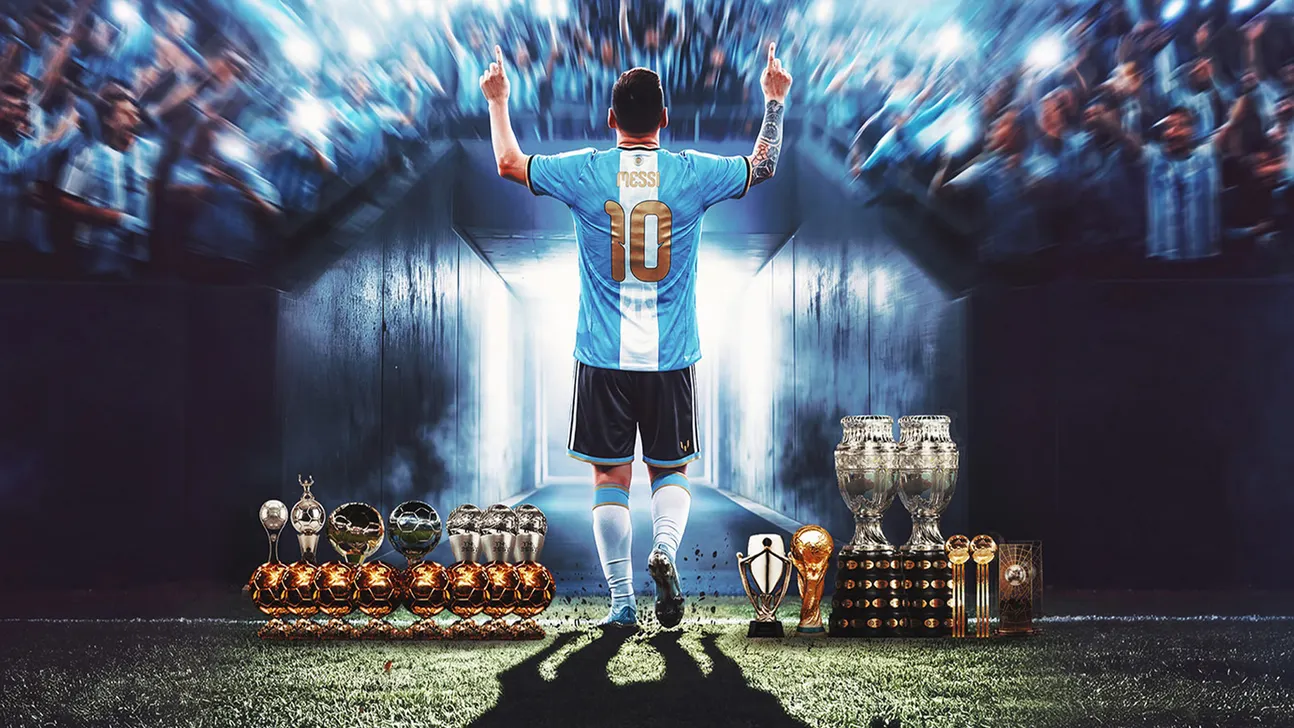
On Tuesday Evening, beneath the overcast skies of Buenos Aires, Argentina mournfully bid farewell to Lionel Messi in his last match for the national team. One particular moment stands out in my memory.
It wasn’t the cheers of the crowd as he scored his 126th goal, nor the dazzling drone display honoring the over 85,000 fans present at Estadio Más Monumental. It wasn’t even the emotional tears of Enzo Fernández or Messi’s poignant speech remembering his late father and his homeland.
What truly moved me to tears was when Thiago Messi, Leo’s 13-year-old eldest son, approached his father during the post-game celebrations and embraced him tightly. In that moment, amidst their shared tears, Thiago understood the immense impact his father had on the nation, making Messi’s international retirement feel almost insurmountable.
I believe that this tender exchange revealed to Thiago the sacrifices his father made throughout his journey. At 13, he is the same age Messi was when he left Argentina for Barcelona, leading to a profound sense of connection between father and son. This embrace symbolized both empathy and appreciation, recognizing that while Messi’s career has been filled with achievements—including World Cup and Champions League triumphs—there has also been significant pain.
That’s why Tuesday night was special; it was not merely about expressing gratitude. It was a moment of collective understanding of sacrifice and a deeper appreciation for what Messi brought to the world.
Lionel Messi’s international journey transcends mere statistics like goals and assists or the trophies he gathered. His true greatness cannot be measured, as what Messi contributed to Argentinians and the footballing community extends beyond personal accolades.
The essence lies in the adversities he faced and overcame. Despite being shunned after losing consecutive finals in 2014 and 2016, Messi returned triumphantly to claim victory in 2022, epitomizing a journey of redemption.
Argentina also bears some responsibility. During tough times, Messi faced a wave of criticism, stemming in part from a protective national sentiment towards Diego Maradona, a divisive figure who embodied the spirited Argentine persona, contrasting sharply with Messi’s reserved nature. While Maradona remained in Argentina until age 21, Messi’s departure for Europe came much earlier, and the federation was often disconnected from his journey.
This pain shadowed Messi throughout his career, culminating in his return from retirement in August 2016, where he sought the love and affirmation of his nation after a heartbreaking loss to Chile.
“As Tennessee Williams famously stated, ‘If I got rid of my demons, I’d lose my angels.’” This sentiment captures the significance of Messi’s struggles; they were essential to understanding his brilliance.
Thus, the tribute in Buenos Aires last Tuesday transcended a simple farewell—it felt more like a homecoming.
Moving forward, how do we cope with this void? How do we contemplate Argentine football and the future of the sport globally without Messi’s influence? How do we cherish artistry absent its creator?
The answer lies in the emerging talents like Lamine Yamal, Erling Haaland, Michael Olise, and Jude Bellingham—today’s football world is in capable hands, and the sport will continue to grace us with exceptional moments for years to come.
For those yearning to relive the magic, an upcoming trip to Miami might be in order.
However, one thing is clear: Lionel Messi is irreplaceable. His legacy goes beyond his individual brilliance; he helped us all feel remarkable in those fleeting 90 minutes, turning a humble, introverted boy from Rosario into a towering sensation.
Fan Take: Messi’s retirement marks not just the end of an era for Argentina but for soccer as a whole. For fans, this is a crucial moment to reflect on his unparalleled contributions and prepare for a future where new stars can echo his brilliance on the field.
Source: www.foxsports.com