

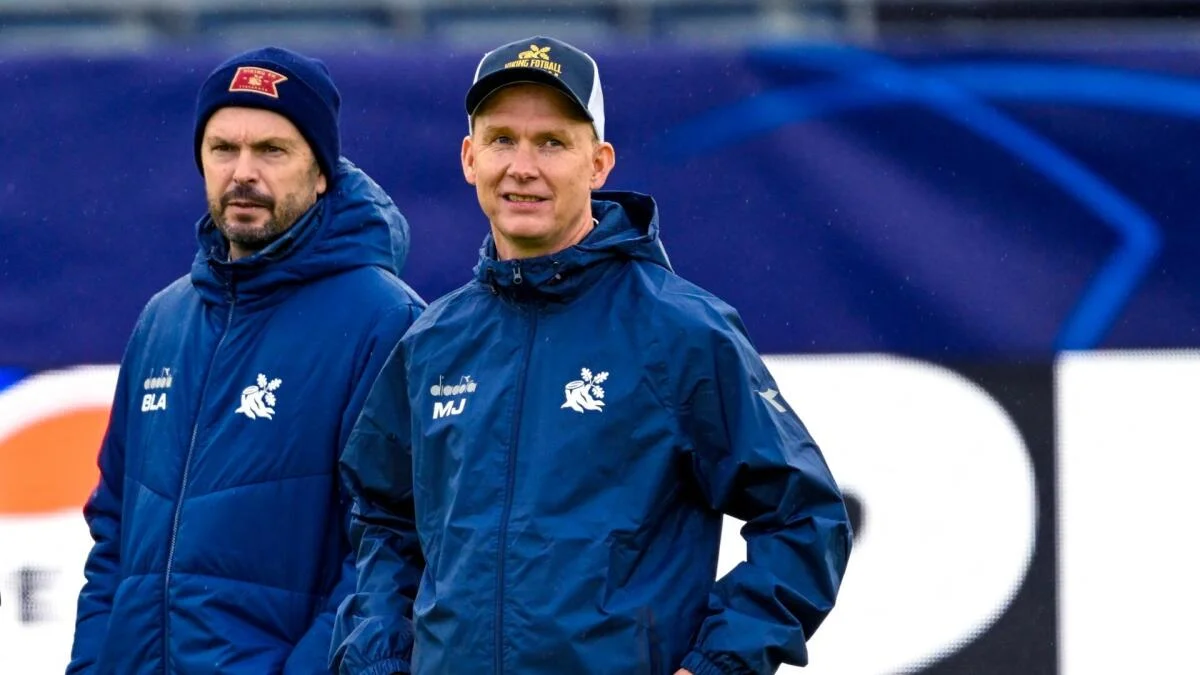
Two coaches leading a team: is it better than having just one? This is a question clubs like Viking FK are currently exploring as they introduce dual head coaches for their Champions League campaigns. Viking FK is not alone; teams such as Lyngby from Denmark and Lincoln City in the English Championship are also embracing this tactic. One notable success was when Viking’s coaches, Morten Jensen and Bjarte Lunde Aarsheim, steered the club to a remarkable 3-3 draw against Bayern Munich. This trend might not be as chaotic as it seems.
Viking led the charge in 2020 with the appointment of the two coaches who successfully guided the team to their first Norwegian league title in 34 years, earning them a spot in this year’s Champions League. Although both had opportunities to apply for the position individually, their friendship prompted them to suggest a joint approach, a decision the club stands by as they enhance Norwegian football’s profile.
“When our previous coach left, we decided to start looking for a replacement. During interviews, the two assistants arrived together, and instead of choosing one, they proposed to work as a duo,” reflected club CEO Eirik Bjorno in a September interview with CBS Sports Golazo. He added, “While I created more work for myself, it has been quite successful; both coaches operate as equals.”
Lyngby took a different route when their manager, Morten Karlsen, was dismissed in December 2025. The club initially intended to establish a dual-coaching system, prompting Andreas Bjelland, already on staff as an assistant, to collaborate with former Mainz coach Mikkel Jespersen. Jespersen described their initial meetings as a way to gauge compatibility, noting their discussions spanned both football and life, allowing them to gradually establish a partnership.
Bjelland emphasized the significance of your coaching partner being someone you work well with: “For co-coaching to succeed, you need a good personal connection.” Although Lyngby might not be making waves in the Champions League just yet, their leadership has led to a promotion back to Denmark’s top flight, establishing a promising foundation for their team. The club’s ascent mirrors Viking’s earlier trajectory, with steady improvement as a key goal.
“There’s synergy in our different management styles that strengthens the team,” noted Bjelland. He explained that distinct personalities contribute to the effectiveness of their leadership, creating a dynamic that allows for comprehensive coverage of coaching responsibilities.
Managing through differences presents unique challenges, as highlighted by Bjorno, who handles conversations with both head coaches. They often navigate disagreements about coaching strategies together. “We have discussions—even heated ones, at times—before arriving at a united front,” Jensen mentioned to the Guardian. “We usually agree on player selections, so disagreements are rare.”
Aarsheim added, “I can read Morten quickly; if he feels strongly about something, I pick up on it, and we can quickly come to a decision.” Lyngby’s coaches also outlined the importance of structured roles within their partnership.
“We need to align our strategies completely, ensuring clarity in roles,” Bjelland explained. “It requires extra discussions and organizational work.” Building mutual trust ensures that both coaches present a cohesive message to players—something that can ease the collective workload and make tactical discussions more effective. Jespersen appreciates having a partner to bounce ideas off of, especially in uncertain situations.
This dual-coach arrangement may represent a shift in the coaching landscape, as more teams may look to emulate Viking’s success. With clubs like Lyngby and Lincoln City already adopting this model, we could be witnessing the dawn of a new trend in soccer coaching.
Fan Take: This shift towards dual coaching could reshape team dynamics and strategy in professional soccer, allowing clubs to harness the strengths of diverse leadership styles. As more teams adopt this model, we could see a profound shift in how soccer is played and managed, potentially leading to more innovative tactics and better player development.
Source: www.cbssports.com