

Rewritten Content:
WASHINGTON — Decision Day across Major League Soccer marked the conclusion of an 8½-month marathon, with teams from Montreal to Miami and Seattle to San Diego competing for playoff positions. While some clubs had already secured their spots, others were intensively strategizing for a better ranking. This day is synonymous with anxiety, tracking scores, and planning for the postseason.
However, for D.C. United at Audi Field, it was more of a “Derision Day.” For seven years running, this once-prestigious franchise has been left out of the playoff picture—a scenario that feels almost unbelievable in an era where postseason spots are more readily available than flyers for discounted mattresses on a New York street corner. Toronto FC stands as the only other team with a longer playoff drought, having been in a similar predicament since its 2007 expansion.
On Decision Day, D.C. United’s fate had been sealed a week prior, leaving them to face off against another struggling team, New York City FC, who won 1-0 with a late goal. While NYCFC had its ups and downs during 2026, such disappointment has become the norm for the D.C. franchise. With ownership comprising Jason Levien and Steve Kaplan, the team has fallen into irrelevance, not only in the thriving league but also in the local soccer market.
The public address system still promotes United as “your four-time MLS Cup champions,” a title that now feels distant since the last championship win in 2004 during a much smaller league. In contrast, 13 different teams have since claimed the trophy. Recent political changes just a couple of miles away in the U.S. Capitol haven’t translated to any improvements for local soccer fans distressed by the state of their team.
Under the current management, United has not won a playoff game in over a decade, and it has been 14 years since it advanced to the conference finals. The team has failed to win at least half its matches in the past 12 years. Their only recent silverware—the 2013 U.S. Open Cup—came in a dismal season where they only managed three wins in the regular season.
Since Ben Olsen’s exit at the end of 2020, United has cycled through four head coaches and two heads of soccer operations in just four years. The latest hire, Erkut Sogut—best known as an agent for former German star Mesut Özil—joined last fall with no team management experience.
D.C. United also lacks a developmental team that connects its youth academy to the main squad. Efforts to establish a training complex in Baltimore for an MLS Next Pro team have stumbled, while ownership has launched a professional volleyball team instead. This neglect has negatively impacted player development, as United has no representatives on any of the U.S. under-23, under-20, or under-17 national teams.
The training complex, located far out in Virginia, is among the smallest in the league, with most of its facilities rented out to the Washington Spirit, a team in the National Women’s Soccer League. In a display of hubris, United is seeking $300 million in public funds to expand its stadium capacity and build a roof, despite it being only eight years old and funded in part by public money. This plan appears more aimed at attracting non-soccer events than improving their MLS ambitions.
Decision Day indeed signifies the urgent need for United to address its uninspiring roster and the performance of its current coach, Rene Weiler, whose record stands at 8-18-16 since his arrival in July 2025. Injuries have hindered his squad this season, particularly affecting key players like Tai Baribo and Louis Munteanu, who missed several matches. The absence of several players, including goalkeeper Sean Johnson and center back Lucas Bartlett, left the team short on the bench for their final showdown.
Weiler acknowledged the need for a deeper squad capable of weekly competition. Fans, too, face tough decisions on their ongoing support for a franchise that has degraded under ownership that tends to spend inadequately and misallocate resources.
In 2018, when Audi Field replaced the deteriorating RFK Stadium and star player Wayne Rooney joined, there was renewed hope. Fast forward to now, and United’s performances have been bleak since 2020, with a string of disappointing rankings. This past season ended with six straight losses and a dismal 1-8-1 record.
Attendance has been lackluster, with only a handful of true sellouts at Audi Field, which at about 19,200 seats, ranks among the smallest in MLS. Even the Washington Spirit, competing in NWSL, have managed more sellouts than United. During Saturday’s match, touted as a sellout, many seats remained empty on a chilly autumn day.
Levien and his partners took over the club in 2012, and the initial seasons brought promise. However, that trajectory has since plummeted, with three seasons finishing in the league’s basement over the last 13. While Audi Field offered renewed hope and revenue after the RFK era, the excitement surrounding the franchise has dissipated. Despite the buzz of players like Rooney, the team has been unable to advance beyond the first round of playoffs during crucial years.
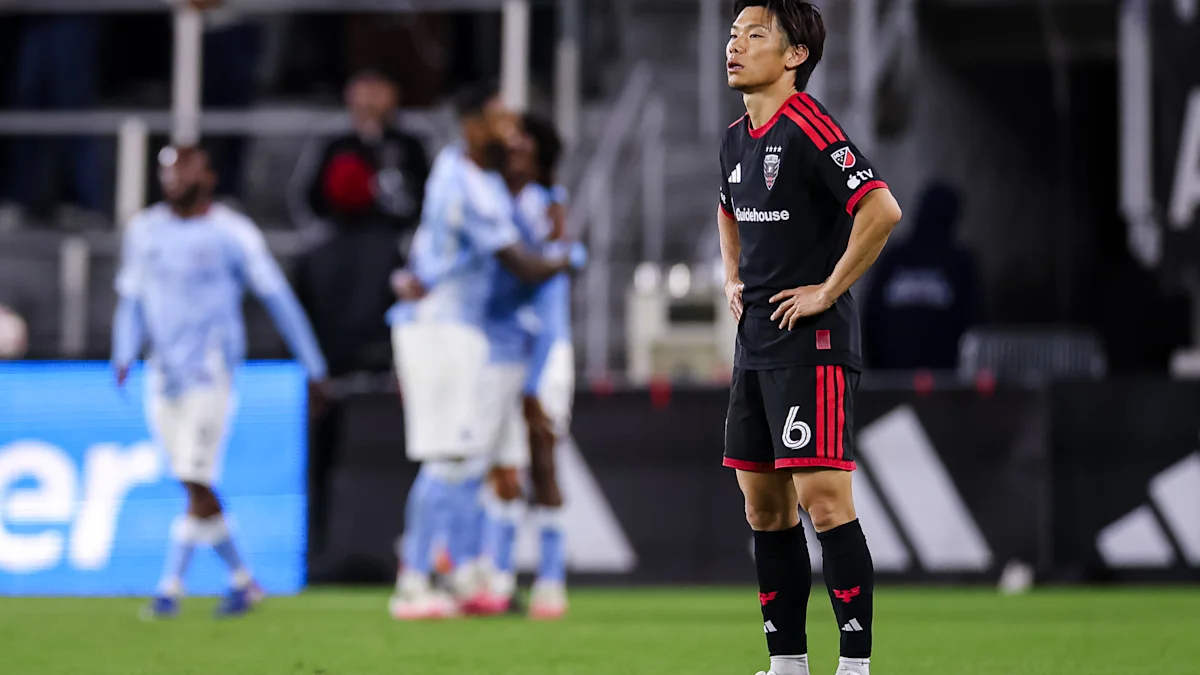
The 2026 season had presented some promise to break free from this rut, yet the team faltered spectacularly. The recent match encapsulated this season’s struggles: a depleted roster, a valiant but insufficient effort, leading to a 1-0 defeat and completing a disheartening 7-15-12 season. NYCFC capitalized on a late counterattack to score while United’s fans trickled out of the stadium, perhaps too dispirited to voice their frustrations. A poignant banner from the supporters read: “We Deserve Better.”
And they certainly do.
Fan Take: This news matters deeply to soccer fans because it highlights the struggles of a once-great franchise, reflecting broader issues within the league and sport. The decline of D.C. United poses questions about ownership accountability and the prioritization of resources, impacting fan loyalty and the overall culture of soccer in the U.S.
Source: sports.yahoo.com
