

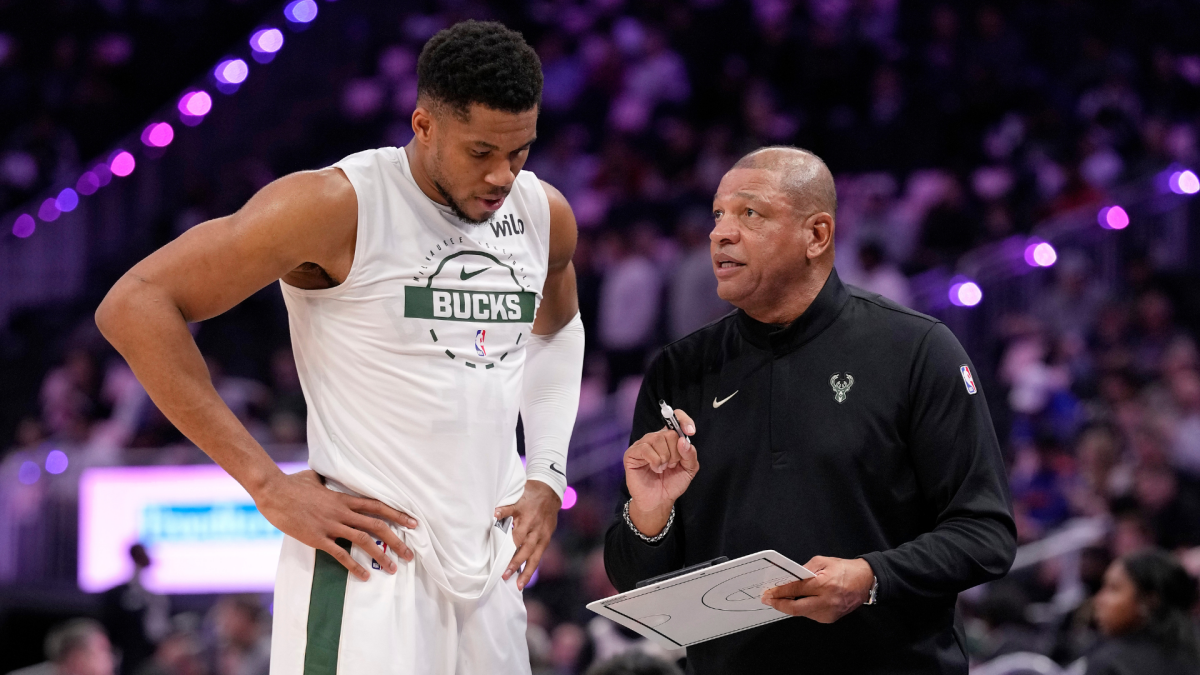
Doc Rivers, who previously coached the Milwaukee Bucks, described Giannis Antetokounmpo as a challenging player to manage and noted that Giannis “didn’t want to be seen as the bad guy” during the prolonged events that ultimately resulted in his trade to the Miami Heat this summer. Rivers, who was at the helm of the Bucks for two and a half seasons from 2024 to 2026, told “The Bill Simmons Podcast” that the drawn-out situation was due to Giannis wavering repeatedly on his commitment to leave Milwaukee, even though he never officially demanded a trade.
As with many stars in smaller markets, Giannis had been linked to trade rumors since he became an MVP-caliber talent. However, speculation intensified recently as the Bucks’ championship window narrowed and Giannis approached unrestricted free agency. After the 2024-25 season, which ended with a first-round playoff loss compounded by Damian Lillard’s Achilles injury, the Bucks had a chance to move Giannis. Instead, they decided to waive Lillard but stretched out his contract through 2030 and signed Myles Turner to a four-year, $108 million deal in a last-ditch effort to retain Giannis. This strategy failed as the Bucks missed the playoffs for the first time since 2016 and ultimately traded Giannis once it was clear he wouldn’t agree to an extension.
Rivers defended Bucks general manager Jon Horst by explaining that Giannis kept flipping back and forth on his decision to leave. Rivers said, “Giannis wanted out, but he was loyal to Milwaukee. He didn’t want to be the bad guy. He wanted Jon and the ownership to say, ‘We’re trading you,’ rather than him requesting a trade. That’s how that situation played out.” While Giannis, who led Milwaukee to its 2021 NBA championship, was clearly conflicted about departing the only franchise and city he’d known for half his life, Rivers’ comments added a new layer of confirmation to this internal struggle.
The more revealing part of Rivers’ remarks concerned the difficulties he faced coaching Giannis. Rivers described Giannis as “not easy” because of his aggressive, downhill style of play. Despite Giannis’ exceptional passing skills, Rivers felt he lacked a high basketball IQ and tended to rely on force rather than execution on every play. Rivers wished Giannis had learned better execution skills, emphasizing the importance of focus during practice and shootarounds. He noted that many talented players, especially those from the U.S. AAU circuit, never needed to focus on precision because they could rely on their physical abilities—something Rivers said wasn’t beneficial for team success. Now, Giannis has a coach renowned for emphasis on execution, which Rivers suggested could positively impact his game.
Giannis is a rare talent with a stubborn streak, qualities that have propelled him to two MVP awards and a historic title for Milwaukee after a 50-year drought. However, those same traits made it tough to construct a supporting roster and caused him to play through injuries that ideally would have sidelined him. Rivers has openly critiqued his time with the Bucks since taking over mid-season when he inherited a team led by Giannis, Lillard, and Khris Middleton, even once saying, “I wouldn’t wish this on anyone.”
It was somewhat surprising to hear Rivers assert that Giannis needs to learn about execution, especially considering his remarkable 50-point performance in the Bucks’ title-clinching game, where he shot 16 of 25 from the field and 17 of 19 from the free-throw line. Rivers was not retained after the 2026 season, and in June, Giannis, along with Bobby Portis, was traded to Miami. In exchange, the Bucks acquired Tyler Herro, Kel’el Ware, Jaime Jaquez Jr., Kasparas Jakucionis, three first-round picks, a second-round pick, and a pick swap.
Both teams have struggled out of the gate this season, with the Bucks posting a 1-7 record as they begin rebuilding, while the Heat sit at 3-6. Giannis is averaging 27.3 points, 12.7 rebounds, and 5.6 assists per game.
Fan Take: This inside look into Giannis Antetokounmpo’s complex relationship with the Bucks and Doc Rivers highlights the challenges of managing superstar egos and evolving team dynamics in the modern NBA. For basketball fans, it underscores how even transcendent talents face growing pains that can reshape franchises and shift the balance of power in the league.
Source: www.cbssports.com
