

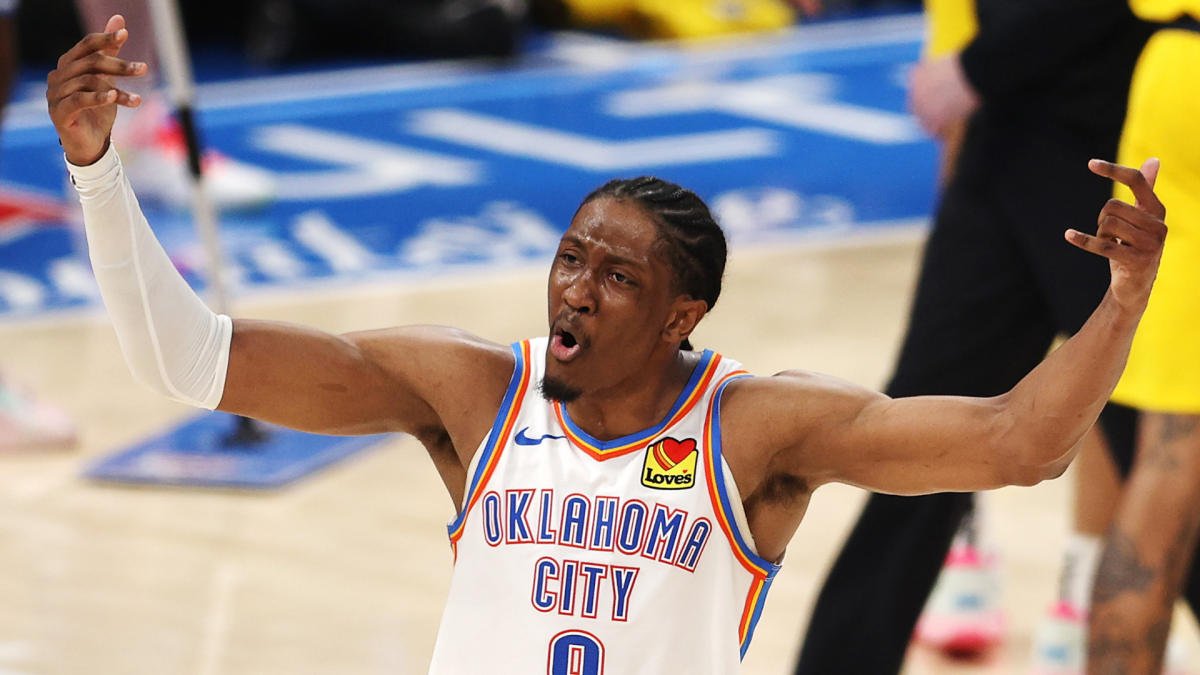
The Oklahoma City Thunder have played 18 games this season, but star forward Jaylen Williams, who is recovering from wrist surgery done in the offseason, has yet to play in any. While his recovery appears on track for full health, Williams’ prolonged absence could financially impact him by as much as $47 million. This stems from the NBA’s collective bargaining agreement rules tied to contract extensions for players with six or fewer years in the league, which allow contract values to increase based on recent accolades such as All-NBA team selections or major awards.
Williams signed a five-year extension worth about $240 million guaranteed last offseason, with potential raises through the Derrick Rose Rule that permits up to 30% of the salary cap if a player meets certain accolades criteria, including being named to an All-NBA team recently. Williams had a contract clause that would increase his salary incrementally based on this season’s performance—26% of the cap for a third-team All-NBA selection, 27% for second team, and 30% for first team or major awards—potentially adding $47 million more. However, because he’s missed 18 games, Williams falls below the NBA’s minimum games played threshold for major awards eligibility, eliminating those salary escalators for now.
Despite this, Williams will still earn a substantial income from his base contract. The controversy lies in the rule’s timing that requires accolades in the season right before the contract starts or in two of the last three seasons, which Williams narrowly missed, even though he was an All-NBA player the previous year. This timing hurts young players like Williams who sign rookie extensions and are expected to develop over time, rather than remain at a fixed level. Established veteran players have stricter criteria due to age-related decline risks, but for rising stars, missing out on these escalators over a single season feels unfair.
This issue highlights how the current collective bargaining agreement’s salary escalation rules can penalize young players for unfortunate timing in performance and injuries. It also impacts the league by limiting how competitive teams like the Thunder can be financially in assembling top-tier talent. Changes to allow more flexible timing or cumulative escalators based on multiple seasons could better reward players who prove their elite status early or over time, rather than in just the immediately preceding season.
The rule may stand until the next CBA review, but it clearly warrants reconsideration to better support promising players like Williams. His case is similar to Jayson Tatum’s past experience, where a single off year delayed a deserved contract boost, benefiting teams financially but at a player’s cost. Moving forward, the NBA should ensure that young stars receive contracts reflecting their demonstrated talent fairly, without harsh penalties for circumstantial setbacks.
Fan Take: This story matters because it reveals how the NBA’s contract rules can unexpectedly penalize rising stars like Jaylen Williams, potentially limiting their financial rewards despite clear talent. For basketball fans, it underscores the importance of fair contract structures that truly reflect a player’s impact and growth, as these deals can influence team building and the future competitiveness of the league.