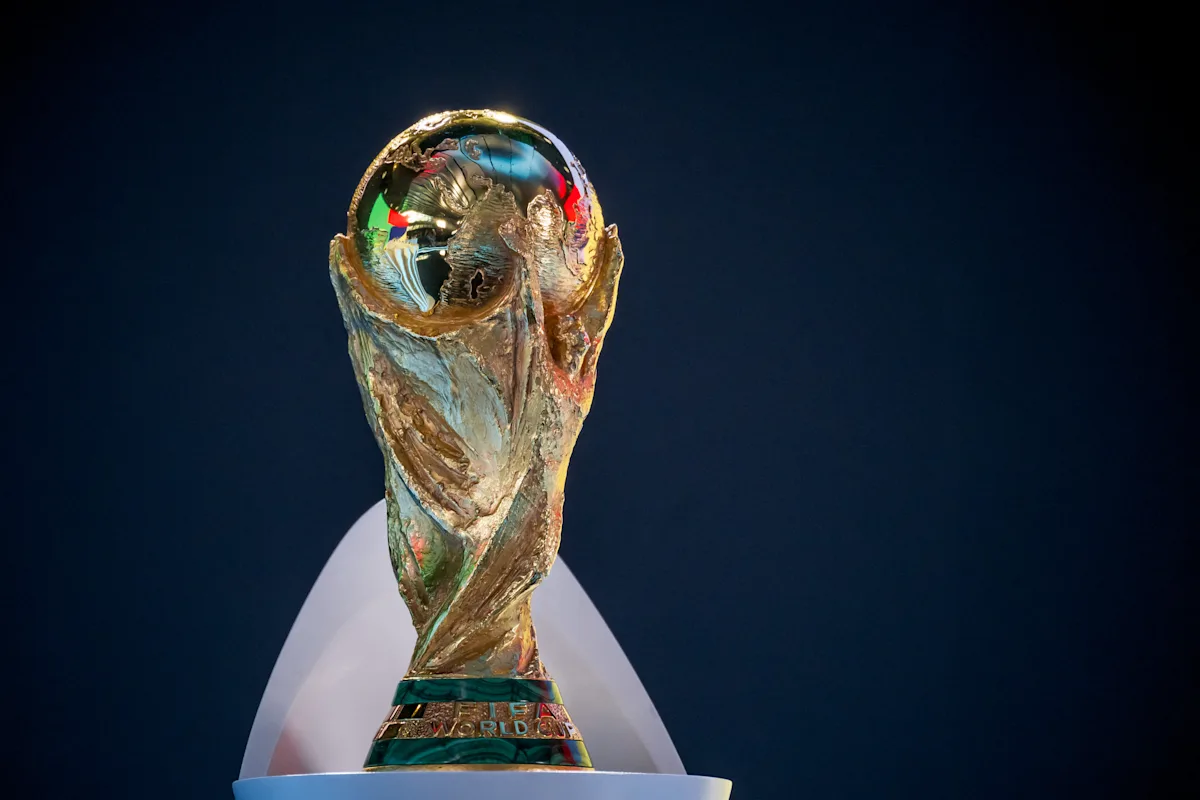
The draw for the 2026 FIFA World Cup is set for Friday in Washington, D.C., where the participating teams will discover their group stage rivals and the route they must take to reach the finals.
This World Cup will be the largest to date, commencing in June with 48 teams taking part, an increase from the 32 that competed in the last seven tournaments. The last edition featuring 24 teams was held in 1994 in the Americas, after which FIFA expanded participation to 32 starting with the 1998 tournament in France.
On Friday, the 39 qualifying nations and the three host countries will learn their placements in the tournament’s 12 groups. Additionally, FIFA will reveal the venues and kickoff times for the matches, starting on June 11 at Estadio Azteca in Mexico City.
Who is in each pot?
The qualified teams will be categorized into four pots, each containing 12 teams, based on the most recent FIFA World Rankings.
Pot 1 consists of the three host nations (USA, Mexico, and Canada) and the top nine ranked teams. Pot 2 will include teams ranked 13 to 24, while Pot 3 will contain those ranked 25 to 36. The final Pot 4 will feature the remaining 12 teams, including six playoff winners yet to be determined.
Pot 1: Canada, Mexico, USA, Spain, Argentina, France, UK, Brazil, Portugal, Netherlands, Belgium, Germany
Pot 2: Croatia, Morocco, Colombia, Uruguay, Switzerland, Japan, Senegal, Iran, South Korea, Ecuador, Austria, Australia
Pot 3: Norway, Panama, Egypt, Algeria, Scotland, Paraguay, Tunisia, Ivory Coast, Uzbekistan, Qatar, Saudi Arabia, South Africa
Pot 4: Jordan, Cape Verde, Ghana, Curacao, Haiti, New Zealand, European Playoffs A, B, C, D, Intercontinental Playoffs 1, 2
In total, 16 teams will represent Europe, nine from Africa, eight from Asia, six from North America, six from South America, and one from Oceania.
So far, 12 European teams have qualified, with four spots still up for grabs in the playoff games this March. In the intercontinental playoffs, set for March as well, two teams from North America, one from Asia, one from Africa, one from South America, and one from Oceania will compete for two remaining spots.
How is the draw conducted?
When the drawing begins, teams will be assigned to one of the 12 groups of four, starting with the USA, Canada, Mexico, and the next team from Pot 1. The host nations will be placed in their own groups: Mexico in Group A, Canada in Group B, and the United States in Group D.
After Pot 1 teams are drawn, teams from Pots 2, 3, and 4 will be allocated to complete the groups.
Each team will compete in three group matches to determine which nations will progress to the final tournament.
After the group stage, 32 teams will move forward, with the top two from each group along with the best eight third-placed teams advancing. Tiebreakers will be assessed in the following order: goal difference, total goals scored, head-to-head results, fair play record, and a lottery if needed.
FIFA has made changes for this World Cup, introducing two paths to the semi-finals to promote competitive balance. This means that if the top two teams win their respective groups, they will not face each other until the finals. For example, Spain, ranked first, and the defending champions Argentina, ranked second, will be placed in opposite brackets. The same goes for France (third) and England (fourth). Thus, the top four teams can only meet in the semi-finals, provided they progress through their groups.
As usual, teams from the same confederation (e.g., Brazil and Uruguay) cannot share a group, with European teams being the exception. Each group will have a minimum of one and a maximum of two teams from any given confederation.
When and where will the US, Canada, and Mexico play?
While the specific opponents are yet to be revealed, the match dates and locations for the three host countries have been announced.
The United States kick off the tournament on June 12 at SoFi Stadium in Los Angeles, concluding their group stage with matches on June 19 at Lumen Field in Seattle and returning to SoFi Stadium on June 25.
Canada will start their tournament on June 12 at BMO Field in Toronto, wrapping up group play with games on June 18 and June 24 at BC Place in Vancouver.
Mexico has the honor of playing in the opening match on June 11 at Estadio Azteca in Mexico City, followed by a match at Estadio Akron in Guadalajara on June 18 and returning to Mexico City for their final group game on June 24.
What are the playoff matchups?
European Semi-Final – March 26th
Path A: Italy vs. Northern Ireland
Path A: Wales vs. Bosnia and Herzegovina
Pathway B: Ukraine vs. Sweden
Path B: Poland vs. Albania
Route C: Turkey vs. Romania
Pathway C: Slovakia vs. Kosovo
Route D: Denmark vs. North Macedonia
Pathway D: Czech Republic vs. Ireland
European Final – March 31st
Wales or Bosnia and Herzegovina vs. Italy or Northern Ireland
Ukraine or Sweden vs. Poland or Albania
Slovakia or Kosovo vs. Turkey or Romania
Czech Republic or Ireland vs. Denmark or North Macedonia
Intercontinental Semi-Finals – March 26th
New Caledonia vs. Jamaica
Bolivia vs. Suriname
Intercontinental Final – March 31st
Congo vs. New Caledonia or Jamaica
Iraq vs. Bolivia or Suriname
The victors of these six playoff matches will advance to Pot 4.
How to watch the FIFA World Cup draw
When: Friday, December 5th, 12 PM ET
Where: John F. Kennedy Performing Arts Center, Washington, D.C.
TV: Fox
Streaming: Fox One, DirecTV
Purchasing through links may earn a commission. Prices and availability are subject to change.
Fan Take: This news matters immensely to soccer fans as the upcoming World Cup marks a significant expansion in teams, enhancing the competition’s global inclusivity. It also raises excitement about the potential matchups and storylines to unfold, making every match a platform for showcasing talent and national pride.