

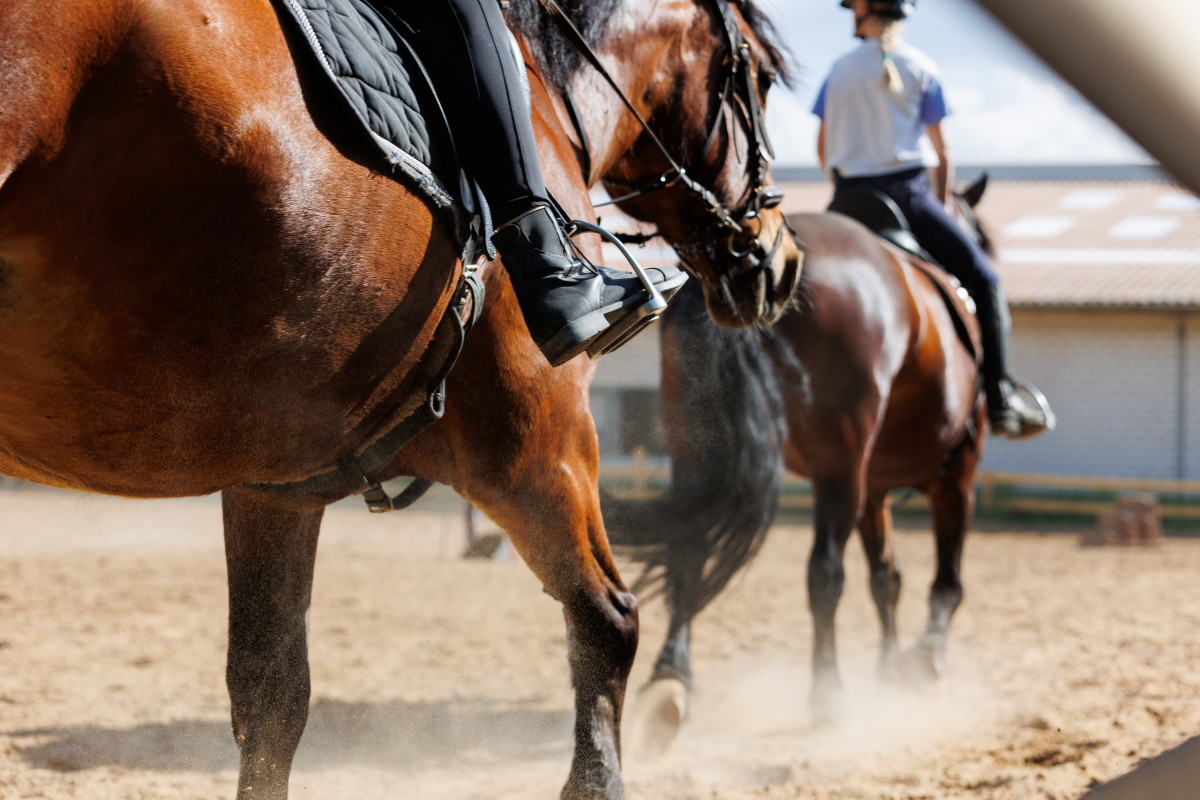
Training horses play a pivotal role in equestrian education, serving as the foundation for teaching beginners, building rider confidence, and often being the first horse-human connection. For many jockeys, these horses ignite a lifelong passion, and for researcher Kaylee Copelin, they sparked her interest in equine welfare.
The first part of the Canadian Equestrian Lesson Industry Survey, featuring detailed insights from 154 lesson barns with over 1,500 lesson horses across Canada, has been released. Supported by the OMAFA Agri-Food Innovation Alliance and Equine Guelph, researchers Kaylee Copelin and Katrina Marquise from the University of Guelph’s Campbell Animal Welfare Research Center examined various aspects of barn management, from feeding and housing to healthcare and daily routines, along with input from barn owners, managers, and coaches.
Due to a lack of registration requirements and oversight, little is known about horseback riding lesson facilities in Canada. Copelin explains that lesson horses lead vastly different lives compared to show or pleasure horses and face unique welfare challenges such as equipment-induced wounds, repetitive behaviors, higher injury rates, and even aggression toward humans. The study aims to understand how these horses are managed, identify areas needing support, and recognize where practices are already strong, providing a foundation for future research into this understudied group.
The survey results offer positive news: most training horses in Canada receive appropriate, species-specific care. They are kept in groups, regularly examined by veterinarians and farriers, and often benefit from alternative therapies like massage and chiropractic care. However, concerns remain about long-term painkiller use and financial pressures that limit barns’ ability to prioritize horse welfare over economic survival. Despite these challenges, the day-to-day management outlook is generally favorable.
Most surveyed barns adhere to the Canadian Code of Equine Practices, with horses living outdoors in groups or working long hours, receiving scheduled farrier visits and dental care. Many barns go beyond basic care with supplements and therapies such as massage, laser treatment, and Reiki, showing a strong commitment to horse welfare regardless of scientific validation. Over 90% of respondents use therapies like massage, chiropractic, acupuncture, and osteopathy; 97% employ professional farriers; and more than 77% work with veterinarians on herd health plans. Turnout practices are good, with 76% allowing group turnout, and almost 96% scheduling at least one rest day weekly. Most facilities are confident in body condition scoring and provide constant hay access, though only about half conduct feed testing, indicating knowledge gaps in nutrition.
Despite these positives, the study uncovered ongoing challenges impacting horse welfare indirectly. A notable pattern in open responses revealed many operators acknowledge serious welfare issues industry-wide but believe their own barns manage well, suggesting a possible need for greater accountability.
Financial sustainability is a major concern, with only 12% of respondents viewing the lesson industry as economically viable. Many sacrifice personal income and quality of life to care for horses, unable to raise lesson prices without losing customers despite rising costs in feed, fuel, and veterinary care. This financial strain often results in delayed retirements and increased workloads for horses. Kopelin highlights this funding crisis as the most significant issue facing the industry, creating a cycle of overworked horses and economic hardship for facilities. Some barns reported excessive workloads of up to 8 hours daily, which is alarming.
Meeting customer expectations while maintaining horse welfare is another dilemma. Barns implement protective measures like limiting jump heights and lesson intensity, but these can clash with client demands seeking immediate results. Owners must sometimes refuse lessons to protect horses, risking customer loss, and some take secondary jobs to support welfare-friendly practices. Although most barns provide at least one day off weekly, approximately 25% lack written records of horse workloads, complicating monitoring.
Interestingly, many barns assign older horses to beginner riders believing it provides mental relief for the horses. However, beginners’ uncoordinated riding and nervousness can be mentally taxing despite the physical demands being lower than for advanced riders, raising questions for future study on beginner versus expert rider impacts.
The use of long-term pain medication is widespread, with over 55% of barns administering drugs like Previcox or Bute to some horses daily, averaging about 30% of their herds. Additionally, 12.5% report prolonged ulcer medication use, and nearly half utilize joint injections. While these treatments indicate concern for comfort, they also highlight the physical toll on horses and ethical questions about asking horses to work under chronic pain. Financial limitations make retiring horses difficult as replacements cost over $10,000; losing one horse increases pressure on others, perpetuating overwork and injury.
Nutrition practices reveal a gap, despite 74% using supplements. Forty-four percent never test hay quality, and just half of those who do use results to adjust feeding, suggesting inefficiencies. While 35% consult nutritionists, many still rely on tradition over science. Heavy supplement use shows owners’ efforts to support horses but may not be fully effective without proper forage analysis.
Awareness of the concept of social license—the social trust essential for animal-related industries—is low, with only 25% recognizing the term. Those familiar see it as a concern for the lessons industry, which interacts closely with the public. Increased transparency about horse care practices could help maintain social acceptance and the industry’s future.
In conclusion, this national survey reveals a complex picture of Canada’s horse lesson industry. Many lesson horses receive careful, suitable care with facilities prioritizing expert health visits and complementary therapies. Yet challenges persist, especially regarding workload, pain management, nutrition knowledge, and economic viability. Operators often go above and beyond, sacrificing personal resources to maintain welfare.
Copelin notes that management itself is generally strong, meeting or exceeding Canadian Equine Code standards. Upcoming research will explore horse behaviors related to equipment and workload to better identify stressors. Future investigations will also focus on how workload and rider ability affect horses physically and mentally, aiming to develop balanced schedules that reduce strain.
As public expectations for animal welfare grow, schools need not only education and resources but also recognition for their role in promoting compassionate horsemanship. Ongoing research and industry collaboration are crucial to ensuring lesson horses thrive, not just perform. These horses form the foundation of the industry, and through joint efforts, meaningful improvements are possible.
Fan Take: This study is vital for horse racing fans because lesson horses are the grassroots of equestrian sports, shaping future riders and the industry’s welfare standards. By understanding and improving the care of these foundational horses, the sport can foster healthier, happier horses and riders, ensuring a more sustainable and ethical future for horse racing and equestrian disciplines overall.