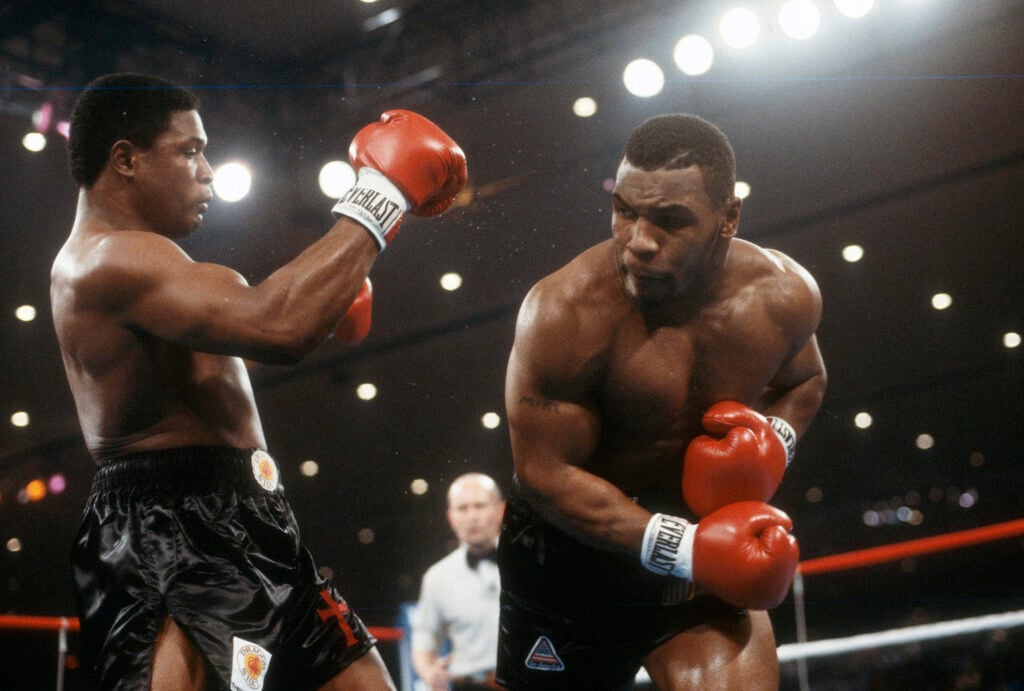
On this day in 1991, former heavyweight champion Trevor Berbick found himself in an unexpected and challenging situation. Before one of the most memorable fights of his career against Larry Holmes, Mike Tyson received some guidance from Muhammad Ali. These legendary boxers shared more than just the ring with Holmes, as Tyson had also famously beaten Trevor Berbick in 1986, becoming the youngest heavyweight champion ever and avenging a loss once suffered by Ali.
Though Berbick fought against some of boxing’s greatest names, his bout against Nobuhiko Takada in Tokyo remains one of the most notable. Five years after losing to Tyson, Berbick took part in an exhibition match against the Japanese pro wrestler Takada. Berbick expected the fight to follow international kickboxing rules, which protect against strikes below the waist. However, Takada, who represented Japan’s “strong style” wrestling—a form emphasizing realistic strikes—started kicking Berbick below the waist immediately. Despite Berbick’s protests, the referee did nothing, leading to Berbick receiving several strikes, including a kick to the head, which forced him to leave the match early.
Berbick’s unusual crossover match echoes the famous 1976 fight between Muhammad Ali and pro wrestler Antonio Inoki, who was closely connected to Takada. In the Ali-Inoki fight, Inoki delivered continuous leg kicks to Ali over 15 rounds, resulting in a draw. Unlike Berbick, Ali endured the entire fight despite severe leg damage, setting a precedent for such mixed-discipline bouts.
Fan Take: This story highlights the unpredictable and often controversial nature of crossover fights, spotlighting the risks fighters face when stepping outside their core disciplines. For combat sports fans, it serves as a reminder of the sport’s evolving landscape, pushing boundaries and blending styles in ways that continue to shape the future of fighting.