The Florida Jockey Federation is committed to preventing Gulfstream Park from keeping its slot license without live horse racing. They released findings from a feasibility study they commissioned, which explores different ways to sustain and grow Florida’s Thoroughbred racing and breeding industry. According to the study, this sector generates $3 billion in economic impact and supports over 33,000 jobs in Florida.
The study was funded by the Thoroughbred Racing Initiative (TRI), a group formed last February to stop Gulfstream Park’s division, along with the Florida Horsemen’s Benevolent and Protective Association (FHBPA), representing horse owners and trainers at Gulfstream Park.
Crossroads Consulting, a Florida-based firm that performed the study, previously conducted a similar analysis for Maryland in early 2024 after the Stronach Group announced plans to exit horse racing in that state. The Maryland study led to an agreement where Pimlico Race Course ownership was transferred to state officials who are rebuilding a Baltimore racetrack and planning a new 300-acre training center nearby.
After a proposal to separate Gulfstream Park failed in the Florida Legislature earlier this year, TRI promised to present a new plan to Florida officials by year’s end. The study evaluated five potential Thoroughbred racing sites in Florida, focusing on facilities capable of supporting a full racing infrastructure, including tracks, stables, grandstands, barns, and parking, with construction cost estimates provided by Populous, the firm behind new Belmont Park and Pimlico designs.
These five Florida sites identified by the study include:
- Gulfstream Park: Currently meeting or exceeding requirements with no immediate funding needed to continue year-round racing, potentially benefiting from a casino and hotel addition.
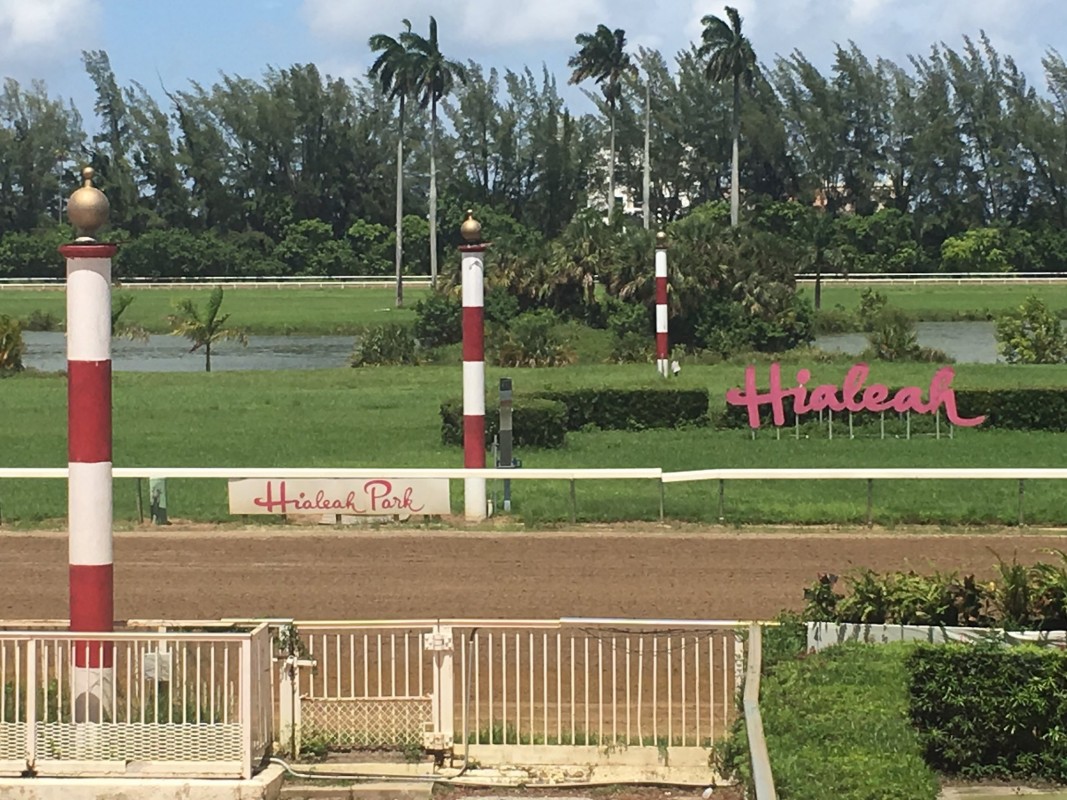
- Hialeah Park: Usable grandstand and paddock but limited stabling; requires significant upgrades with a budget estimate of about $90 million.
- Hialeah Winter Bundle: A scaled-back event option with existing seating, budgeted at around $50 million, with other races held at separate locations.
- Tampa Bay Downs: Functional stables but an aging grandstand needing major renovation, with an estimated $44.4 million cost.
- Greenfield Concept: A new facility near Ocala with a 1-mile dirt track and 7-furlong turf course, seating 3,000, and full facilities, costing nearly $195 million excluding land.
The future of racing at these venues depends on cooperation from owners. Gulfstream Park might be purchased by billionaire Mike Lepore. Hialeah, owned by John Brunetti Jr. and family, includes a casino but hasn’t seen thoroughbred racing since 2001. Tampa Bay Downs currently hosts its 100th racing season and is owned by Stella Thayer. Sites like Palm Meadows Training Center and the former Calder Racetrack were ruled out as viable options.
The study also explored three ownership and operational models:
- A non-profit horse racing association governed by industry insiders and independent directors, reinvesting profits into racing facilities and incentives.
- A state-level authority similar to New York’s, managing racing with public accountability.
- A jockey cooperative led by FHBPA or FTBOA, ensuring jockeys and producers have direct control over operations and reinvestment.
FTBOA CEO Ronnie Powell recently revealed plans for a new thoroughbred racing venue near Ocala in Marion County. TRI also indicated these models could collaborate with experienced horse racing or gaming organizations through partnerships that preserve local governance.
The Stronach Group’s future funding plans remain unclear if they exit Florida racing, a key hub for thoroughbred breeding, training, and racing in North America.
This study covers data and industry benchmarks from 2019 to 2024 and compares Florida’s thoroughbred industry to 10 other states, highlighting best practices. John Green, TRI Vice President and DJ Stable general manager, emphasized the importance of a feasibility study as a foundational step toward actionable plans. He expressed commitment to finding solutions that break decoupling and support the industry’s role in Florida’s economy and tourism for decades.
This article originally appeared on December 22, 2025, on the Paulick Report.
Fan Take: This study and the ongoing efforts to secure Florida’s thoroughbred racing future are crucial for fans who cherish the sport’s legacy and economic impact. Ensuring live racing continues with modern, sustainable facilities can preserve the thrill of horse racing and support the livelihoods of thousands connected to the industry.