
Rhythm plays a crucial role in training horses and enhancing their performance across all disciplines. It helps achieve balance, relaxation, and a deeper connection between horse and rider.
Rhythm is not about speed but the regularity and consistency of a horse’s footsteps in different gaits—walk (four beats), trot (two beats), canter (three beats), and gallop (four beats). Ideally, each gait should maintain a steady rhythm, both during the movement itself and when transitioning between gaits.
Contrary to some beliefs, most racehorses have a basic grasp of rhythm, although their pace is faster than what is typically needed off the track. During morning workouts, they gallop one to two miles at a sustained, rhythmic pace rather than a frenzied sprint. Jockeys help maintain this rhythm by steadying their hands and keeping contact with the horse’s mouth, calming the horse if it becomes too eager or loses rhythm through subtle adjustments.
Galloping rhythmically helps horses avoid injuries and develop self-control during races, teaching them not to expend all their energy too early and to respond to their rider’s instructions for peak performance near the finish. Off-track training focuses on slower gaits but the principle remains—the rhythm aids balance, relaxation, performance, and injury prevention.
Riders can’t directly change a horse’s rhythm until they can move smoothly with the horse’s natural pace, using their body—trunk, legs, and seat—to feel the horse’s movements. Hands and reins play a supportive, secondary role. Beginners should focus on matching the horse’s rhythm at walk, trot, and canter, using body movements to connect with the gait. When riders master this, they can start influencing the horse’s rhythm.
Breathing rhythmically alongside the horse—for example, inhaling and exhaling in sync with strides—can also help. Building rhythm is a cooperative effort; early training sessions often focus on identifying and settling into the horse’s natural tempo, which can initially feel uneven or hurried.
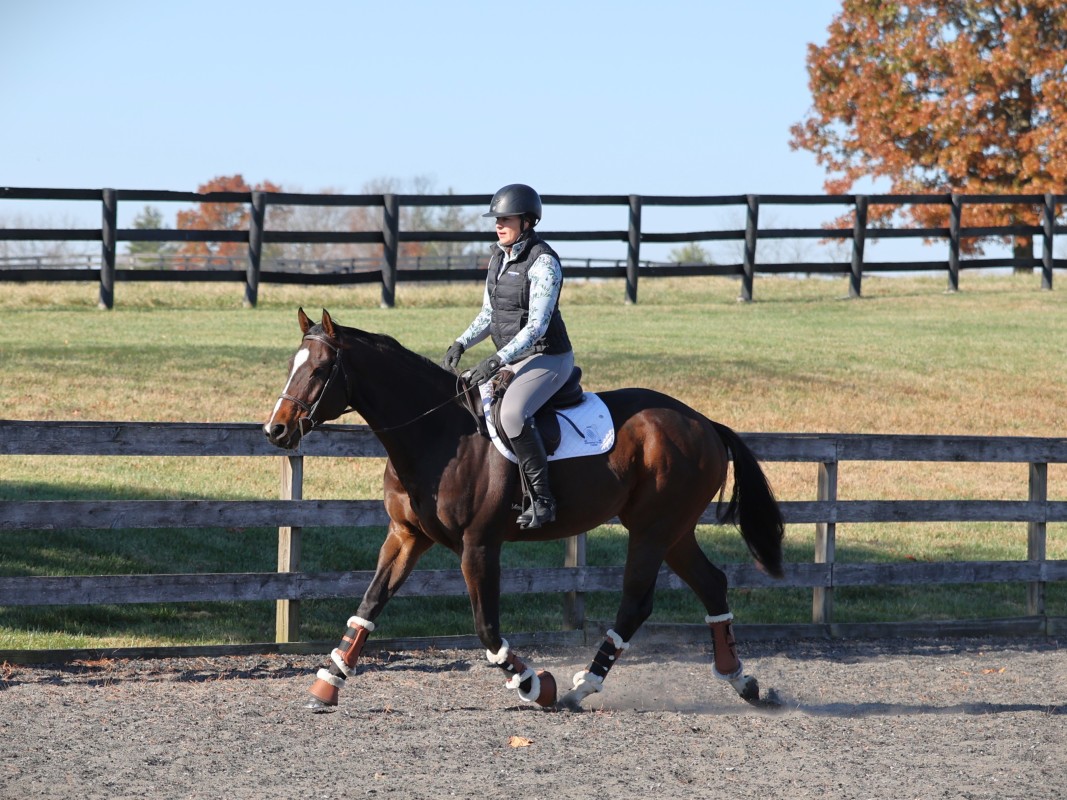
Recently retired racehorses tend to find their rhythm in canter with some practice and do better at slowing down and regulating rhythm in trot. Circles are valuable for teaching rhythm, as they encourage a steady pace and enhance rider-horse connection through coordinated body aids. Lunging and longlining help too, as they provide vocal cues and control within a safe environment, promoting rhythm and preventing injuries.
Some tips for maintaining rhythm include providing security through legs and seat to support the horse, posting with intention during trot to influence tempo, and using vocalizations or singing to convey calmness and rhythm, which affects both horse and rider’s stress levels.
Fan Take: This insight into rhythm training is vital for horse racing fans because it highlights how racehorses develop not just speed but crucial balance and control that impact performance and safety. Understanding and applying rhythm training off the track could extend horses’ careers and enhance their welfare, ultimately elevating the sport’s quality and sustainability.