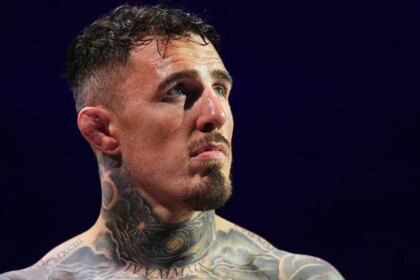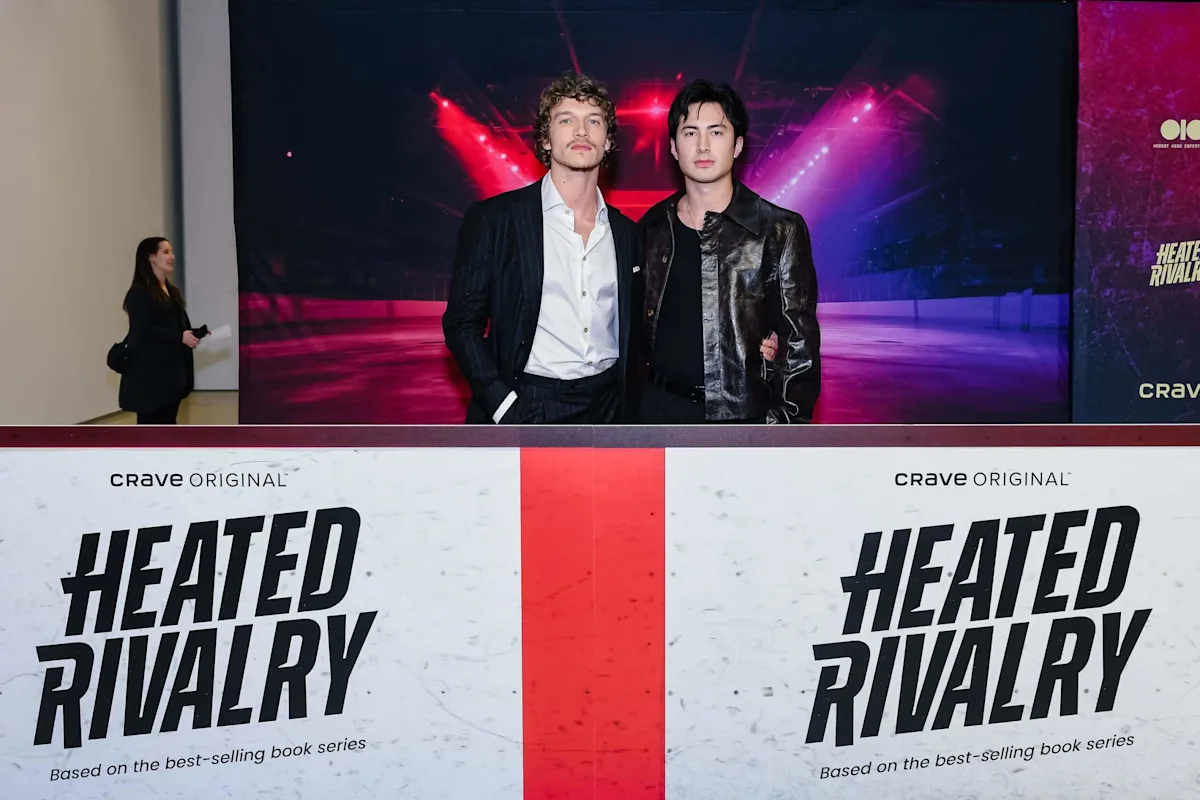
When Harrison Brown secured a small role on the Canadian TV series Rivals, he was thrilled to join a project that was sparking conversation. Rivals, a show focusing on gay hockey players, delves into the complexities within men’s hockey culture, which Brown advocates should be fundamentally changed. Despite being the first openly transgender professional hockey player and now an actor, Brown didn’t foresee just how much attention the show would gain.
Brown told The Athletic, “Nobody expected this—it’s become a pop culture sensation.” Heat Rivalry, streaming on HBO Max and Canada’s Crave platform, follows two fictional male hockey players—Japanese-Canadian Shane Hollander and Russian Ilya Rozanov—who share an intense rivalry and a secret romance. Brown appears briefly as Rozanov’s teammate. In real life, Brown played three seasons in the National Women’s Hockey League before transitioning medically.
Gradually, the show has infiltrated mainstream hockey culture, raising questions about the sport’s inclusion of the LGBTQ+ community and its shortcomings. Could this rising interest spark a cultural shift in men’s hockey? At the very least, it has opened the door for discussion.
Jacob Tierney, a Montreal-born writer and director known for Letterkenny and its spin-off Shorey, adapted his first two books into this series. The show emphasizes character relationships, witty exchanges, and romance over intense hockey scenes. Brock McGillis, a former pro goalie and LGBTQ+ advocate, described the show as appealing to “girls, gays, and them.”
Currently, Heat Rivalry is Crave’s most successful original debut and has been renewed for a second season. While fans pushed for Emmy consideration, the show was ineligible due to Canadian funding. Remarkably, two episodes rank among the top-rated TV episodes on IMDb, surpassing famed shows like Game of Thrones and The Mandalorian. Music icon Miley Cyrus even expressed interest in contributing to the next season’s soundtrack.
Though NHL players have generally stayed quiet, the Boston Bruins acknowledged the show on social media during a game against the Montreal Canadiens, whose Pride Night featured a show trailer. Fans don Heat Rivalry shirts at NHL games, and an NHL representative recently praised the series as “the most unique engine for gaining new fans.”
Actor François Arnault, portraying Scott Hunter, a veteran hockey player exploring a same-sex relationship, shared in interviews his surprise at the diverse audience, including actual hockey players tuning in. Arnault hopes the show leads to genuine changes in how the NHL treats players, noting the league’s historical lack of openness.
While the series has limited hockey footage, it uses the sport’s environment—the locker room dynamics, professional pressures, and the high-profile lifestyle—to explore themes of same-sex relationships and acceptance, mirroring real-world challenges.
The NHL banned Pride Night jerseys and rainbow tape in October 2023 after some players opted out of Pride Night celebrations, though rainbow tape was later reinstated by player defiance. Special Pride Night jerseys remain unavailable.
No NHL player has ever publicly come out as gay. Luke Prokop, a defenseman who came out in 2021, is affiliated with the Nashville Predators. He recalls positive experiences within teams but balances his activism carefully to avoid being viewed as a distraction. He hopes to be seen simply as a hockey player.
Hockey’s conservative culture demands conformity, restricting individuality, which discourages queer players from being open. Brock McGillis educates youth on fostering inclusivity, highlighting the harsh judgment players face for expressing themselves. Ironically, the sport’s close-knit culture could aid NHL teams in embracing openly gay players, emphasizing the family-like bonds.
While some NHL stars and officials have voiced LGBTQ+ support, including player agent Bayne Pettinger and superstars Connor McDavid and Sidney Crosby, the league remains less welcoming than women’s professional hockey, which has many LGBTQ+ members.
Brown notes the increasing visibility of lesbians, bisexuals, transgender, and non-binary people in hockey, fostering comfort in self-expression. He sees shows like Heated Rivals challenging toxic masculinity in hockey and providing much-needed representation, which could reshape perceptions of masculinity within the sport.
The show’s success offers the NHL a chance to attract new fans, a prospect the league recognizes. Maintaining these fans requires creating a genuinely welcoming and safe environment, McGillis stresses.
This article originally appeared in The Athletic.
Fan Take: This groundbreaking show highlights the urgent need for inclusivity and representation in hockey, signaling a potential cultural shift in a traditionally conservative sport. For hockey fans, embracing this change could mean a more diverse and accepting future, enriching the game both on and off the ice.