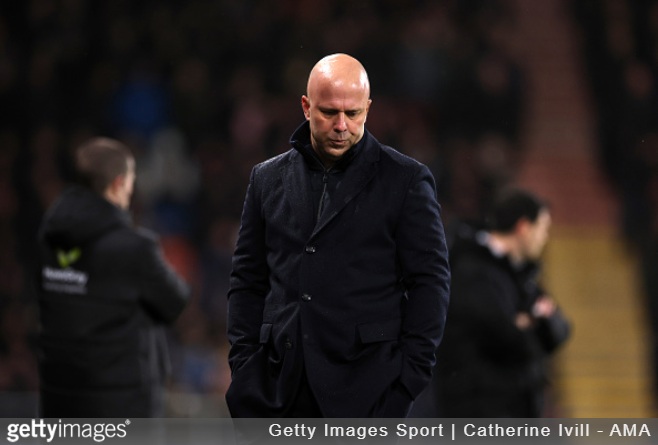
With Virgil van Dijk visibly frustrated, Arne Slot’s baseless criticisms of the referee, and Mohamed Salah gazing at the rain-soaked sky, the closing moments at the Vitality Stadium on Saturday painted a telling picture.
Bournemouth delivered a significant blow to Liverpool, marking a downturn in their season. What began with a sense of optimism devolved into disarray, underscoring a troubling shift for teams that were once solid but now seem fragile, predictable, and struggling to find solutions.
Match Unveils Liverpool’s Flaws
This defeat was particularly significant. After 11 league matches and 14 overall competitive games without loss, Liverpool’s defensive weaknesses, lack of creativity in attack, and signs of fatigue served as alarming warnings. The contrast to the positivity stemming from a recent Champions League victory in Marseille was striking, serving as a reminder that Arne Slot’s team has deeper issues than just this one match.
Bournemouth embodied what Liverpool lacked: energy, creativity, and fearlessness. Under Andoni Iraola, Bournemouth absorbed early pressure and easily dismantled Liverpool’s defense with long passes, exposing a vulnerable left side. Milos Kerkes had a tough outing, Van Dijk seemed off his game, and Joe Gomez’s first start at center-back since December 2024 was marked by misfortune and indecisiveness.
Evanilsson opened the scoring after Van Dijk’s lackluster effort to intercept a ball. Alex Jimenez doubled the lead in a chaotic stretch where Liverpool played for seven minutes with 10 men, as Gomez, injured in a clash with Alisson, could not be replaced immediately. Surprisingly, Slott was seen urging his players to kick the ball out of play.
Van Dijk’s header before half-time provided a glimmer of hope, and in the 80th minute, the tide seemed to turn when Salah’s clever backheel set up Dominik Szoboszlai’s stunning equalizer from a free-kick. Had the score levelled at 2-2, the old Liverpool would have seized victory, but instead, they faltered.
The winning goal came late in stoppage time following a long throw that led to chaos, resulting in a rebound off the post and a blunder from Amin Adli, who scored. Liverpool’s defensive frailties were evident, reflecting a team running on empty. This marked their fifth goal conceded from a throw-in this season—the worst record in the league—a far cry from the team’s former intensity and structure.
Transfer Market Mishaps: Losing Guehi and Semenyo
If the defeat to Bournemouth highlighted Liverpool’s weaknesses, the January transfer window only made matters worse. After Connor Bradley’s injury and Giovanni Leoni’s season-ending ACL injury, bolstering the defense became imperative. Ibrahima Konate, absent for personal reasons, is nearing the end of his contract, while Joe Gomez remains injury-prone and Andy Robertson’s potential move to Tottenham Hotspur looms.
Marc Guehi was seen as an ideal addition—young, experienced in the Premier League, and tactically compatible with Slot’s system. However, Liverpool hesitated, allowing Manchester City to swoop in; Guehi is now set to strengthen an already fierce rivalry.
Similarly, Bournemouth’s dynamic forward Antoine Semenyo caught Liverpool’s eye. His speed, strength, and versatility made him an appealing choice for a fluid attack, but again, Liverpool missed their chance while other clubs capitalized.
These missed opportunities are painful not just for the players in question but also for what they signify: a club caught in a struggle between ambition and caution. In a cutthroat market, indecision can be detrimental.
Visible Frustration from Van Dijk and Tactical Challenges for Slot
Van Dijk’s demeanor at full-time—arms flailing and voice elevated—was revealing. The captain is acutely aware of the standards Liverpool once upheld, and their decline is glaring. While he oscillates between authoritative and careless, the heavy burden he carries is undeniable. With Gomez prone to injuries, Konate missing, and Bradley out, Liverpool’s defense appears makeshift, and it’s no wonder the captain is fuming.
In contrast, Slot remained calm and composed amidst the turmoil, arms crossed. His 4-2-2-2 formation proved effective against Marseille, but it showed vulnerabilities against Bournemouth. The midfield tandem of Gravenbirch and Mac Allister lacked intensity, and Kerkes was left exposed due to the wide rotation. Slot’s substitutions—Robertson for Kerkes and Ekitike for Mac Allister—failed to energize the team.
Slot acknowledged that fatigue played a role, but can that serve as an excuse for a team with high aspirations? The short answer is no.
The Bigger Picture: Teams in Transition – At What Cost?
Liverpool’s identity is evolving, and transitions are often fraught with challenges. The once high-energy, Salah-centric machine from the Klopp era appears to be fading. Slot’s vision of fluid positioning and collective tactical responsibility is still developing, with some positives but numerous gaps remaining.
Recent reports suggest that the club’s leadership is in alignment, with the understanding that the 2025-26 season will be a transitional one following a recent title win. However, qualification for the next Champions League is currently uncertain, raising concerns about the financial and reputational impacts of missing out on European competition.
The defeat against Bournemouth and the missed transfer opportunities emphasize a critical reality: evolution necessitates investment. Without Guehi, the defense remains shaky. The absence of Semenyo leaves the attack lacking direct options, and unless Salah’s role is clarified, the team risks drifting through transitional phases without fully mastering either one.
Bottom Line: Urgency Needed Over Excuses
While Liverpool’s season isn’t lost, they are still in the Champions League hunt and aiming for a top-four finish. They possess talented players, but warning signs are evident. The combination of a shaky defense, an underwhelming offense, and a transfer strategy that appears neither proactive nor responsive lays a fragile groundwork for a promising future.
Even Salah’s anticipated return from AFCON, following a wave of public discontent, feels overshadowed in a broader narrative. Clubs are wrestling with transitions, managers are seeking equilibrium, and captains are lamenting declines. The rain-drenched aftermath at Vitality served as more than just a glimpse of a disappointing day—it reflected Liverpool’s current reality.
Liverpool can’t afford to linger if they wish to reclaim their stature among Europe’s elite. They cannot idly watch as rivals bolster their squads, nor can they rely on past glories to resolve current issues.
The time for indecision has passed. For Arne Slot and Liverpool, the stakes are high: act decisively or risk falling behind.
Fan Take: The situation at Liverpool highlights a critical juncture not only for the club but for fans who passionately follow the sport. The need for decisive action in recruitment and strategy is paramount—as the club’s ability to compete at the highest level relies heavily on addressing these challenges promptly.