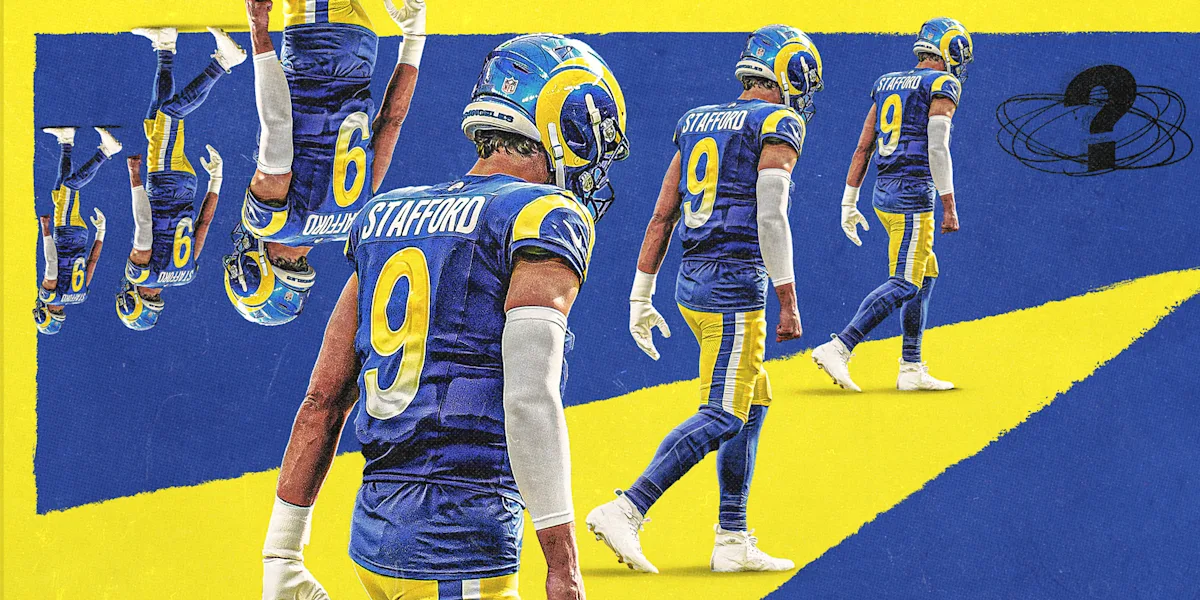
Matthew Stafford had an epidural in August to ease pain from a worsening disc, and he spent time in an expensive Unmortal Chamber — a $160,000 wheeled recovery pod that uses noninvasive therapies — after missing several weeks of training camp. At 37, the veteran’s durability suddenly felt fragile, and this summer there was real concern that one significant injury could trigger degenerative back trouble and possibly end a Hall of Fame-worthy career.
That physical worry was only part of the blow from Sunday’s 31-27 NFC Championship loss to the Seattle Seahawks. Critics have scrutinized the Rams’ late-game choices — most notably the decision to go for fourth-and-4 from Seattle’s 6-yard line while holding a four-point lead — but Stafford, who threw for 374 yards and three touchdowns in the game, told reporters the missed trip to the Super Bowl wasn’t merely a tactical error. After a season in which he produced elite passing numbers and led one of the league’s most potent offenses, losing in the title game cuts deep.
Stafford said on the “Let’s Go” podcast he’ll take his time before deciding whether to play again. “It’s going to involve a lot of things,” he explained, citing physical, mental, emotional and family considerations. “I had a lot of fun playing football this season, and I had a lot of fun playing for the Rams. That moment is not now.” Coach Sean McVay answered “Yes” when asked if he expected Stafford back, but immediately added the real question: whether Stafford still wants to keep playing.
Both Stafford and McVay made adjustments this year. Stafford’s sack rate (3.71%) was one of the lowest of his career, helped by a strong offensive line, though he did record a high number of throwaways and cut down on scrambles. McVay diversified the offense midseason, using heavier personnel groupings — 12- and 13-personnel and multiple tight end sets — to add physicality to the run game and create more deceptive passing looks. The results were impressive: the Rams finished the regular season at or near the top of league charts in total yards per game (394.6), points per game (30.5), points per drive (2.8) and passing yards per game (268.1), while also ranking well in rushing, red zone touchdown rate and EPA metrics.
Stafford built immediate chemistry with Davante Adams and continued to connect with Puka Nacua, showing the full palette of throws — from sidearm flicks to no-look deliveries — even while dealing with a sore throwing finger late in the year. According to Next Gen Stats, he dominated against blitzes this season, producing a league-high 32 touchdowns and just one interception in those situations. He wasn’t flawless — costly misses in Philadelphia, a multi-interception game versus Atlanta and other lapses were painful — but he also earned All-Pro recognition for the first time, threw a career-high 46 touchdowns, and delivered late-game postseason drives against Carolina and Chicago.
Adams called Stafford “one of the best quarterbacks to ever play this game” and “one of the coolest teammates” he’s had, describing his time in L.A. as a dream. McVay, visibly emotional after the loss, repeatedly described the roster as “special,” praised the relationships built this season and said he was grateful for the group.
Still, the Rams will need to address clear weaknesses. Special teams mistakes cost them repeatedly this year: midseason changes to the special teams staff and the kicking unit didn’t erase a trend in which four of L.A.’s six losses were tied to special-teams errors, including a pivotal fumble on Sunday. The secondary, particularly the outside corner position, is another area likely to be upgraded even though the defense overall finished among the better units in points allowed (10th fewest) and EPA allowed per play (top 10). Free-agent additions such as run-stopping nose tackle Poona Ford and linebacker Nate Landman helped stabilize the front, and younger pieces like Quentin Lake at safety appear to be progressing.
There’s much to like in what the Rams have constructed, but roster assembly and coaching can only be pushed so far in a league that punishes small margins. If Stafford can keep playing at this level and stays healthy, Los Angeles remains a Super Bowl contender — but that future hinges on whether he chooses to keep playing.
Fan take: This matters because Stafford’s health and decision about his future could shift the balance of power in the NFC — his presence keeps the Rams among the elite, his absence would spark a major roster and strategy reset. For the sport, it’s a reminder that even the best seasons can end on razor-thin margins, and that player health decisions increasingly shape championship windows.