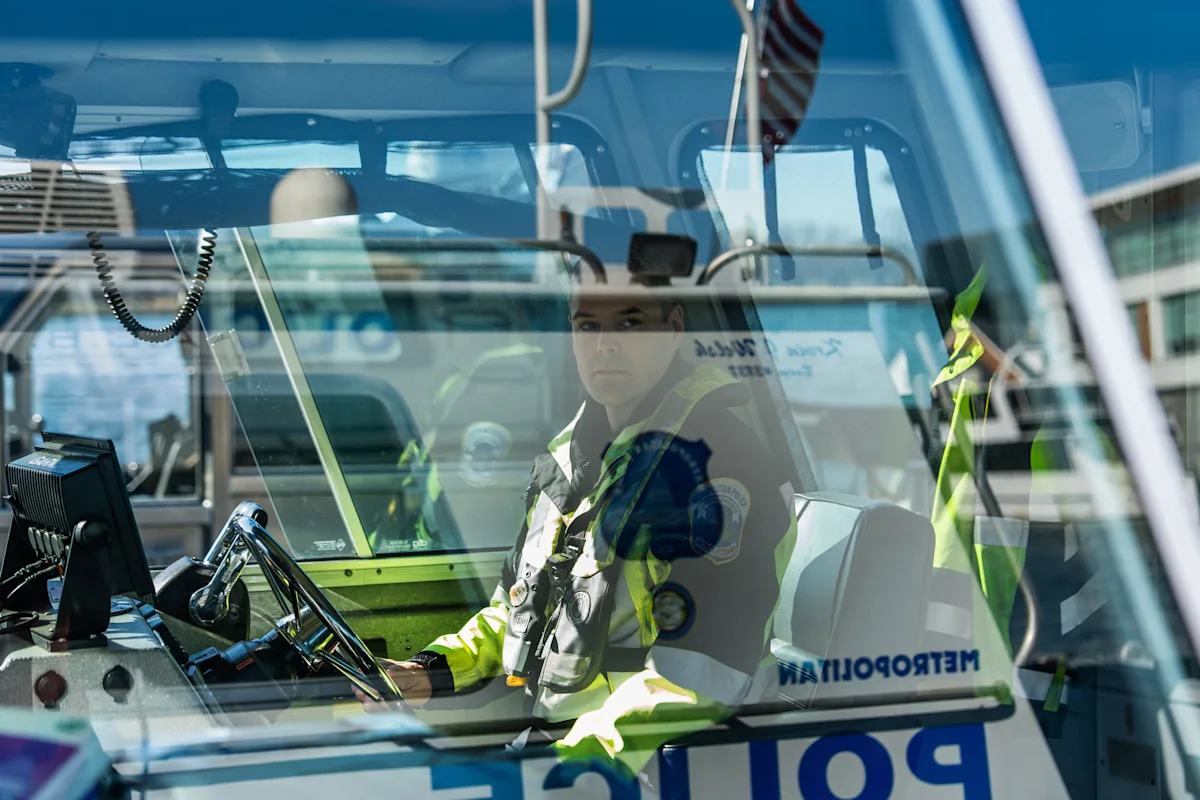
WASHINGTON (AP) — For many, the lasting image from the night when a plane and a helicopter collided over the dark Potomac River is the scattered children’s suitcases and tiny ice skates. Others recall the daunting scene of boats navigating debris-filled, shallow waters to retrieve the victims. In an instant after landing, lives were suddenly lost.
Relatives of those on American Airlines Flight 5342 and the Black Hawk Army helicopter observed the one-year remembrance Thursday of the deadliest air disaster on U.S. soil in more than two decades. Meanwhile, rescuers relived the intense moments that night and the challenging recovery that followed, as they plunged repeatedly into frigid waters polluted with jet fuel and dangerous debris, despite near-zero visibility, hoping to find survivors.
Tragically, no survivors were found; daughters, sons, spouses, and parents were recovered from the river, identified, and returned to their families.
The plane, carrying 64 people from Wichita, Kansas, to Washington, D.C., struck a Black Hawk helicopter with three crew members shortly before landing on January 29, 2025, killing all 67 aboard both crafts.
“At the hour’s end, it was clear there would be no survivors,” stated John Donnelly, Chief of the District of Columbia Fire and Emergency Services. The focus shifted to recovering bodies and belongings and assisting investigators.
For nearly a week, divers and responders worked tirelessly in roughly 8 feet (2.5 meters) of water to recover and identify victims. Some searched for months afterward for personal effects.
Tim Lilly, a former Black Hawk pilot whose 28-year-old son Sam was co-pilot on the flight, praised the responders: “Diving in the Potomac is tough even in good conditions, but what they did that night was incredible.”
In spring, Lilly and his wife Sheri were taken to the river site to lay flowers, meeting the individual who helped recover their son—a deeply emotional and healing moment.
The initial distress call, “Crash, crash, crash,” came from Ronald Reagan Washington National Airport’s control tower at 8:48 p.m., triggering the largest regional emergency response since 9/11. By midnight, around 350 personnel, including 20-30 Port Security Force divers, were at the scene.
Robert Varga, a Metropolitan Police Department scuba diver with 16 years of experience, recalled the call coming in while home and being underwater within an hour. “When we’re called, we know it’s serious,” he said.
The last major Potomac incident was an Air Florida plane crash in 1982 that killed 78 people.
“It was complete chaos,” said Lt. Sam Short of Washington Fire and Rescue, the first on the scene with divers, describing a horrific situation he struggles to put into words.
The crash site featured the partially submerged plane fuselage, scattered luggage, and a strong jet fuel odor.
Officer and diver Jeffrey Leslie recalled getting the call while putting his young kids to bed. Returning to the site months later, the sight of planes landing nearby sharply stirred memories, especially the area near Runway 33, where Flight 5342 was supposed to land.
Leslie noted personal items like a young figure skater’s white ice skates—a passenger returning from a competition—often triggered memories and offered some comfort.
Chief Donnelly prioritized family safety, the investigation, and responder welfare amidst dangerous conditions, often sharing grief with families.
A memorial in Washington recently honored families and emergency personnel, while some attending a National Transportation Safety Board hearing wore shirts recognizing response units.
Lt. Andrew Holos stressed mental health support for responders, acknowledging the trauma is difficult to prepare for.
Edward Kelly, president of the International Association of Firefighters, noted their union deployed peer support workers to meet with 75% of the involved firefighters and paramedics to help them recognize and address traumatic stress.
“Many responders are parents themselves, making the impact even more profound,” Kelly said.
Short called the experience “tough,” mentioning lost colleagues and months of recovery time needed by responders.
Donnelly’s department continues to monitor divers’ health due to potential exposure to hazardous substances.
Leslie described returning personal items like earrings, wedding bands, and children’s skates to families as a form of healing.
“They valued every possession we could give back,” Holos shared.
Varga hopes families understand that emergency workers did everything possible to rescue victims and bring closure.
“We made repeated efforts over months to recover personal effects because we knew how much they mattered,” he said.
“Hopefully, this brings some peace for the families.”
Reported from Omaha, Nebraska by Funk.
Fan Take: While this tragic event might seem distant from basketball, it underscores the broader human stories that touch us all, including athletes and fans alike. Recognizing the courage and resilience of emergency responders reminds us of the strength communities must harness, which often mirrors the teamwork and perseverance celebrated on the court.