

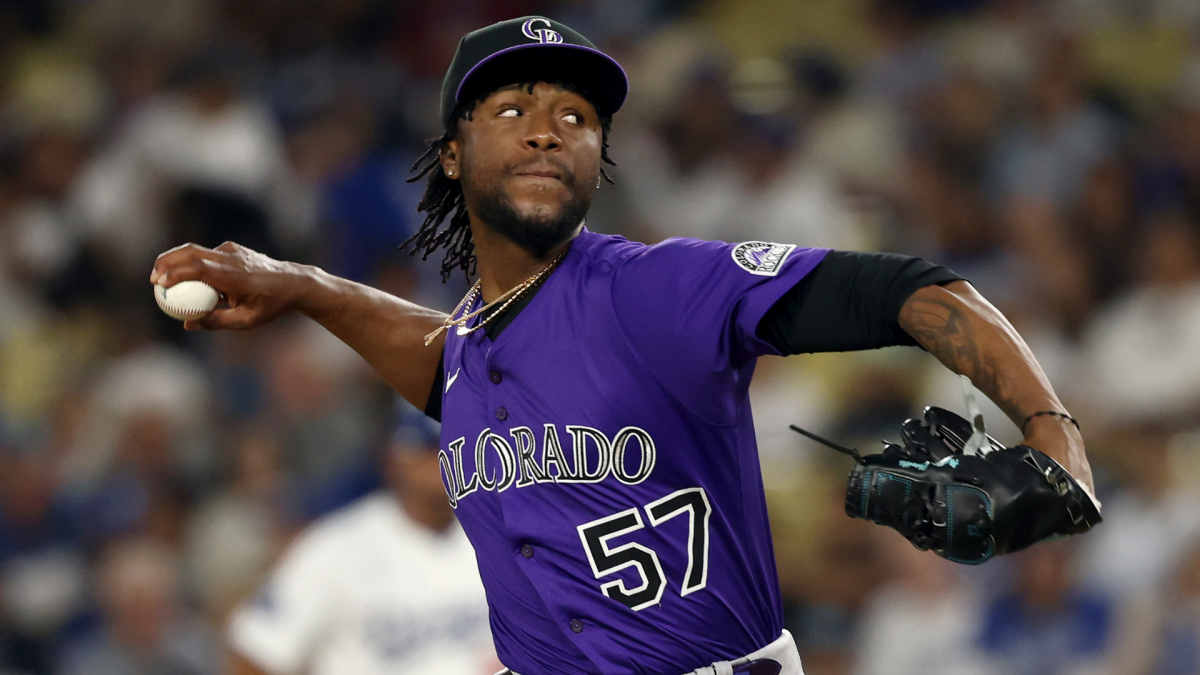
The New York Yankees completed a minor trade with the Colorado Rockies on Wednesday, acquiring right-handed pitcher Angel Chivili in exchange for minor league first baseman TJ Rumfield. This move stands out because the Yankees have made only a few external additions this offseason, and it is unusual to bring in a reliever who had an ERA over 7.00 last season (specifically, 7.06).
Chivili, 23 years old, has pitched in 73 games over the past two seasons for the Rockies, with a 6.18 ERA and a strikeout-to-walk ratio of 2.15. According to Baseball-Reference, his performance last year was near replacement-level, meaning he pitched worse than a typical minor leaguer given a major-league chance. So why invest in him?
A closer examination of Chivili’s skills reveals promising reasons for optimism about his potential to improve. Here are three key points explaining why he’s intriguing.
1. Natural Attributes
Earlier this offseason, the Seattle Mariners traded two players, including reliever Jose A. Ferrer, who finished his year with an inflated 4.48 ERA but showed promise beyond the stats. This illustrates that teams prioritize more than ERA when evaluating pitchers, often looking at the tools and underlying metrics that suggest future growth.
Chivili shares some characteristics with Ferrer: both throw hard fastballs averaging over 97 mph, have similar spin rates, arm angles, and release points. The major difference is Ferrer is left-handed and leans toward a sinker pitch, whereas Chivili primarily throws a four-seam fastball. Ferrer also has a strong sinking changeup, something the Yankees might work on with Chivili. While Ferrer was a recognized top-100 prospect and Chivili was not, it’s important to remember pitchers are rarely finished products early in their careers.
2. Easy Gains to Make
Even without expanding his pitch selection, Chivili has clear opportunities for improvement. Moving away from the hitter-friendly Coors Field will help reduce his inflated ERA. Also, his pitch usage could be optimized—he threw his fastball 46% of the time last year, but it was his least effective pitch in terms of missing bats. Conversely, his changeup and slider had whiff rates over 40%, yet he used sliders less than 20% of the time, despite them being considered a standout pitch by various models.
Adjusting pitch mix is not as simple as throwing the most whiffs, especially if command is an issue, but it’s easy to envision the Yankees tweaking Chivili’s approach similarly to how Fernando Cruz improved his splitter usage dramatically after joining the team. This “low-hanging fruit” gives reason to believe Chivili can outperform his current numbers.
3. Roster Flexibility
One important consideration is that Chivili still has one year of minor league options remaining. This means the Yankees can freely move him between the majors and minors without exposing him to waivers, maintaining bullpen depth and flexibility. The Yankees currently rely heavily on three key bullpen arms—Camilo Doval, Fernando Cruz, and Jake Bird—and while Doval and Cruz are unlikely to be sent down, Bird’s recent performance leaves some uncertainty.
Having Chivili available as an option in the minors allows the Yankees to carry additional insurance for injuries or underperformance while also giving him time to develop away from the major league spotlight. At some point, he could get an opportunity to prove himself, and that chance might lead to surprisingly positive results.
Fan Take:
This trade might appear minor, but it highlights the Yankees’ willingness to gamble on raw talent with upside, which could pay dividends in strengthening their bullpen depth. For baseball fans, moves like these emphasize that player development and smart tinkering can turn overlooked arms into key contributors, keeping the sport dynamic and full of surprises.