

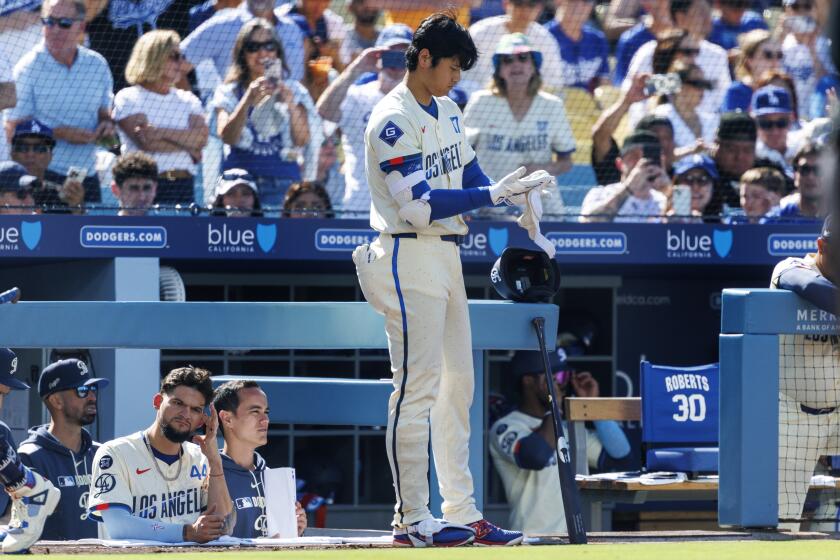
His breathing was heavy, interrupted by deep inhales, with sweat dripping from his forehead. Was he exhausted? Perhaps. But was he energized? Clearly, yes.
Shohei Ohtani, who recently turned 31, showed these signs after resuming his intense two-way role, pitching and batting for the in his latest game on Saturday. Speaking to reporters, he expressed that as long as he can play the way he wants, his birthday feels just like any other day.
Ohtani’s approach remains the same as last month. After recovering from his second Tommy John surgery, he’s not just hitting but fully embracing his two-way role, pitching once a week while leading the lineup daily. Four weeks into pitching again, his performance has been encouraging.
On the mound, Ohtani allowed just one run, four hits, and four walks over six innings, painting a picture of a quality start. At the plate, he continues to perform at an MVP level, leading the National League with 30 home runs and a .610 slugging percentage, ranking highly in OPS, RBIs, and batting average.
Manager Dave Roberts expressed surprise and admiration for Ohtani’s dual talents, noting his ability to handle both roles efficiently. Ohtani’s pitching strength remains, throwing fastballs at 100 mph and commanding his breaking balls well, now with a new, slightly lower arm angle that suits him post-surgery.
His only challenge is pitching longer than two innings, though Roberts believes he’s capable of five or six innings eventually, emphasizing the importance of gradual progress without risking injury. Ohtani echoed this cautious approach, focusing on steady rehabilitation.
Since June 10, following increased pitching sessions, Ohtani’s batting stats have seen a dip, which Roberts attributes to natural fatigue and a small sample size. Ohtani himself admits that he hasn’t been as aggressive at the plate but remains confident in refining his performance during practice.
Despite a slight downturn in some batting metrics, Ohtani’s overall value to the and baseball remains immense. His bat is crucial to the team’s offense, and his pitching progress is closely monitored to optimize his dual-role potential.
According to Fangraphs, Ohtani ranks just behind Pete Crow Armstrong in wins above replacement in the National League, underscoring his elite status. Roberts expressed being “really impressed” with Ohtani’s impact and ongoing growth.
—
Fan Take: Shohei Ohtani is redefining what it means to be a two-way player in modern baseball, showing that excelling both on the mound and at the plate is possible even after major surgery. This story matters because it could inspire a new era where versatility is celebrated, potentially changing how teams develop and value players in the future.